Follow Us on Google
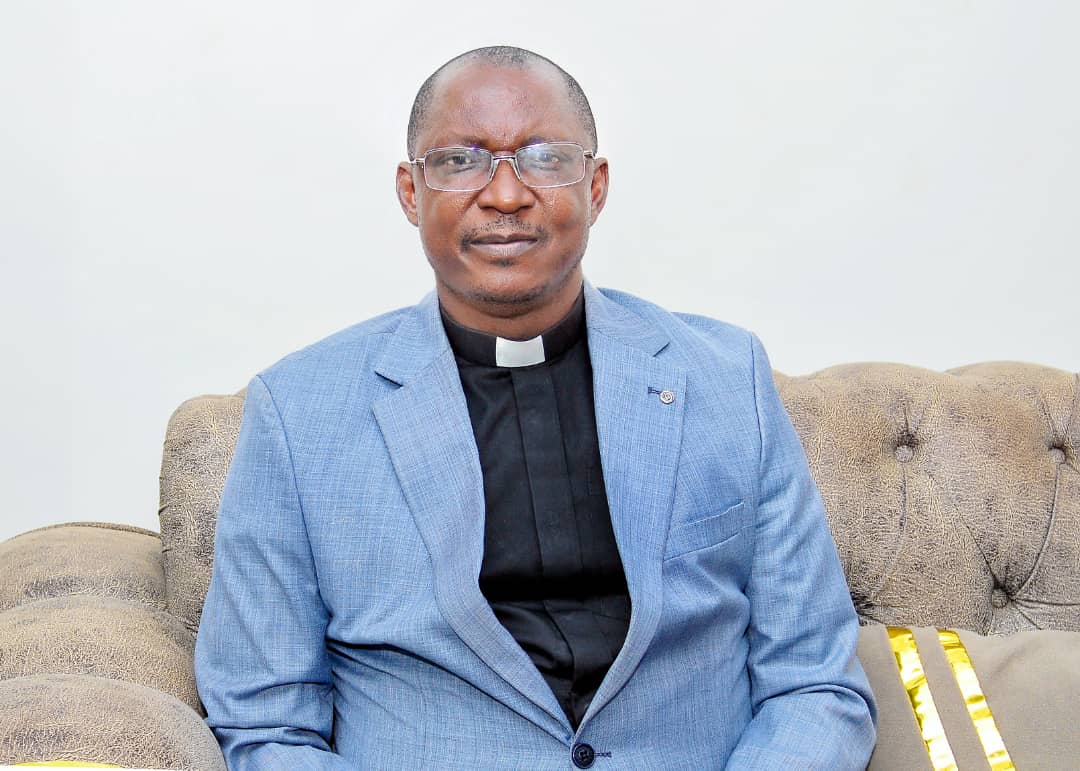
The Chairman of the Northern Christian Association (NCA) in the 19 northern states and the Federal Capital Territory, Rev Joseph Hayab, has expressed concern over the alleged involvement of Christian and Muslim leaders in corruption cases being investigated by the Economic and Financial Crimes Commission (EFCC).
The EFCC boss, Ola Olukoyede, had disclosed that pastors, imams and other religious figures feature prominently among individuals investigated, prosecuted and convicted for financial crimes in Nigeria.
Olukoyede made the disclosure penultimate Wednesday at the 2026 Second Council Meeting of the Nigeria Inter-Religious Council in Abuja, where he urged religious leaders to take a more active role in the fight against corruption and called for greater scrutiny of religious titles.
However, speaking with journalists on Saturday in his Kaduna home, Rev Hayab said the revelation by the EFCC chairman should serve as a wake-up call to churches, mosques and religious organisations across the country.
He said he agreed with the EFCC chairman’s disclosure but was disappointed that people expected to serve as moral examples were instead being cited in connection with alleged wrongdoing.
“Truly, the EFCC Chairman made that statement when I was also handling a case, so I know. And I quite agree with what he said,” Hayab said.
“But I am disappointed that people of my constituency, who are supposed to be leading lights, who are supposed to be leading examples, are being used as examples of bad character.”
The Christian leader recounted the case of a Kaduna-based man who allegedly claimed to be an evangelist and falsely presented himself as a convert from Islam while soliciting financial support from churches and individuals.
According to Hayab, the man allegedly invoked the names of prominent personalities and was invited by churches to preach, while receiving substantial financial contributions from people who believed his claims.
“A Kaduna man who claimed to be an evangelist has been going around states and many places, lying that he was a convert from Islam,” he said.
“Churches believed he was saying the truth, running to him, calling him to preach to them, not knowing that everything he was doing was 419.”
Hayab said the alleged fraud came to light after a person who had been defrauded reported the matter to the EFCC, which subsequently examined the suspect’s financial records.
He added that the investigation allegedly revealed substantial transfers from individuals to the man, prompting the anti-graft agency to invite some of those involved to explain their relationship with him.
“I know a friend who supported him because he was thinking he was supporting the work of God with over N100 million, not knowing that everything he was saying was lies,” Hayab alleged.
He warned that religious identities should not become shields for fraudulent activities, saying both Christian and Muslim leaders had a responsibility to protect the integrity of their respective faiths.
“People are hiding under Christianity to cheat people, people are hiding under Islam to cheat people,” he said.
Hayab also expressed concern over the alleged diversion of funds associated with Christian and Muslim pilgrimages, saying the use of questionable or corrupt funds for religious purposes undermined the spiritual essence of pilgrimage.
He said he agreed with the position attributed to the Sultan of Sokoto that corrupt money should not be used to fund pilgrimage.
“Pilgrimage is supposed to be a place, a time you go for spiritual retreat. But if you are already using corrupt money for it, it has dented the retreat,” he said.
The cleric further urged religious leaders who hold public appointments to demonstrate integrity and resist the temptation to use public resources to acquire extravagant lifestyles.
“We are not in any competition. You can build the best house in this world, it doesn’t change you,” Hayab said.
“What does it profit you if you gain the whole world and lose your soul? That’s what the Bible says.”
Other News
He said he had personally chosen to remain content with his modest home rather than use public resources to finance an ostentatious lifestyle.
“I’m not going to steal government money to build a fashionable house just to show. Who am I showing?” he said.
According to Hayab, lack of contentment among some religious leaders was contributing to the erosion of public confidence in religious institutions.
“So, lack of contentment is the reason why some of our colleagues are bringing shame to our faith,” he said.
“If you are a Muslim cleric and you do that, you are bringing shame to Islam. If you are a Christian cleric and you do that, you bring shame to Christianity.”
Hayab also cited the record of former Joint Admissions and Matriculation Board (JAMB) Registrar, Prof Ishaq Oloyede, as an example of the kind of public service he said religious communities should celebrate.
He said religious leaders must also examine whether they have the moral authority to condemn corruption when some members of their own institutions are involved in it.
“That also challenges us whether we have the moral stand to correct abuse. We can’t tell them not to be corrupt when we are corrupt,” he said.
While thanking the EFCC leadership for bringing the issue to public attention, Hayab urged religious organisations to take responsibility for the quality and integrity of those they train, ordain and commission as clerics.
“The onus is now back on us religious organisations to see: who are we training, who are we ordaining, who are we commissioning as imams and pastors?” he asked.
He also criticised what he described as politically uninformed statements by some religious leaders, particularly comments concerning the number of times a president could constitutionally seek election.
Hayab said religious leaders could express support for a government or political leader, but should be careful not to make statements that suggest a misunderstanding of the Nigerian Constitution.
“You can say, ‘I love the man, the man is performing,’ and end it,” he said.
“But to say things that you are saying, ‘as many times as you want,’ shows that you don’t even understand anything.”
He warned that religious leaders who become closely associated with government could subsequently find themselves in public offices, making integrity and proper understanding of the law particularly important.
Hayab concluded by calling on pastors, imams and religious organisations to protect the reputation of their faiths and ensure that those entrusted with religious leadership do not become associated with corruption.
“We really, really feel we should call on our pastors: please, give your religion a good name,” he said.
“If you are a Christian, give Christianity a good name. If you are a Muslim, give Islam a good name.”
He described the EFCC disclosure as “a wake-up call for all of us” and urged the various denominations and Islamic organisations responsible for training religious leaders to take steps to ensure that those they produce do not bring shame to their faiths or the country.
“I pray that the different denominations that are producing pastors… will take measures to see what kind of pastors they are producing, so that we don’t produce wrong people that will bring shame to our nation,” Hayab said.