Follow Us on Google

From Adanna Nnamani, Abuja
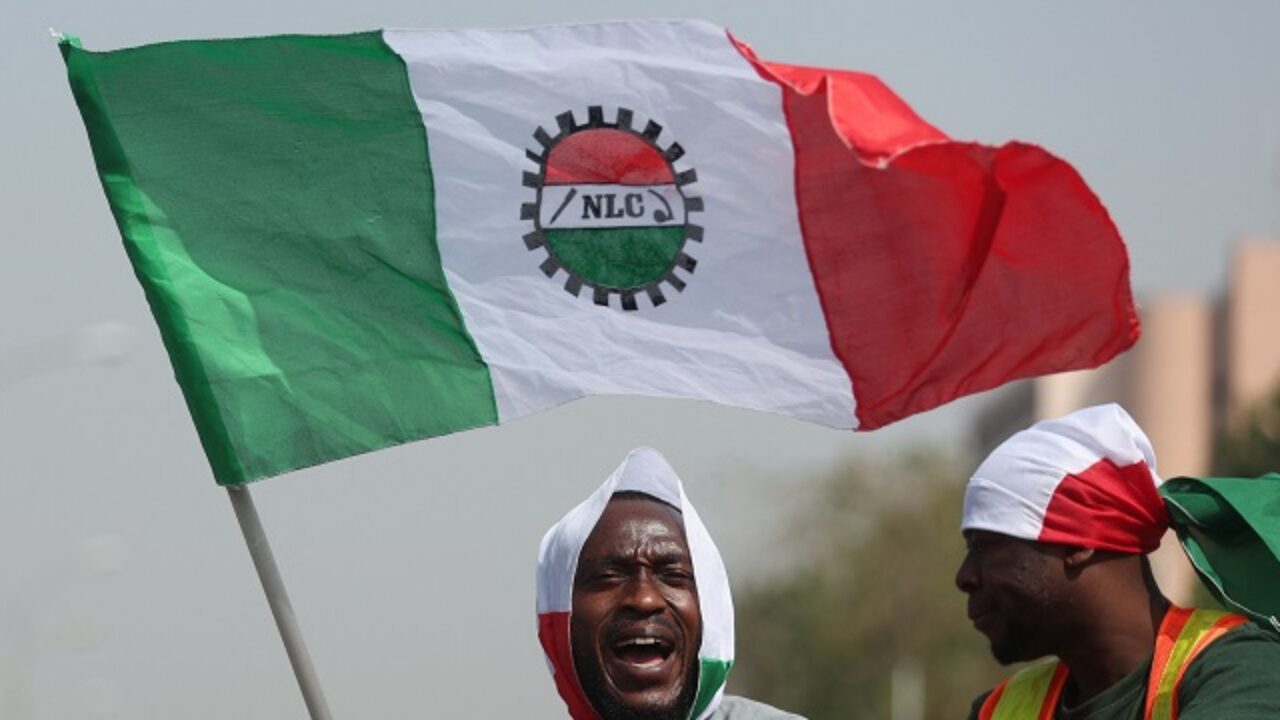
The Nigeria Labour Congress (NLC) has denied negotiating the N40,000 consequential adjustment granted to federal workers following the implementation of the 2024 national minimum wage, insisting that the outcome was solely the responsibility of public sector unions.
The congress said its mandate in the minimum wage-setting process was limited to negotiating the national minimum wage through the tripartite arrangement involving labour, government and employers, while consequential adjustments were negotiated separately by unions in their respective sectors.
In a statement issued over the weekend and signed by its Acting General Secretary, Benson Upah, the NLC described claims that it negotiated the N40,000 across-the-board addition as false and a deliberate distortion of Nigeria’s collective bargaining framework.
It explained that in the public sector, the Joint Public Service Negotiating Council (JPSNC), comprising government representatives and about eight trade unions, was responsible for negotiating the implementation of the new minimum wage and consequential adjustments with the Federal Government.
The congress added that state-level counterparts of the council handled similar negotiations with state governments.
In the private sector, it said industrial unions negotiated with employers’ associations based on the peculiarities of their respective industries.
Giving an example, the NLC said the Association of Food, Beverage and Tobacco Employers negotiated with the National Union of Food, Beverages and Tobacco Employees on the application of the new minimum wage in the sector.
It maintained that, although it represented workers in both the public and private sectors, its leadership did not participate directly in negotiations on consequential adjustments across the various sectors.
The congress further insisted that, throughout the history of national minimum wage negotiations, its leadership had never negotiated consequential adjustments with either the government or organised private sector employers.
Other News
It said the Joint Public Service Negotiating Council had always handled such negotiations in the public sector, while the Joint Negotiating and Industrial Councils of various industrial sectors performed similar functions in the private sector.
The clarification, according to the NLC, became necessary following what it described as deliberate misinformation by individuals seeking to mislead workers and create division within the labour movement.
It said the development was particularly concerning as negotiations for a new national minimum wage were approaching, warning that attempts to shift responsibility could undermine accountability within the labour movement.
The congress urged Nigerian workers to hold the appropriate institutions accountable for their respective roles in wage negotiations.
It, however, reaffirmed its commitment to ensuring that the forthcoming national minimum wage negotiation produced an outcome that served workers and the wider population and approximated a living wage.
The NLC also pledged to put measures in place to ensure that future consequential adjustment exercises were handled by the appropriate institutions in ways that would benefit Nigerian workers.
The statement read in part: “Any person who attributes the outcome of consequential adjustments to the NLC is either naïve, plainly ignorant, or involved in propagating outright mischief to mislead Nigerian workers and the masses. Such a person is so pathetically ignorant that they are not fit to hold any leadership position in any union, as they lack understanding of the basic structures and dynamics of collective bargaining in Nigeria because the collective bargaining framework in Nigeria is not only statutory but has enjoyed decades of flavour and traditions. It should be noted that throughout the history of the national minimum wage setting exercise, the leadership of the Nigeria Labour Congress (NLC) has never sat down to negotiate consequential adjustment with either the government or the organised private sector employers. The JPSNC has always had that responsibility for the public sector, while the JNICs of the diverse industrial sectors have also done the same for the private sector.
“We believe that this moment demands clarity and deep consciousness. The enemies of the working class are attempting to sow confusion and division within our ranks by shifting blame and obscuring the true loci of responsibility as we begin the negotiation of a new national minimum wage. The NLC stands firmly with the Nigerian working class and masses, and we will not allow our movement to be misrepresented by those who serve the interests of capital and exploitation. The new national minimum wage is on the verge of being negotiated.
“This is a critical moment for Nigerian workers and the masses to take necessary steps to hold specific institutions accountable for their specific expectations. The NLC will do its best to ensure that the outcome of this forthcoming exercise continues to serve Nigerian workers and the masses and approximates a living wage. We will put adequate measures in place to ensure that consequential adjustment exercises are done by diverse institutions in creative ways for the benefit of Nigerian workers.”