Follow Us on Google
Celebrating Aji-Ereke festival of farming, unity
From Uchenna Inya, Abakaliki
In Amagu community and the entire Ikwo, Ikwo Local Government Area of Ebonyi State, Aji-Ereke festival has remained a unifying factor apart from reminding the people that farming season has set in and time for cultivation of crops for food sufficiency.
The festival which is celebrated for eight days usually attracts friends, in-laws, relatives, neighbours and well-wishers during its grand finale, thereby preserving the cultural heritage of the people.

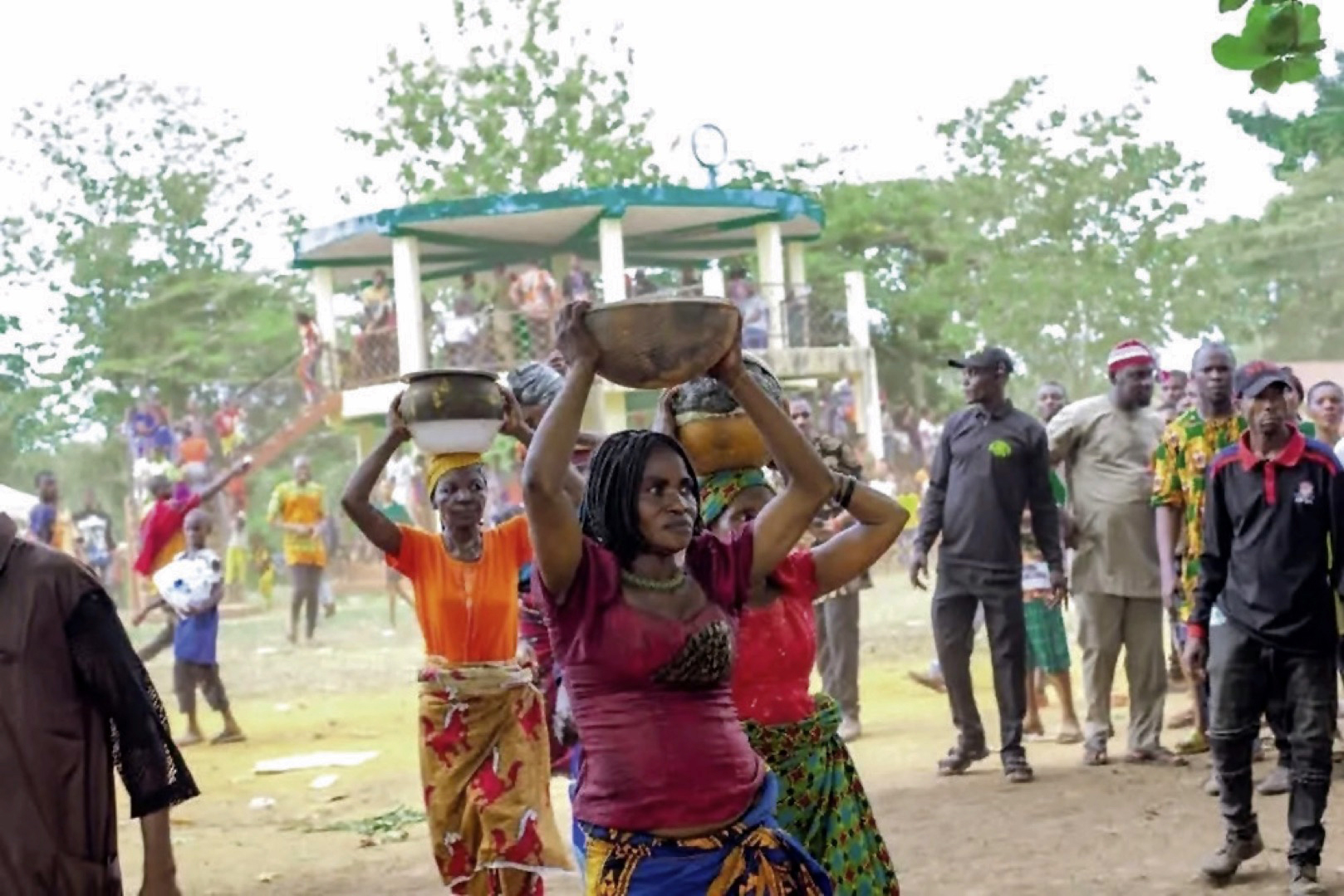
After its celebration, the people will start cultivating their crops. It is usually celebrated between March and May every year. During the celebration, the people exchange gifts while women cook different local delicacies, package them inside local pots and plates and bring them together for consumption among themselves.

The women also bring gallons of palm wine together with the goods which they also drink together as a way of making themselves happy.
The festival affords those of them who are married outside the community and the state the opportunity to visit their father’s places. They usually cook local delicacies which they carry to their fathers. During the visit, they will be prayed for and blessed.
The festival provides women the opportunity to show that their husbands do take good care of them by wearing their best clothes and looking very beautiful while old women tie only wrappers around their waists and bare their chests.
The women usually appear in this form during the celebration, dancing round the venue of the festival while men play drums for them. Different masquerades usually spice the celebration by parading the venue. Men and youths are usually seen chanting songs for the masquerades, following them round the venue.
This year’s grand finale was marked with pomp and pageantry in Edukwu Igweledeoha, Amagu community on April 18, 2026.
The event was filled with captivating cultural displays, including the iconic Ereke dance and the appearance of revered masquerades that added colour and deep cultural significance to the celebration.
Governor Francis Nwifuru described culture as the foundation of economic and social growth of any nation. He said culture unites every nation and urged people of the state to uphold their cultures and traditions.
Represented by his Principal Secretary, Chief Mathias Adum, the governor said no nation, community or group will succeed without culture and commended the member representing Ezza South/Ikwo Federal Constituency in the House of Representatives, Hon. Chinedu Ogah, for reawakening the spirit of the people towards cultural revival.
“For him to remember that culture is the root of our existence is very crucial. The foreign culture has eroded our cultural milieu.
“Culture binds and unites us together. He is reminding us that we should go back to our culture. Our culture is the foundation of our economic and social growth. No nation, no community, no group should allow their culture to die.
“If you lose your culture, you will lose your tomorrow, you will lose your identity and the ones you assimilate to acquire, you will never get them..
“Youth should imbibe the virture of culture starting from their language. Don’t lose your language because you want to speak French or English because it will never place food on your table.
“Culture has come to stay, it will never die. You can see the type of tourism going on here in this festival. If you don’t know your history and culture, then you will not get anywhere,” the governor stated.
In his royal benediction, a traditional ruler in the community, Isaiah Otubo, extolled the unity and resilience of the people of the community. He reiterated the urgent need for authenticity in cultural practice and implored the people to resist the dilution of their heritage and uphold tradition as a living legacy rather than a symbolic performance.
Other News
“This thing we are doing today as Aji- Ereke is a thing that started from time origin. It came before our grandfathers and great grandfathers. So, we are trying to preserve it and we thank our representative in the National Assembly for deeming it necessary to revive it. We are going to revive it and it is going to be an annual event.
“Every year, we will do it to show people that we still recognize our culture, we will not allow it to die. In Ikwo, Aji is a feast that goes round the entire community.
“We have about 15 different communities in Ikwo and we in Amagu where we are doing this today, we have 25 villages and each of these 25 villages used to have this in their different village squares. But today, we are connecting them together here to have the grand finale to show people that this is our culture because our culture is our heritage and we don’t want it to die.
“It is the beginning after all the struggles and everything: harvesting, gathering all to the farms. This is the time we begin to send the crops back to the ground. As soon as we finish this festival, we start cultivation and we plant our yams, cocoyams, cassava, groundnuts, maize, everything. We use this festival to celebrate the beginning of the farming season,” he said.
In his remarks, Ogah called for cultural reawakening, cautioning against the gradual erosion of tradition through digital abstraction and performative identity. He urged the people to return to the live experience of culture, to practice, preserve, and transmit it as a functional legacy.
According to him, Aji-Ereke remains a strategic instrument for reinforcing kinship solidarity, strengthening communal bonds, and galvanizing collective will towards a shared vision of progress.
He emphasized unity, peace, and inclusive prosperity as both cultural imperatives and political necessities. He invoked divine blessings for a fruitful planting season this year which the festival represents, thereby reinforcing its intrinsic alignment with agrarian productivity, renewal, and abundance.
“This annual festival, which marks the beginning of the planting season in Amagu Ikwo, continues to bring together our people across the 25 villages and four wards in a strong display of oneness and shared heritage.
“I am delighted to receive distinguished guests, traditional rulers, community leaders, and dignitaries from within and outside Ebonyi State.
“I sincerely appreciate everyone who came out to be part of this great event. I encourage our people to continue to uphold our culture, remain united, and work together for peace and progress.
“In line with my commitment to education, I announce a ₦300 million scholarship scheme for students of Ikwo and Ezza South in tertiary institutions.
“This initiative will benefit 10 students per ward across the 31 wards, with each beneficiary receiving ₦300,000. Seventy percent of the slots will be allocated to science students, while thirty percent will go to others. This programme is fully sponsored by the Chinedu Ogah Foundation.
“I also urge our people to remain steadfast in their support for the government and to actively participate in the electoral process by obtaining their Permanent Voter Cards.Together, we will continue to preserve our heritage and build a better future for our people,” he said.
A resident of Enyibichiri community in Ikwo local government, Chief Emmanuel Nworie, said from the day of the grand finale of the festival, the people will move into farming this year and predicted bountiful harvest this year. He described Aji-Ereke festival as a unifying culture inherited from ancestors by the people
Nworie said: “Aji-Ereke is the culture we inherited from our ancestors and it marks the beginning of a new farming season. It shows that last year has ended in the Ikwo calendar.
“From today, every Ikwo person is expected to begin to think of how to cultivate yam and other crops for next year. it is a very important culture in Ikwo
“Culture regulates our activities. You can’t just go into farming without ending the year and that is why we have a new yam festival and other cultural activities . So, this Aji-Ereke marks the end of last year and a beginning of a new year in Ikwo culture and calendar.
“So, every person in Ikwo will start farming, to cultivate the land and so on for next year. So, culture is a unifying factor, you can see how happy our people are. It has nothing to do with idle worshipping, rather, it is unifying our people.
“Some activities that take place during this festival include exchange of gifts, visits to neighbours and so on. Daughters that are married outside the community, come to visit their parents during this festival, especially their fathers. They will come with palm wine, local delicacies and other edibles to celebrate with their fathers and their fathers will give them their blessings.
“If you come to Ebonyi State, we know Afikpo people as people that have very rich cultural heritage. They are sustaining it. I’m advising Abakaliki people that we should queue up, it has nothing to do with idol worshipping, it is not fetish.
“You can see even when they bless the cola, they call the name of Jesus Christ. So, this cultural heritage is different from idol worship and I’m advising our people to go back to our culture, to go back because there’s no culture that preaches witchcraft. Culture is a unifying factor.”