Follow Us on Google
From Sola Ojo, Abuja
The United Nations Children’s Fund (UNICEF) and the Kaduna State Government have stepped up efforts to strengthen breastfeeding support for mothers and improve child survival, nutrition and development across the state.
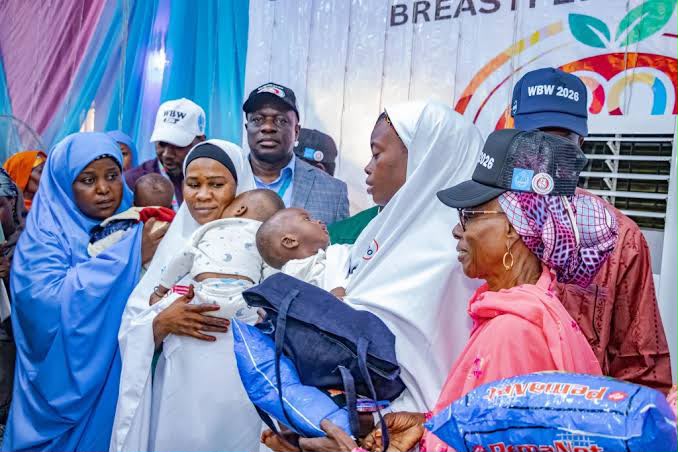
The renewed commitment was announced in Kaduna on Tuesday as the state joined the rest of the world to commemorate the 2026 World Breastfeeding Week, held from August 1 to 7, with the theme, “Breastfeeding for a Sustainable Start in Life: Strengthen What Works.”
As a part of the activities, UNICEF, in collaboration with the State Government, launched the First 1,000 Days Social and Behaviour Change Initiative for Nutrition, aimed at promoting proven nutrition and breastfeeding practices from conception through a child’s first two years of life.
UNICEF Nutrition Specialist, Kaduna Field Office, Chinwe Ezeife, said the First 1,000 Days represented a critical period in which interventions could significantly shape a child’s health, nutrition, growth and development.
She said the 2026 theme was a call to move beyond awareness campaigns and strengthen interventions that had already been proven to work.
Ezeife identified Kaduna State’s adoption of six months paid maternity leave for eligible women as one of the measures capable of protecting mothers and enabling them to practise exclusive breastfeeding for the recommended six months.
She, however, stressed that government policies must be supported by families, communities and workplaces to ensure that mothers could sustain breastfeeding after returning to work.
Ezeife urged mothers to adhere to three key breastfeeding practices: initiating breastfeeding within one hour of birth, exclusively breastfeeding for the first six months without giving water or other foods, and continuing breastfeeding alongside appropriate complementary feeding from six months until two years of age or beyond.
Earlier, Kaduna State Commissioner for Health, Umma K. Ahmed, said the state government was committed to strengthening maternal, newborn, child and adolescent health and nutrition services across the 23 local government areas.
Ahmed said the government recognised breastfeeding as an investment in human capital development, stressing that healthy and well-nourished children were more likely to thrive in school, become productive adults and contribute to the socio-economic development of the state.
She said the government would continue to support Infant and Young Child Feeding programmes, Baby-Friendly health facilities, maternal nutrition, community nutrition services and the capacity of healthcare workers to provide quality breastfeeding counselling and support.
The commissioner urged mothers to initiate breastfeeding within one hour of birth, practise exclusive breastfeeding for the first six months and continue breastfeeding alongside appropriate complementary foods until two years of age or beyond.
Ahmed also called on fathers, families, employers, healthcare providers, traditional and religious institutions, civil society organisations, development partners and the media to work together to create an environment where mothers could breastfeed successfully.