Follow Us on Google

By Moses Akaigwe
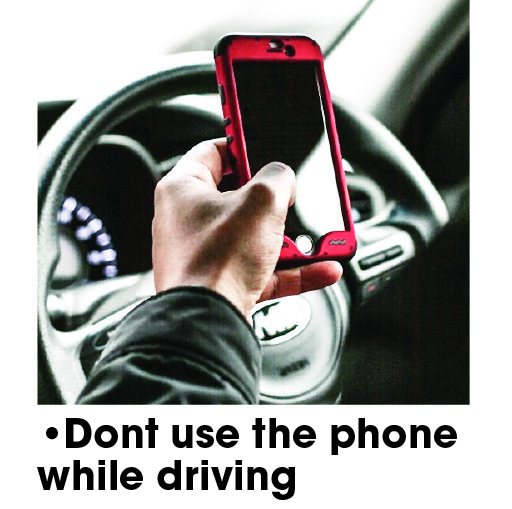
Two recent surveys published in The Travelers in the United States suggest that employers may need to assume more responsibility for workplace crashes involving cell phones than what one would expect.
The findings from the survey were compiled in a 2019 Travelers Risk Index and suggest the connected nature of society combined with mounting workplace expectations is a considerable contributor to crashes as a result of distractions.
The CEO of MasterDrive, Eugene Herbert, says some interesting statistics were revealed in the surveys:
While three out of four companies have a distracted while driving (DWD) policy in place, only 18 percent of companies require employees to set their phone to ‘Do Not Disturb’ before leaving
While 74 percent of surveyed executives consider distracted driving to be a grave concern, another 12 percent do not worry about the liability associated with a DWD crash
10 per cent of consumers admit to talking on the phone while driving
30 per cent of drivers admit to being in a near-miss collision because they were distracted
These stats provide a concerning perspective of DWD in the workplace. “If, according to the surveys, 87 per cent of executives expect employees to sometime or frequently be reachable when outside the office, it is not surprising that 20 per cent of consumers reply to work-related messages while driving, 50 per cent say they need to always be available and 17 per cent consider driving time an ideal time to get more work done.
“A realistic solution to this is not a simple one. If anything can wait until the driver reaches their destination, pressure should be placed on executives to emphasise this in their communication. If it cannot wait, however, DWD policies should take cognisance of this and outline how to handle it.”
There are various options available. “The one is to rather call, if the employee has Bluetooth enabled, as opposed to sending messages or emails.”