Follow Us on Google

By Christy Anyanwu
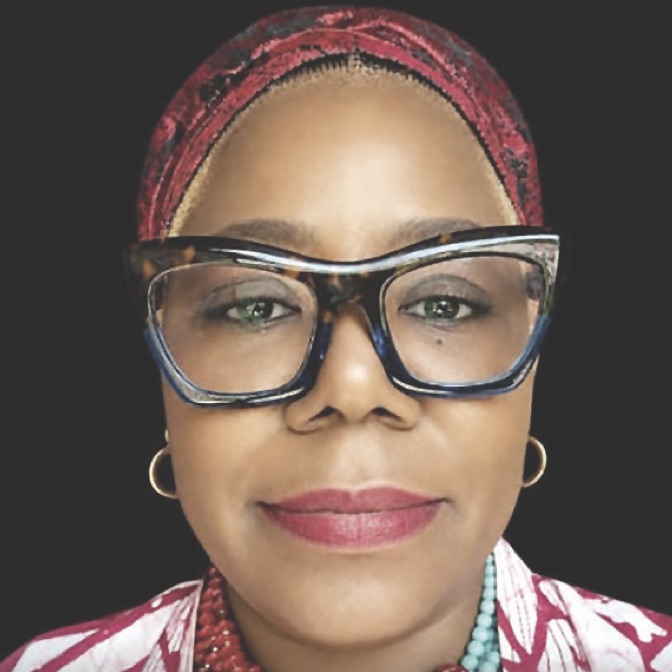
Dr Adedolapo Ayokunle Fasawe is the first female Chief Executive Officer of the Lagos State Environmental Protection Agency (LASEPA). In this interview with Saturday Sun, the unassuming medical doctor and environmentalist highlighted the dangers of pollution. She also spoke on the achievements the agency has recorded so far and her humble beginning as a medical doctor, among others.
As the first female CEO of Lagos State Environmental Protection Agency, how has the journey been so far?
I started working with LASEPA in 2019. I became General Manager, coming from Public Health Care. I realised that environment and health are intertwined. So, I decided to explore the environment while still being a doctor. The mandate we have here as an agency, we were not fulfilling ten per cent of it. You know that people resist change. Initially, it was a battle. But the fact is that, if you treat your staff like your own children, the art of war will not be there. So, I used that approach for capacity building and we re-orientated our thinking as public servants. People have a perception about us that is not right.
The first thing I did was in the area of human capital- building of staff and teams. I did new organograms; I interviewed people to find their areas of strength. I moved them all around because to succeed in anything you are doing, money is important, but you need human resource that believe in you as a leader and that is why LASEPA is successful today because they believe in me as their leader.
Can you state some of the achievements the agency has recorded under your leadership?
We have four zonal offices. I had to create another. Even now, we have 11 and it is still not enough to cover Lagos because we are in the business of environmental protection. We look at the land mass of Lagos – water, land, air, it is all our business here. Even what goes into your drainage is our business.
After creating those zones, we brought the agency closer to the people. Many people did not know that noise is a pollutant and it is not good for the health.
As a public health physician, we started the Noiseless Lagos campaign. You don’t need so much money to advocate a noiseless Lagos. My people and I started a big advocacy project in the media, including television, stating the laws of noise pollution. It is against the law to advertise or propagate your goods with loudspeakers in any public place in Lagos.
After the advocacy, we started enforcement. Before enforcement, we did alternate dispute resolution. Enforcement means we seal the premises. You pay a fine and we both jointly agree on compliance. The offender signs an MOU. Technically, we get reports through calls and that is when someone called, complaining that his neighbours music is killing him. You cannot play music that is above 53 decibels. You can enjoy music in your home, but once it gets to a certain decibel you are committing an offence. Noiseless Lagos has been a very successful campaign. At least 75 per cent of big entertainment centres and religious houses have sound proofed their building because our slogan is: “Less noise, more sense.”
Sound is different from noise. When sound becomes annoying, irritating, confusing, and vibrating, that is what is called noise and noise is bad for the health. Noise can cause abortion, high blood pressure, all sorts of ailments. We are not just doing it for keeping Lagos quiet; we are looking at the health impact assessment, the impact of noise on human being. We had a project in Ojota Motor Park and I’m happy that as a result of that project, many conductors do not use amplifiers to call passengers again.
We have a doctor, an oncologist following us on the campaign. Half of the conductors are 40 per cent deaf and they don’t even know, because they can have sensory deafness and it is a machine that will detect that. That comes from repeated exposure to noise. I have a girl who got deaf totally. She is an event planner. Her eardrums pulped. She has to go to America to do eardrum transplant. So, when we talk about noise pollution, people look at it as nothing. Noise is a nuisance; it’s not good for our health and for our environment.
What are other things that LASEPA is involved in?
LASEPA protects the environment. We also monitor industries to ensure that their trade end points (electrical and electronic waste) are disposed off in an environmentally sustainable manner. After manufacturing, some firms will dump whatever is remaining in the middle of the Atlantic Ocean or just pour it into water. It poisons the fish. When we eat poisonous fish, it exposes one to the risk of cancer. Some people who do not smoke can be diagnosed of cancer just because they eat poisonous fish from the water.
That is what I’m enjoying here; bringing health into this business and it is real. So, we decided to build a treatment plant here in this premises. We ensure that our water, our land, air is not polluted because any of it affects us. The World Bank Report 2020 stated that we had 17, 800 premature deaths in Lagos due to air pollution. The saddest part of it is that almost 70 per cent are children with pneumonia bronchitis and asthma, among others.
Protecting the environment is protecting ourselves and this environment is something they have given us to hold in trust for generations to come. This generation is the first set. I would say the battle is almost lost with global warming and climate change if this generation does not pass it to the next generation; we are sitting on a time bomb. Mother Nature is Mother Nature. It would fight us back. We apply to the World Bank for a grant to put air quality machines in Lagos State during COVID-19 when we were all locked up inside. In Lagos State, 60 per cent of air pollutions in Lagos State are due to traffic, emissions from cars. That’s why this agency is collecting raw data to show that these things are real. It’s not so far from you.
Each time an okada starts, the carbon it exhumes behind is almost 1000 molecules. We not only enforce people to do the right thing, we teach people how to protect themselves and protect the environment. It is a different concept when you mix health and environment and that is what I’m trying to do here. That way, people can start to relate to the concept of global warming and climate change.
We set up an e-waste unit and we have successfully accredited people who will dispose used electrical materials. There is mercury in the fridge and mercury causes cancer. When you just dump it somebody will inhale and 10 years later, the person may develop cancer.
For e-waste, electrical electronic goods, we have a system that monitors them, from end user to disposal, we ensure we monitor it so that they don’t release substances into the air. Somebody waste is another person’s raw material. So, we are doing that with electrical and electronic waste which we are not doing before. That is an achievement we are proud of.
Proudly, we have the first e- library in Lagos State. We use it to review reports and plagiarism is a thing of the past because we have anti-plagiarism software. You must do an environmental impact assessment for industries, down streams, petrol stations, manufacturers, construction, aviation, energy sector, all of that we can monitor what they are doing through here. People can be caught real time online and we can take action.
Another achievement is air quality control machines which cost a million dollar each. World Bank was able to give us six. Lagos needs about a hundred. For these six, we put in strategic areas, the six is a drop in the ocean. But it is something.
Shortly after your resumption as the CEO of LASEPA, COVID -19 set in. How does that affect you?
During the pandemic, we had a lot to do and what we did really was advocacy. We went around, talking to people, the media, on environment. It was found in medical research that the poorer your environment, the higher your risk of morbidity and mortality because the poorer your air quality, the higher your risk of catching the virus. If you are breathing in dirty air, it is easy for corona virus to settle there. Mother nature fought us back during COVID. We had loose skies, one of the best air qualities in the world, but must we have a pandemic for that to happen? We have to keep thinking. For suggestions and ideas LASEPA is open.
Any advice to women?
We need more women in the business of the environment because women can influence their children. Women can influence their husbands in environmental protection. Everything that happens regarding pollution is the women – kitchen, nylon bag, women can teach their children about the environment, and we need more women. Women have been documented to be a veritable tool in advocating or in change of mindset. A woman can change the way her house is, or the way they throw away paper, or the way they throw away plastic bottles.
You are a medical doctor. After graduation, did you work somewhere else before joining Lagos State Government?
After graduation, I did my house job at OAU, Ife. I came to serve in Lagos State. My father insisted that I did public service and that is why I’m still here. I served in Mushin Local Government. They threw me into the toughest places, I had to deal with men and gunshots and all sorts and I survived it. I went back to private sector, I worked in Duro Soleye Hospital at Allen, and I practised clinical medicine for about 12 years. Something was pulling me back to public service. When Asiwaju was leaving, because I was consulting for the health ministry as a doctor, he said, join the system. I said I can’t be like these people, he said you too make them be like you. That was 2004. The rest is history.
How do you cope in the midst of politicians?
You just have to get your acts right. Data is king. Get your acts rights, politicians are not hard to deal with. They are human beings and they are smart people. However, they’re surrounded by people who at times do not give them facts. When they surround themselves with people that give them facts and data and reality, they do the right thing. My governor has supported the agency so much because he sees and I explain to him the way I’m explaining to you. That is how I have dealt through health up to here. I used to do medical missions. I have my team of 250 doctors, volunteers doctors. We would go round every local government once a year and do free health care and surgeries. We have a mobile field hospital. We would do surgeries till dusk now, and I believe prevention is the future of medicine. That’s why I’m here. I call it health promotion; we teach you how to prevent catching illness and the environment is important in that. For example, malaria is differently related to the environment. Water, static, hurdles of water, dirty water, they germinate, diarrhoea, typhoid fever is from contaminated food from what we pour into the water bottles.
Tell us a bit about your life, growing up
I grew up in a university campus. My mum is a professor, my dad read history and he went to school in America on scholarship and he chose to study librarianship, the arts of book keeping and book reading. So, I love reading from when I was young. I was curious about the human body and how it functions. Out of five of us, I’m the only one that studied medicine. My parents were very liberal. My sister is an accountant, the other one a lawyer, our parents allow us do anything you want to do. I knew I wanted to become a doctor because I was curious and I rose to the peak of my career in health. Over there in health, I was a level 17director for five years and I said okay, let’s try Environment. Two years on, I’m here in LASEPA.