Follow Us on Google
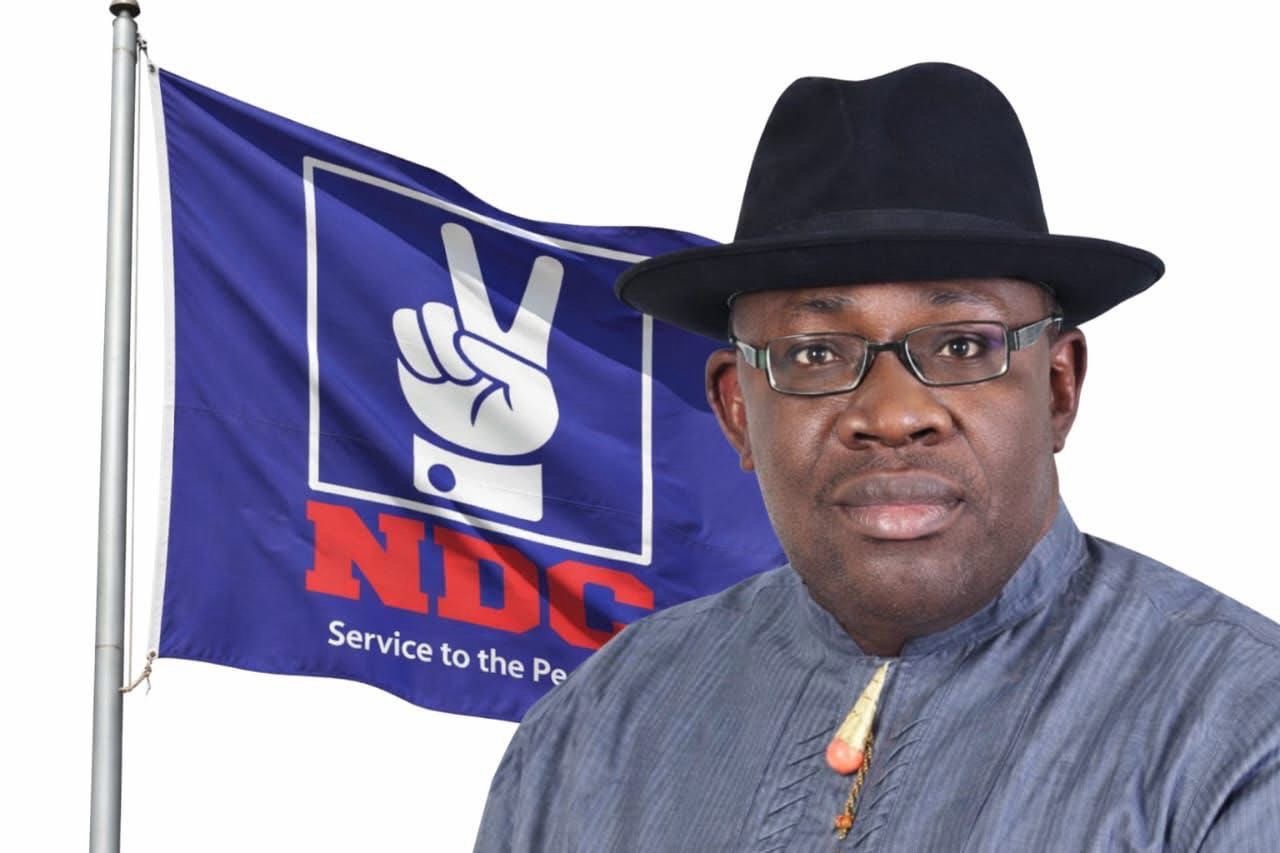
National Leader of the Nigeria Democratic Congress (NDC), Senator Seriake Dickson, has dismissed reports of internal turmoil within the party, insisting that its leadership remains stable despite concerns arising from recent primary elections.
Speaking during an interview with ARISE NEWS on Wednesday, the former Bayelsa State governor described the growing attention around the NDC as evidence of the party’s rising influence rather than a sign of instability.
According to Dickson, the party remains united and focused on its broader political objectives ahead of the 2027 general elections.
“The NDC leadership is intact, and there is no crisis whatsoever. There is no crisis of confidence. Nigerians believe in what we represent, and we appreciate the trust and confidence they continue to place in our party,” he said.
Addressing complaints from some aspirants and party members over the conduct of the party’s primaries, Dickson acknowledged that the process was not flawless but noted that the NDC successfully navigated a challenging electoral timetable while building a national political structure within a short period.
He explained that the party had undertaken electronic membership registration and organised direct primaries under significant time constraints, adding that the Electoral Act’s provisions on direct primaries created operational challenges for many political parties.
While admitting that some participants were dissatisfied with aspects of the exercise, he praised party leaders and aspirants for showing restraint and commitment to preserving unity.
Dickson also responded to allegations of unfair treatment involving activist Aisha Yesufu and claims of irregularities in the party’s internal processes. He maintained that the NDC remains open to all members and does not operate a system that favours particular individuals.
He stressed that popularity on social media should not exempt anyone from complying with established party procedures.
On allegations that party tickets were awarded based on financial influence, Dickson firmly denied that the NDC sells nominations to the highest bidder. However, he acknowledged that political campaigns require substantial resources and that aspirants’ capacity to fund competitive campaigns is often a legitimate consideration in electoral politics.
Other News
“The NDC does not sell nomination forms based on how much money a person has. Politics everywhere requires resources, but that is different from selling party tickets,” he stated.
The senator also dismissed unofficial primary election results circulating on social media, insisting that only results formally submitted by the party to the Independent National Electoral Commission (INEC) should be regarded as authentic.
Commenting on the role of supporters of the party’s presidential candidate, Peter Obi, Dickson said the NDC is not a coalition of competing interests but a united political platform working towards a common goal.
He revealed that neither Obi nor his running mate, Rabiu Kwankwaso, paid to secure the party’s ticket, describing both men as committed partners in building a formidable political movement capable of challenging the ruling All Progressives Congress (APC).
Dickson further urged supporters to avoid attacking the party or its leadership, arguing that weakening the NDC ultimately undermines the candidates seeking office on its platform.
“You cannot genuinely support Peter Obi while disparaging the platform he is running on. The NDC is the vehicle carrying our candidates into the election, and every supporter should understand the importance of strengthening that platform,” he said.
Looking ahead to the 2027 presidential election, Dickson expressed confidence in the party’s prospects, citing widespread concerns over insecurity, economic hardship and national discontent.
He argued that the next election would be shaped by Nigerians’ desire for change and called on party members to remain focused on issues affecting citizens rather than internal distractions.
“We are confident of victory in a free and fair election. Nigerians are dealing with insecurity, hunger, unemployment and division. These are the issues that matter, and they are the issues we intend to address,” he said.