Follow Us on Google

•Calls on NASS to update Petroleum Industry Act by amendment
By Enyeribe Ejiogu
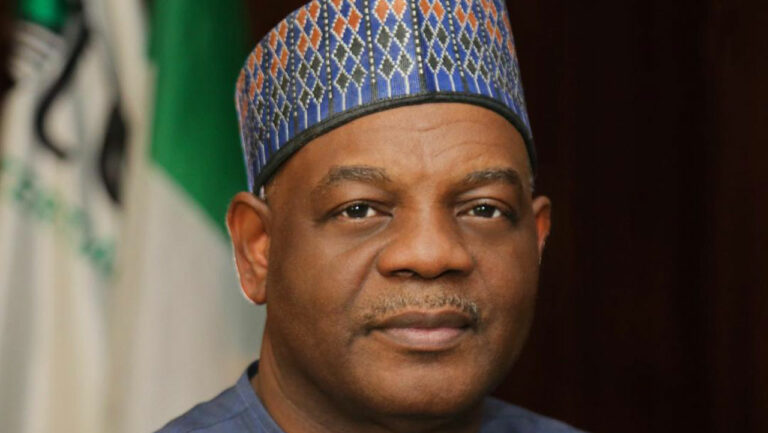
With insecurity worsening as Sahelian terrorists carry out sustained attacks on communities, and the security services becoming overwhelmed, Dr Ajuzie Osondu, a lawyer with over 25 years of post call-to-Bar experience in litigations and other aspects of law practice, has made a profound call on the Federal Government to recognize that the country is facing existential threat. He contends that the country is confronted with a desperate situation, which equally demands a desperate solution.
Osondu, who holds a doctorate degree in Law from Babcock University, obtained the Bachelor of Laws (LL.B) degree in 1998 and Master of Laws (LL.M) in 2009, both from University of Lagos and a second Master of Laws (LL.M) degree from Lagos State University in 2018, from where he had previously graduated with Bachelor of Arts (B.A.) Degree in 1988 with Second Class Upper Division. He proceeded to the prestigious Babcock University for the Doctor of Philosophy (PhD) degree, which he obtained in 2025 after exactly three years of intensive research work. A private legal practitioner of repute, he is the author of several law-allied books.
In this interview, he discusses major issues regarding the state of the nation and proffers fundamental solutions. He also comments on the recent Supreme Court decision regarding the man who was sentenced to death for killing a herdsman that attacked him in his farm.
How long have you been practising as a lawyer? How would you characterize the successful litigations you have engaged in, up to Court of Appeal level and beyond?
I have been in active legal practice for 25 years. During this period I have handled various contentious and non-contentious court cases in the customary courts, magistrate courts, high courts and court of appeal. The subject matter of cases in these litigations ranged from dissolution of customary and statutory marriages, landlord and tenant matters, land matters, aviation litigations, general civil claims for damages for breach of contracts, and a host of others. Some of the cases were determined by the court while some were settled amicably out of court through Alternative Dispute Resolution mechanisms.
As with most successful lawyers, are you also an author of books? Give a snapshot.
Yes, I have authored a number of authoritative books in various areas of law. I have written in the area of environmental protection – Our Common Environment: Understanding the Environment, Law and Practice; I also wrote in the area of maritime and admiralty jurisdiction – Modern Maritime Law and Practice in Nigeria; then in the area of corporate law – Modern Nigerian Law and Procedure of Meetings. Outside of law, I wrote in the area of career counselling titled, Career Counsellor, which was recommended by Lagos State Ministry of Education. My current research effort is on Comparative Oil and Gas Law wherein I am researching on the oil and gas laws of six jurisdictions – Nigeria, Norway, United Kingdom, United States, Canada and Russia in comparative terms. I have also written on matrimonial causes.
Insecurity continues to worsen. State governors have security votes. Do you think that they are adequately investing in the real facilities and strategies to combat insecurity beyond giving Toyota Hilux patrol vans to the police?
Truly, insecurity has challenged and shaken the foundations of our dear country Nigeria. It has not been this bad compared with when we were younger and growing up. Security votes are rightly given to State Governors because they are the chief security officers of their states and the Federal Government has a limited geographical area of control in the Federal Capital Territory. Securing the rest of the vast geographical territory of Nigeria is in the hands of the state governments. Mobility of the police and other security agencies is one of the strategies of fighting insecurity. So, the governors have done well in providing Hilux patrol vans for the Nigerian Police and other security agencies. However, the insecurity question in Nigeria goes far beyond allocation of security votes and provision of Hilux patrol vans. The real problem has to do with the security architecture of the country. The command and control structure of the Nigerian Police and other security agencies are in the hands of the Federal Government and its agencies. I think this has made the provision of effective security in the states very difficult. It calls for decentralisation of the entire security architecture in Nigeria.
It has been said that desperate situations demand desperate solutions. Retired General Theophilus Danjuma is on record to have called upon communities to defend themselves. Similarly, Director General of the Department of State Security (DSS) Adeola Ajayi said that communities can use arms to defend themselves. Now what is the position of the law regarding the possession of firearms by individuals given the security situation and killings in Nigeria?
The Firearms Act regulates the possession of firearms in Nigeria. Section 3 of the Act prohibits any person from having in his or her possession or control any firearm that is specified in Part I to the Schedule to the Act also known as ‘prohibited firearm’ unless that person has a licence granted by the President acting in his discretion. However, Section 4 allows Nigerians to carry what is categorized in Part II of the Schedule to the Act as ‘personal firearm’ provided such firearm is licensed by the Inspector General of Police. It is noteworthy that the grant or refusal of this category of licence is to be determined in accordance with the principles decided upon by the President of Nigeria. The above state of the law shows that Nigerians may carry some categories of firearms under strict licensing requirement at the absolute discretion of the President of Nigeria and the Inspector General of Police.
Some people have criticised the police for showing double standard, whereby responsible citizens are denied gun permits but Fulani herdsmen are allowed to move about with AK-47 rifles. What is your opinion on this double standard?
I think that the alleged double standard by the police was brought about by the combined effect of the provisions of Sections 3 and 4 of the Firearms Act cited earlier and other regulatory instruments that govern the carrying of arms by Nigerians. The combined effect of the provisions of Sections 3 and 4 of the Act is to the effect that the hands of the Nigerian Police, even at the level of the Inspector General of Police, are tied when it comes to the grant of licence to carry arms in Nigeria. The grant or refusal of firearms licence under Part I of the Firearms Act is dependent on the President’s discretion, while grant of firearms licence under Part II is determined in accordance with the principles decided upon by the President of Nigeria. So, to address the issue of alleged double standard, the Firearms Act needs to be amended in order to liberalise the conditions for grant of firearms licences to Nigerian citizens in view of the insecurity in the country so that Nigerians can effectively defend themselves against armed bandits and other armed groups by whatever name they are called.
Do you think that insecurity has reached the point where people can use any means to defend and protect their communities in line with the advice that retired General Danjuma gave some time ago?
By virtue of the provisions of Section 33 of the Constitution of the Federal Republic of Nigeria 1999 (as amended), the Nigerian Constitution recognizes the right of Nigerians to life and also the right to use reasonable force as a means of self-defense to protect their lives and property. Section 33 (2) (a) of the Constitution expressly provides that ‘A person shall not be regarded as having been deprived of his life in contravention of this section, if he dies as a result of the use, to such extent and in such circumstances as are permitted by law, of such force as is reasonably necessary (a) for the defence of any person from unlawful violence or for the defence of property…’ The above constitutional provision is clear that the means used by Nigerians in self-defence must be permitted by law and not by chaotic or unlawful means. My opinion on this is that although the Nigerian Constitution does not expressly provide that Nigerians should carry arms, it however recognises the right of Nigerians to resort to self-defence in order to protect their lives and property from being unlawfully taken away by any armed groups by whatever name they are called. Nigerians cannot successfully employ the act of self-defence to withstand such armed groups carrying AK-47 or other categories of lethal weapons with their bare hands. So they need to be allowed to lawfully defend themselves. The government should liberalise the process of licensing of guns to Nigerian citizens so that this self-defence allowed by the constitution is carried out within the ambits of the law.
Not long ago, a farmer who in self-defence killed a Fulani herdsman that attacked him in his farm was sentenced to death. Given the present level of insecurity and attacks, in what way can a person legally act in self-defence?
I’m sure you are referring to the recent Supreme Court case of Jackson v. State in which Jackson disarmed Ardo Bawuro, a Fulani herdsman who attacked him with a knife in his farm. Jackson went ahead to stab Ardo multiple times on the neck until he died. Jackson was charged with murder and he set up the defence of self-defence. First, I want to state that self-defence is a total and complete defence which if it is upheld, completely exonerates the defendant and he will not even go to prison for one day. I had cited Section 33 (2) (a) of the constitution which allows a Nigerian who is under unprovoked attack, as in the case of Jackson, to use such force as is reasonably necessary for the defence of such persons from unlawful violence or for the defence of property. Other provisions on self-defence can be found in Sections 286-294 of the Criminal Code Act and Sections 59-67 of the Penal Code Act. So Jackson exercised his right of self-defence by disarming Ardo. The problem arose concerning what he did with the knife after disarming Ardo. The Supreme Court decision was based on the principle of ‘no safe or reasonable means of escape’ which requires that for self-defence to succeed, the person under attack must have no safe or reasonable means of escape. The fact that Jackson had disarmed Ardo and was no longer under a threat by him, afforded him an opportunity to retreat instead of stabbing Ardo multiple times to Ardo’s death. According to the Supreme Court, the use of the knife to stab Ardo multiple times after disarming him was no longer reasonably necessary as a means of self-defence since he was no longer under a threat by Ardo who was no longer armed. The majority of the Supreme Court Justices held that such act by Jackson amounted to use of excessive force on his part. However, a dissenting judgment and public opinion think that the holding has placed greater burden on Jackson and other persons relying on self-defence when under unprovoked attack.
In my opinion, a person can only successfully set up the defence of self-defence if the person exercises the right of self-defence in a manner and in such circumstances as are permitted by law in line with constitutional and statutory provisions. The Supreme Court’s decision in Jackson’s case is that of the Apex Court of the land. Jackson can only appeal to God and perhaps to the President to exercise the power of prerogative of mercy on him. I believe the President might listen considering the special circumstances surrounding the case. In a country where armed groups, whether Fulani herdsmen, bandits, terrorists, kidnappers, ritualists or by whatever name they are called, go about killing innocent and defenceless citizens of Nigeria, the standard of self-defence ought to be lowered and not to be raised as in Jackson’s case.
What would you say are the sweetest memories from your doctorate programme at Babcock University? What did your thesis focus on?
I enjoyed the serene and aesthetic environment, friendly lecturers and supervisors that are always available to attend to you. Babcock assigns two supervisors for each PhD candidate so that if one is not available, the other will attend to you. Candidates are also made to undergo a study in Research Methodology so as to equip them for their thesis research. So at Babcock University, a candidate’s graduation depends on the candidate’s ability to fully immerse himself or herself in what I call academic ‘baptism of fire’ by attending to their course work, seminar presentations, semester examinations and finally the thesis work. My thesis explored the role which petroleum industry legal, institutional and regulatory regime could play in promoting investment opportunities in the petroleum industry in Nigeria. I completed my PhD within the minimum three-year period, which is six semesters.
Looking at the Nigerian oil and gas industry, what is your general assessment of the legal framework that guides operations within the industry?
Nigeria is richly endowed with enormous petroleum resources which present investment opportunities in the upstream, midstream and downstream sectors of the petroleum industry. The role of the legal, institutional and regulatory regimes is pivotal to the full harnessing of these great potentials. Unfortunately these regimes have not been responsive and proactive enough in ensuring the growth of the petroleum industry and in promoting investment opportunities. It is discovered that the legislations, which governed the industry before the passage of the Petroleum Industry Act in 2021, spent 45 years on the average without any reforms. It took 21 years between the year 2000 when the Petroleum Industry Bill was initiated and the year 2021 when it was eventually passed as an Act of the National Assembly. The essence of legislative reforms is to remove impediments that militate against investment opportunities in the industry and other emergent issues affecting the industry, which needed urgent legislative intervention. In the absence of these legislative reforms, these investment opportunities were lost. Despite the passage of the Petroleum Industry Act 2021, problems such as inadequate fiscal incentives, needed to reduce contracting timelines and costs, and inefficiency in the implementation of local content requirements still persist. The Petroleum Industry Act is overdue for amendment and the National Assembly needs to urgently initiate the amendment of the Act and review regulations requiring urgent reviews in order to move the industry forward.