Follow Us on Google

From Romanus Ugwu, Abuja
A cybersecurity leader and digital transformation advocate, Prof Ojo Emmanuel Ademola, has warned against the consequences of Nigeria, the giant of Africa, being digitally dependent.
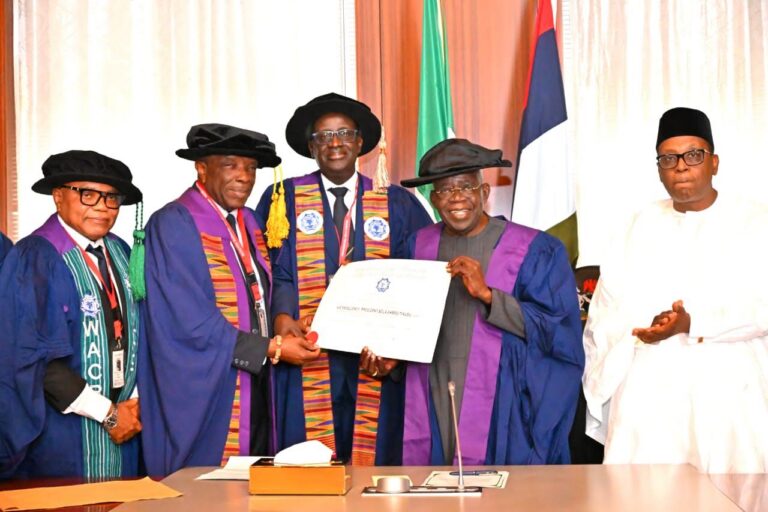
Ademola, a faith‑inspired public intellectual, gave the warning in Abuja at the maiden annual summit of Professor Ademola Ojo Emmanuel Foundation (PAOEF), which had in attendance senior government officials, global leaders, policy experts, industry innovators and development partners, assembled for the dialogue.
In his keynote address at the event, themed, “Future‑ready leadership: Integrating technology, governance, and faith for societal renewal,” Ademola insisted that Nigeria stands at a critical point in history where governance, technology and values must intersect to shape a sustainable national future.
According to him, “The future is not a timezone; it is a design. Nigeria must not stand at the edge of progress; Nigeria must stand at its centre. Nigeria will not be left behind. Nigeria will not be digitally dependent. Nigeria will define the future with integrity, innovation, and courage. As Nigeria rises, Africa rises and as Africa rises, the world gains a new partner in progress.”
During the summit, he also formally unveiled his new book, ‘Leading the Digital Future,’ describing it as a roadmap for the next generation of leaders in governance, enterprise and the civic sphere.
“Digital governance is no longer optional, it is a national obligation,” Professor Ademola said, adding, “The nations that will lead the next era are not the largest, but the most digitally prepared.”
Other News
Major highlight of the event was the announcement of significant progress on the University of Professional Studies, Igbajo‑Ijesha, located in Oriade LGA, Osun State, which the PAOEF is championing.
He reaffirmed the Foundation’s commitment to ensuring that the university becomes a national model for digital‑first higher education, professional and applied studies, research in cybersecurity, artificial intelligence and innovation, leadership development and public administration.
He called on development partners, philanthropists and public‑sector stakeholders to collaborate toward completing the institution’s construction.
“Education is the seed of a nation’s future. Where we plant it determines what we will become,” he noted.
He urged government ministries, regulatory agencies, private‑sector leaders and international partners to embrace a whole‑of‑nation approach to digital transformation.
He proposed ‘The Abuja Compact,’ a seven‑pillar action framework for national adoption, include trusted digital identity and national data infrastructure, broadband expansion, artificial intelligence for public service delivery, cybersecurity as national defence strategy, innovation‑driven economy and startup support, human capital investment for the digital future and ethical governance anchored on faith‑inspired value.