Follow Us on Google
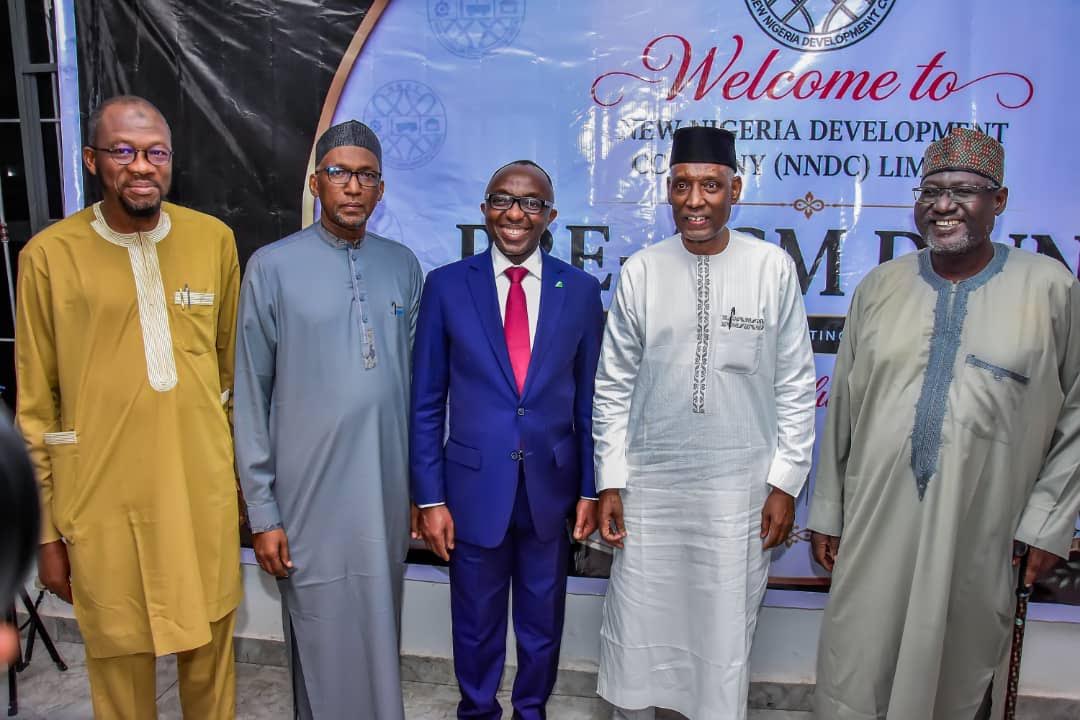
The New Nigeria Development Company (NNDC) has unveiled a five-year transformation blueprint aimed at repositioning the company into a commercially driven investment holding firm, while reporting stronger assets and revenue despite a decline in profit for the 2025 financial year.
The plan was unveiled during the company’s 57th Annual General Meeting (AGM), where Board Chairman, Alhaji Lamis Shehu Dikko (Ajiyan Katsina), said the strategy would guide NNDC’s transition into a modern investment institution focused on sustainable value creation and regional economic development.
Speaking at the AGM, Dikko said the company remained resilient despite Nigeria’s difficult economic environment.
“NNDC remained resilient despite Nigeria’s challenging economic environment, characterised by high inflation, exchange-rate volatility and tight monetary conditions,” he said.
He explained that the 2026–2031 Strategy Blueprint, developed with KPMG and themed “NNDC: The Rebirth”, would transform the organisation from a legacy institution into a commercially focused investment holding company.
According to him, the strategy prioritises corporate governance, portfolio optimisation, capital raising, operational excellence, investment facilitation, enterprise development, and human capital growth.
“The Blueprint provides a roadmap for transforming NNDC from a legacy institution into a commercially focused investment holding company centred on active portfolio management, sustainable value creation and regional development,” Dikko said.
He disclosed that the company recorded a 1.8 per cent increase in revenue, rising from ₦794.64 million in 2024 to ₦808.88 million in 2025.
NNDC also posted stronger financial indicators, with total assets increasing by 12.7 per cent to ₦31.43 billion, while shareholders’ equity rose by 11.9 per cent to ₦29.95 billion. Cash and cash equivalents also increased to ₦3.94 billion, reflecting what the company described as a strong liquidity position.
Although profit after tax declined to ₦1.37 billion, Dikko attributed the reduction largely to a ₦1.07 billion impairment charge on bad debts recognised in line with International Financial Reporting Standards (IFRS).
“The reduction was largely attributable to a ₦1.07 billion impairment charge on bad debts recognised in accordance with International Financial Reporting Standards. This formed part of the company’s continuing efforts to clean up its financial records and strengthen the integrity of its balance sheet,” he said.
The chairman added that the company’s financial statements received an unmodified audit opinion, confirming that they fairly presented NNDC’s financial position.
To preserve capital for the ongoing reforms, the board resolved not to recommend the payment of dividends for the financial year.
Other News
Looking ahead, Dikko said NNDC would concentrate on implementing the transformation strategy, strengthening subsidiary performance, and attracting strategic investors.
“The company will focus on completing the clean-up of its financial records, implementing the transformation strategy, strengthening subsidiary performance, mobilising investment capital and delivering measurable commercial and developmental impact,” he said.
He also announced that the board would undertake a comprehensive review of NNDC’s subsidiaries to strengthen governance, restructure underperforming businesses, attract strategic investors, and improve operational accountability.
The transformation blueprint identifies investment opportunities across agriculture, information and communications technology, solid minerals, oil and gas, power, infrastructure, manufacturing, hospitality, real estate, and financial services.
As part of its commitment to human capital development across Northern Nigeria, NNDC announced an allocation of ₦30 million to the Young Professionals Development Trust and the Musa Bello Learning Resource Centre to support professional education and manpower development.
Ahead of the AGM, NNDC hosted a pre-AGM dinner featuring the Managing Director of the Ministry of Finance Incorporated (MOFI), Dr Armstrong Takang, as guest speaker.
Takang said NNDC could draw valuable lessons from MOFI’s institutional reforms while adopting international best practices in managing investment assets.
“NNDC could draw valuable lessons from the MOFI turnaround model while adopting global best practices in the active ownership of assets and companies,” he said.
He stressed the importance of defining a clear institutional mandate, maintaining a comprehensive understanding of owned assets, exercising active ownership without interfering in day-to-day operations, establishing strong governance, and deploying capital strategically.
Takang added that the similarities between NNDC’s transformation agenda and MOFI’s operating model created opportunities for collaboration.
“Such collaboration could accelerate portfolio value creation, support the development of investable platforms around Northern value chains, prepare assets for investment, enhance creditworthiness and mobilise institutional and private capital,” he said.
Dikko thanked the governments of the 19 Northern shareholder states, directors, management, staff, regulators, and business partners for their continued support.
“We are confident that NNDC will emerge stronger and better positioned to contribute meaningfully to the economic transformation of Northern Nigeria,” he said.