Follow Us on Google
From Juliana Taiwo-Obalonye, New York
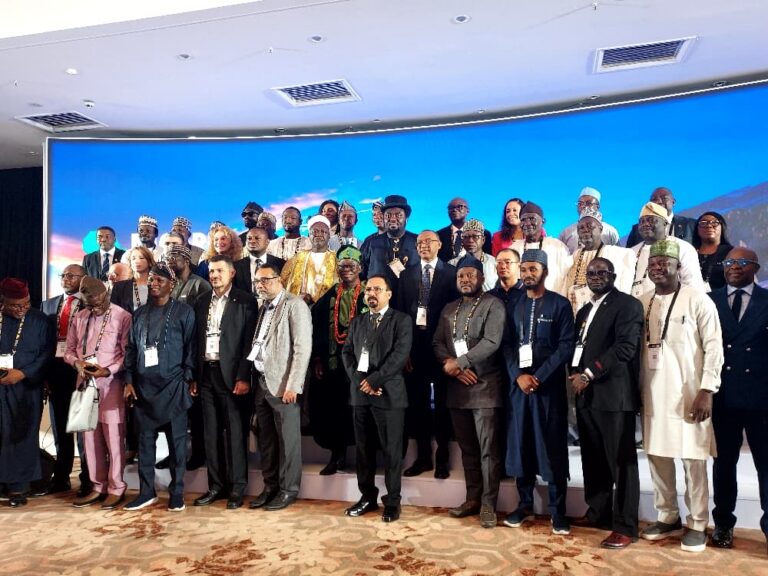
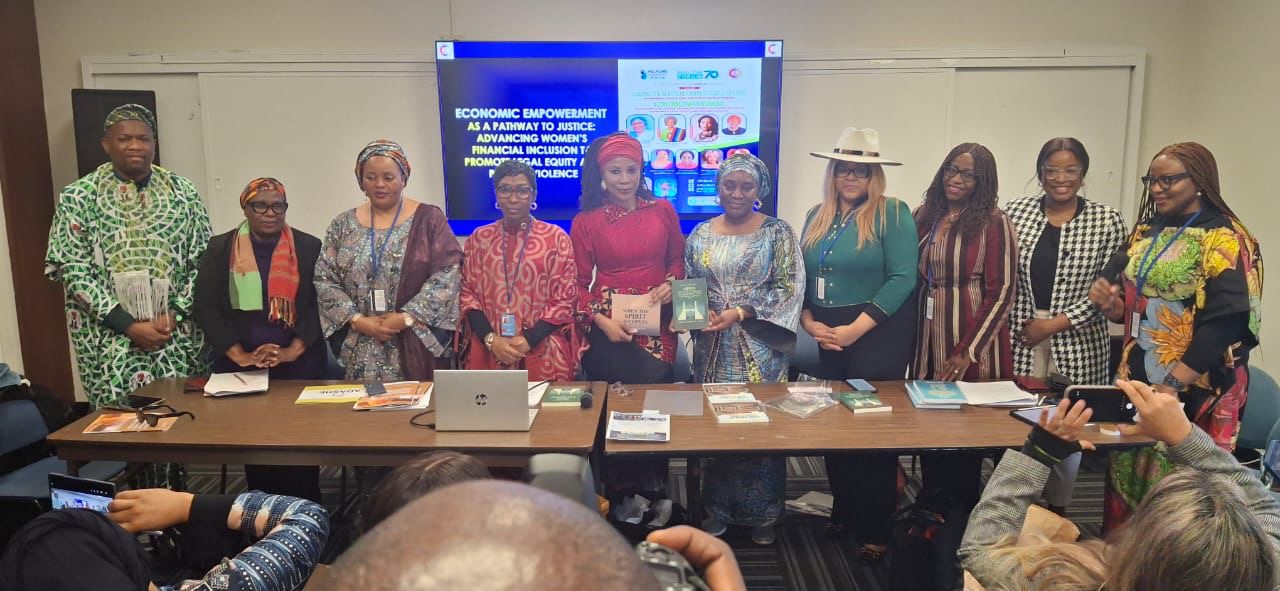
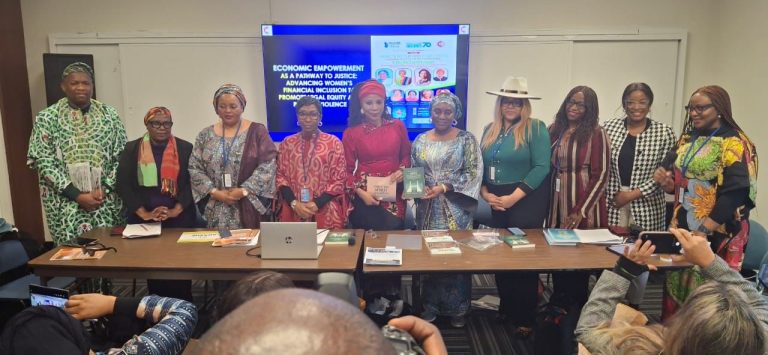
The call for a new era of women’s empowerment anchored on economic independence, digital skills and inclusion in public decision-making resonated at the United Nations Headquarters yesterday as African women leaders, spearheaded by Helpline Foundation Abuja and the Defence and Police Officers’ Wives Association (DEPOWA), hosted a high-level side event during the 70th Session of the Commission on the Status of Women (CSW70).
Themed “Building the Next Generation of Female Leaders: Empowering Girls in STEM and Public Decision-Making” and focused on “Economic Empowerment as a Pathway to Justice: Advancing Women’s Financial Inclusion to Promote Legal Equity and Prevent Violence,” the session brought together policymakers, development experts, and advocates from across Africa and the west to discuss how to transform gender equality commitments into tangible, scalable action.
Founder of Helpline Foundation Abuja and Convener of the Africa Women Conference (AWC), Jumai Ahmadu emphasised that the event’s goals went beyond dialogue—it was about aligning empowerment efforts with leadership development for sustainable change.
“At Helpline, our work has always been anchored on a simple conviction: when women and girls are empowered, societies become more just, resilient, and prosperous,” she declared. “Yet millions of women across the world continue to face barriers to economic opportunity, financial inclusion, leadership participation, and access to emerging technologies.”
Underscoring the interconnectedness of women’s financial empowerment and leadership, she said, “These are not separate conversations. Economic empowerment strengthens women today, while education, digital skills, and leadership development prepare girls to lead tomorrow.”
Ahmadu highlighted Helpline’s innovative partnerships through the AWC Women and Girls Digital Technology Hub – AI and Data Science Programme, run in collaboration with DataCamp Donates USA, which trained 100 women and girls chosen from over 3,000 applicants across Africa.
“We now have 37 high-performing participants advancing into specializations such as AI engineering, Python data science, SQL analytics, and Power BI, with graduation expected by mid-2026,” she noted.
Beyond technology, Helpline also promotes civic engagement through platforms like The Voice of the Girls Parliament, which encourages young women to engage in governance and policy dialogues. Dr. Ahmadu described DEPOWA as a “natural and strategic partner” in advancing these efforts.
“We are particularly proud to host this event with DEPOWA, whose commitment to women’s welfare and economic empowerment continues to impact families and communities,” she said.
President of the Defence and Police Officers’ Wives Association (DEPOWA), Mernan Femi-Oluyede, on her part, outlined the organization’s decades-long commitment to equipping military and paramilitary families through education, skills training, cooperatives, and community outreach.
“We look to strategic partnerships, community-based interventions, and sustainable development initiatives. Much of our work promotes the economic empowerment of women across the armed forces community,” she explained.
Representing the network of military officers’ wives associations—including NAOWA, NOWA, and NAFOWA—Mrs. Oluyede described the far-reaching impact of DEPOWA’s programmes:
“Our husbands are at the forefront of curbing insurgency across Nigeria, and this has profound effects on families. We support the women and children who bear the unseen burdens of these sacrifices by promoting entrepreneurship, education, and psychosocial resilience.”
She noted that DEPOWA’s skills acquisition programmes cover trades such as tailoring, catering, computing, cleaning, and entrepreneurship, contributing directly to family financial stability.
“Empowering women economically is fundamental to building resilient families, peaceful communities, and sustainable national development.”
Other News
Mrs. Oluyede also announced the establishment of the NAOWA Multi-Purpose Cooperative Society, designed to facilitate access to finance for officers’ wives.
“Women that are empowered have a greater voice and are better able to advocate for themselves. This cooperative is one of the most practical ways of achieving that,” she stressed.
Highlighting DEPOWA’s nation-wide footprint through the network of service wives’ associations, she emphasized the Association’s readiness for collaboration: “We have structures across the country and can reach even difficult-to-access communities. For any development partners seeking real grassroots impact, DEPOWA already has the boots—and heels—on the ground.”
Her remarks drew warm acclaim, with one panelist describing DEPOWA as “a grassroots supply chain for empowerment programs reaching the last mile.”
Assistant Administrator and Director of the UNDP Regional Bureau for Africa, Ahunna Eziakonwa, commended the conveners and urged global actors to recognise that financial inclusion is central to women’s protection and justice.
“A woman’s access to income, assets, credit, and economic opportunity is deeply connected to her safety, agency, and ability to claim her rights,” she said. “When women are economically dependent, vulnerability deepens and justice becomes harder to access.”
She described women’s financial inclusion as “a justice issue, a protection issue, and a human dignity issue,” calling current gender disparities in financial access “a form of structural exclusion.”
Drawing on UNDP’s success stories in Africa, she shared how women-led cooperatives and training programmes have improved social and legal outcomes across the continent. In Uganda, vocational training integrated into gender-based violence response programs helped survivors regain independence. In Mali, microfinance combined with legal assistance improved rural women’s agency, while in Tanzania, entrepreneurship and legal aid initiatives allowed survivors to rebuild confidence and autonomy. Similarly, in Zimbabwe, women’s savings groups combined financial education with paralegal support in areas like inheritance and property rights, enabling them to seek protection and justice.
“These examples show that when women gain economic power, justice becomes more attainable; when women gain assets, protection becomes more real; and when women gain voice, violence loses its hold,” she said.
A Continental Call to Action
Ms. Eziakonwa called on African governments, civil society, and the private sector to collaborate around four imperatives: expanding gender-responsive digital financial services, integrating economic recovery into GBV responses, ensuring accountability in national inclusion strategies, and strengthening partnerships between public and private institutions. “Economic empowerment is not peripheral to justice. It is one of its pathways,” she declared. “If we want to reduce violence and transform women’s lives, we must invest not only in protection, but in power—economic power, legal power, and decision-making power.”
Other key contributions came from Umma Sani, Managing Director and CEO of UHMI International and Adashe Women Empowerment Initiative, who reaffirmed the role of entrepreneurship in empowering women in Nigeria and beyond. She emphases that the Adashe project has been able to make some women to be financially independent through daily contribution and non-profit revolving loan scheme that Adashe exposes them to.
She added that to date, 100 houses have been successfully completed and handed over to women beneficiaries,
demonstrating Adashe’s capacity to translate vision into measurable and verifiable impact. Through strategic partnerships with the Federal Government of Nigeria, Family Homes Funds, and other key stakeholders, the organization has continued to expand access to housing and empowerment initiatives across the country.
Founder, Alpha Oasis International, Jumai Idonije, reiterated government commitment to expanding opportunities for rural and urban women alike.
The event concluded with delegates pledged stronger African-led partnerships to link digital innovation, financial inclusion, and legal equity for women.