Follow Us on Google
From George Onyejiuwa,Owerri
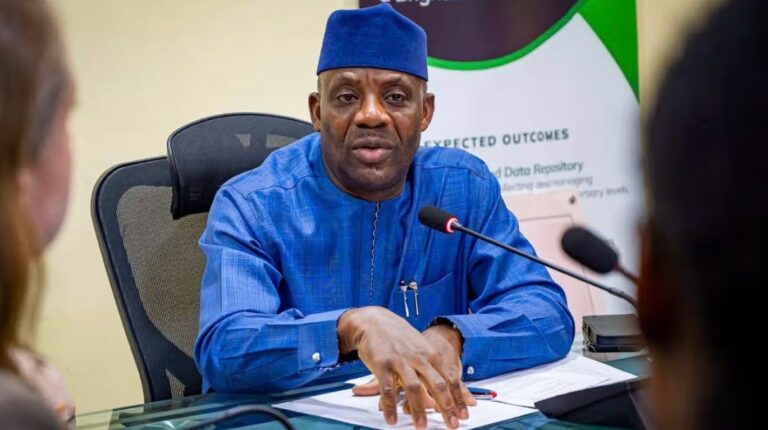
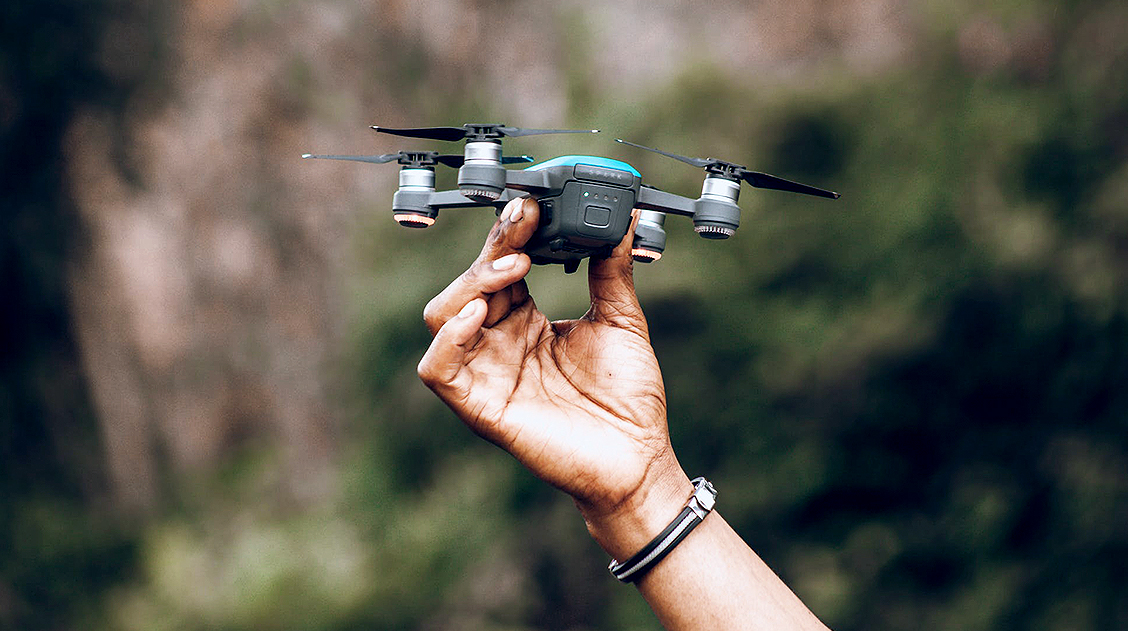
The Imo State Commissioner for Education, Prof Bernard Ikeagwuoha, has disclosed that the state now produces both drones and android phones at the Imo digital city.
Prof Ikeagwuoha, who represented Governor Hope Uzodimma at the International Conference organised by the Institute of Educational Leadership Practitioners of Nigeria (IELPN), which was held yesterday in Owerri, the Imo State capital, revealed that the Imo digital city now produces drones and android phones and that the government is currently building the largest computer village in Africa.
Speaking on the theme of the conference: “Leading Education in an AI-Driven World for Skills, Employability, Ethics and Sustainability”, he said every generation experiences a technological revolution and in this Al era the youths are the beneficiaries because it is transforming every facet of human endeavours. Every student, today, requires digital competency. Students must have the ability to solve problems. We have the largest digital city in Nigeria. We are already producing Drones and Android Phones in the Imo digital city. We are building the largest computer village in Africa, the Imo State government in Al technology.”
He added, “There is no family in Imo State that doesn’t have at least one graduate. Imo State has the highest literacy rate in Nigeria because in Imo State, education is an industry and it was for this reason that Governor Hope Uzodimma invested massively in the Imo Digital City and now in the Computer Village”.
Prof Ikeagwuoha urged Nigerians to embrace and domesticate artificial intelligence for national development.
Also, the Keynote Speaker, Asheesh Srivastava, a Professor, Higher Education Policy & Dean, Academic & ResearchInter University Centre for Teacher Education, Banaras Hindu University (IUCTE-BHU), said that in the 21st century, technology should not be about competition and India and Nigeria should collaborate in advancing technology.
He also said that technology is just a means and not an end in itself as teachers remain at the driving seat.
Other News
“India and Nigeria have a lot of things in common and can collaborate in education technology. In the last one and half decades India has focused on technological advancements. We have information and communication technology and education policy. Our policy is focused on the extensive use of technology in all facets of the country’s endeavour. I think that Nigeria can also adopt a similar national and educational policy. Technology is a means and not an end. The end should be decided by the teachers who are on the driving seat. This is why I said that the Al is the machine and the teachers are the drivers.
Earlier, President of the Institute, Prof Sunny Daniel Osaat, said, “This year’s conference is titled “Leading Education in an Al-Driven World for Skills, Employability, Ethics and Sustainability” is not only apt but also timely, demanding how education leaders can guide
educational institutions to provide the best to the individuals and national development, and make the recipients globally relevant. For any institution and entire educational system to be so relevant, the system should be built on four pillars such as Skills Al. As an automating routine, the skills must be based on critical thinking, creativity, problem-solving, digital and Al literacy becomes vital for educational development.
Employability education should be able to produce employable graduates and jobs creations. This means curriculum reform must align with existing industries, entrepreneurship, and others
applying Al tools.
Continuing, he said, “We use this conference to call on education leaders and Al stakeholders to rethink and redesign education with the use of Al to lead teaching and learning systems that can produce relevant skills and employable citizens with good ethical background for the present and future generations.”
The Registrar/CEO of the Institute, Dr Taiwo Olufumilayo Olusa, in her welcome address, said Al is reshaping education and leadership and that it is the duty of educators to use responsibly for the benefit of humanity.
“Our task is to use it responsibly and ethically to improve skills, employability, and sustainability. We look forward to presentations, discussions, research sharing, and practical ideas. I welcome all our participants from far and wide”.