Follow Us on Google

…Only 27% of 8m target vaccinated in Lagos
By Doris Obinna
The Lagos State Government has raised worry over the number of unvaccinated residents of the state against COVID-19 in the state. It has, therefore, advised those who are yet to be vaccinated to go and do so because COVID-19 is not yet over as some people think.
The concern was expressed at a two-day advocacy meeting held in Lagos recently, with journalists to promote the COVID-19 vaccination uptake, immunisation and nutrition among children under two years in the state.
The meeting, which brought journalists across all platforms: print, radio, television and the new media was organised by the National Orientation Agency (NOA) Lagos State in collaboration with the United Nations Children’s Fund (UNICEF).
The state Immunisation Coordinator, Ministry of Health, Dr Olubunmi Akinlade, who attended the event, spoke on the COVID-19 vaccination update in the state. She said that despite Lagos State remaining the epic centre of COVID-19 in the country, just only about 27 per cent of eight million adults targeted for vaccination have been vaccinated so far.
According to her, many people still don’t see the reason they should get vaccinated despite aggressive education that the COVID-19 vaccine is not only safe but also saves lives.
She said: “Some take only the first dose of the vaccine and never bother to take the second or third doses. So you see, it it is necessary to be fully vaccinated. The target by the state is to vaccinate 69,000 people daily based on the eight million targets but the high reluctance of people to get vaccinated is greatly slowing down the exercise.
“Only about 20,000 to 30,000 people present themselves for vaccination each day and such a figure is not encouraging. More so the virus is still around and some people contract it and die without showing the symptoms.”
Also, Director, National Orientation Agency, Lagos State, Dr Waheed Ishola, who spoke on the aim of the meeting, said there is a huge concern over the continuous reluctance of Lagosians to present themselves for COVID-19 vaccination, saying the development is not acceptable for a state considered to be the epicentre of the disease in the country.
According to him, both NOA and UNICEF believe so much in the role the media can play in bringing this issue and others that formed the discussion at the advocacy meeting to the front burner to get all the stakeholders to live up to their responsibilities.
He said: “The media can educate particularly the general public on this public health concern and the huge importance of having healthy people to the socio-economic development of a country. What people read, what they listen to on radio and watch on TVs’ changes their behavior.
“Behavioural change is not something that happens like that; you need to constantly drum it into people’s ears. By doing so, they become aware and think of ways to change their attitude.
“You know, there are early adopters who want to do things immediately they hear of it and there are also late adopters, who would want to wait. Those ones would want to sit on the fence. Also, there are people up till now who have not taken COVID-19 vaccine because of the rumours and negative narratives they heard.
“They’re waiting for those that have taken it to die, so these are the things we need media practitioners to help publicise so that these set of people should know that COVID-19 vaccines is safe and accessible.
“It is also important for media practitioners to speed up with what is happening in terms of vaccines uptake and to increase especially the uptake of COVID-19 vaccines because majority of people out there are thinking that COVID-19 is a done deal but it is not.
“From evidences across the world, COVID-19 has come to stay so we need to protect ourselves by practicing those non pharmaceutical interventions, which are regular hand washing, covering of the mouth when sneezing, keeping your distance from people and using your facemask when in an enclosed space etc.
“Meanwhile, we record death every day, but because most often, people are not interested to find out what happened or caused the death of their loved ones , it is also a challenge in this our clime. We need to be careful and take extra care because there are things that when we do them constantly we avoid a lot of illnesses especially proper hand washing; a lot of us have forgotten about it.
“COVID-19 vaccines are still available in all primary healthcare centres, people are free to walk in there. If you have not taken COVID-19 vaccines before now, you are free to walk in and take it, if you have taken before, go in with your card and take your second dose and if you have completed your doses, go there and take you booster dose, the COVID-19 vaccines is free for everyone.
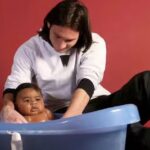
“Also, we encourage our women to go for their routine immunisation, because as we all know, the first 1000 days of a child’s life determines how that child would be in future. Most of our mothers especially those in rural areas do not know that it is important to complete all the doses of the child’s immunisation for the child’s survival and again, they do not know the importance of nutrition in a child’s life.
“So we are encouraging our mothers through the media because when stories are written around all of these, people would begin to understand the importance of these issues. Lactating mother must ensure that they exclusively breastfeed their children.”
He reiterated the importance of exclusively breast feeding a child for six months for both working and non working mothers. He disclosed that if the child takes all the available immunisation, it would prevent the child from contracting vaccine preventable diseases. According to him, mothers must best believe that the complete immunisation doses for the child guarantees the survival of the child or so.
He further said: “And for expectant mothers, attending antenatal is part of the pregnancy journey because that is where the sensitisation begins. There, you are told the state of your health and that of the child in your womb. You’re also told to take good nutrition that would help both you and the child to effectively develop.
“UNICEF cannot do all the sensitisation alone. That is the reason for the workshop so that the media can put it out there in the public domain, publicise these information to the public so that the people can appreciate the knowledge of all of these.
“When stories are written around these issues, people will begin to accept the fact, especially those who have not taken COVID-19 vaccines at all, while those who have taken would want to complete their doses.”