Follow Us on Google

By Uche Usim
With cyber criminals becoming more sophisticated in their nefarious activities, the Central Bank of Nigeria (CBN) is responding by tightening the screws on Nigeria’s financial identity system.
To this end, it has rolled out stricter Bank Verification Number (BVN) rules aimed at shutting out fraud and cementing trust in an increasingly digital banking landscape already flooded with old and budding cyber rogues.
From May 1, new limits on enrollment, data changes and system access will take effect and marks a shift from rapid expansion to tighter control.
The flaunts a clear priority of securing the system before scaling it further.
It prioritises security, traceability and accountability as digital finance deepens across the economy.
For the apex bank, the message is telling the public that the era of loosely managed identity data in financial transactions is over.
The policy thrust is captured in a new regulatory circular titled “Addendum to the Revised Regulatory Framework for Bank Verification Number (BVN) Operations and Watchlist for the Nigerian Banking Industry 2021.” The document sets out stricter guardrails for enrollment, data modification, and institutional access, while introducing real-time monitoring tools to flag suspicious activity.
The new CBN circular signed by the CBN Director of the Payment System Policy Department, Musa Jimoh, is expected to further help banks and other financial institutions maximise the gains of BVN, especially promoting a stable financial system.
The apex bank reiterated that enrollment for the BVN be limited to individuals aged 18 and above, while amendments to phone numbers linked to a BVN will be restricted to a one-time change only.
Financial Institutions are by the new rule mandated to establish and maintain a temporary watchlist for BVNs implicated in suspected fraudulent transactions reported by a financial institution.
“A BVN may remain on this temporary Watchlist for a maximum period of twenty-four (24) hours. During this period, the BVN owner shall be contacted to clarify the identified transaction(s).
Enrolment for BVN is restricted to individuals who have attained the age of eighteen (18) years and above. Amendments to phone numbers linked to a BVN shall be allowed only once,” the statement read.
Reinforcing a critical financial backbone
Since its launch in 2014, the BVN has evolved into a foundational pillar of Nigeria’s banking system. Designed to assign a unique biometric identity to each customer, the system has helped reduce fraud, streamline Know-Your-Customer (KYC) processes, and improve interoperability across financial institutions.
Today, the BVN database, managed by the Nigeria Interbank Settlement System (NIBSS), covers tens of millions of Nigerians and serves as a unifying identity layer across banks, fintechs, and payment service providers.
Data from NIBSS shows that BVN enrollment has climbed to 68.59 million users, reflecting steady growth in financial inclusion and digital banking adoption. From 51.9 million in 2021, the figure rose to 56 million in 2022, 60.1 million in 2023, and 63.5 million by the end of 2024, before accelerating further in 2025.
This rapid expansion, however, has also heightened risks.
Fraudsters have increasingly targeted identity systems, exploiting loopholes such as frequent phone number changes, weak verification protocols, and delayed fraud detection mechanisms. The CBN’s latest intervention is therefore aimed at closing these gaps without undermining access to financial services.
What the new rules say
Under the revised framework, BVN enrollment is now strictly limited to individuals aged 18 and above, aligning identity registration with legally recognized adulthood.
More significantly, the apex bank has imposed a one-time limit on phone number changes linked to a BVN, a move designed to curb identity manipulation.
The circular states: “Enrolment for BVN is restricted to individuals who have attained the age of eighteen (18) years and above. Amendments to phone numbers linked to a BVN shall be allowed only once.”
Another key feature is the introduction of a temporary watchlist mechanism for suspected fraudulent transactions. Financial institutions are now required to flag and isolate BVNs linked to suspicious activities for a maximum period of 24 hours, during which the customer must be contacted for clarification.
“A BVN may remain on this temporary Watch-list for a maximum period of twenty-four (24) hours. During this period, the BVN owner shall be contacted to clarify the identified transaction(s),” the CBN stated.
This measure, regulators say, strikes a balance between vigilance and fairness, allowing banks to act swiftly while giving customers an opportunity to explain flagged transactions before further action is taken.
In addition, access to BVN databases has been tightened. Only CBN-licensed financial institutions will be granted routine access, while the apex bank retains discretionary authority to approve exceptions under strict legal conditions.
“Access to the BVN databases shall be exclusively granted to Central Bank of Nigeria (CBN) licensed financial institutions… the Bank reserves the right to approve access… in extenuating circumstances,” the circular added.
A broader anti-fraud architecture
The BVN reforms are not coming in isolation. They are part of a broader regulatory push by the CBN to modernize Nigeria’s financial surveillance systems.
Just days before issuing the BVN addendum, the apex bank rolled out new guidelines titled “Baseline Standards for Automated Anti-Money Laundering (AML) Solutions for Financial Institutions in Nigeria.”
The objective is to embed automation, real-time analytics, and standardized compliance tools into the financial system, making it harder for illicit transactions to go undetected.
Together, these measures represent a layered defense strategy: identity verification through BVN, transaction monitoring through AML systems, and institutional accountability through stricter access controls.
Cardoso’s stability agenda
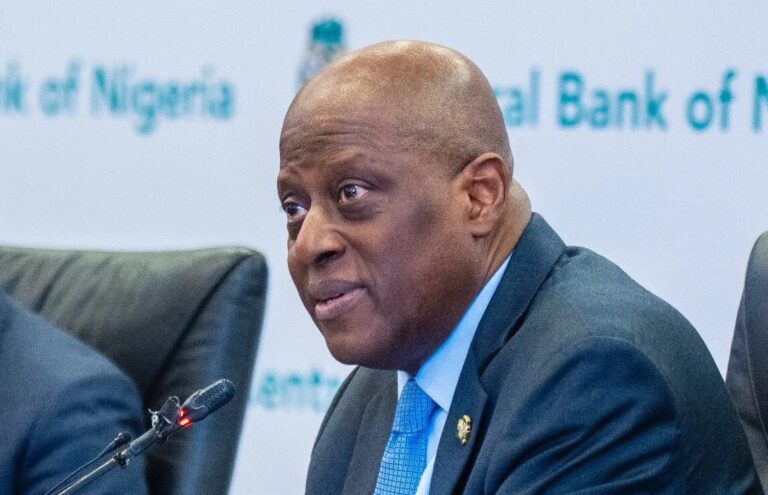
Under the leadership of Olayemi Cardoso, the central bank has consistently emphasized financial system stability as a core mandate.
Cardoso has framed regulation not merely as enforcement, but as a “duty of care” to millions of Nigerians who rely on the banking system for savings, payments, and investments.
According to him, effective regulation must go beyond policy documents to include financial literacy, dispute resolution mechanisms, and protection of customer rights, particularly in areas such as privacy, confidentiality and transaction integrity.
The BVN reforms reflect the philosophy of strengthening the system while ensuring that legitimate users are not unduly penalized.
Analysts weigh in
Other News
Industry stakeholders have largely welcomed the new measures, describing them as timely and necessary in an increasingly digital financial landscape.
President of the Bank Customers Association of Nigeria, Dr. Uju Ogubunka, noted that the temporary watchlist mechanism enhances real-time monitoring and rapid response.
By introducing a short-term flagging system, banks can quickly isolate suspicious transactions without resorting to prolonged account restrictions that inconvenience customers.
Other analysts argue that limiting phone number changes is particularly crucial, as fraudsters often exploit SIM swaps and repeated updates to hijack financial identities.
The age restriction, meanwhile, aligns BVN enrollment with legal and contractual capacity, ensuring that registered individuals can be held accountable within the financial system.
Expanding access with the NRBVN dimension
Even as it tightens controls, the CBN is simultaneously expanding access through the Non-Resident BVN (NRBVN) initiative, a policy aimed at integrating Nigerians in the diaspora into the domestic financial system.
Launched in Abuja, the NRBVN allows Nigerians living abroad to obtain a BVN remotely, eliminating the need for physical presence in the country.
For Cardoso, the initiative is both an inclusion strategy and an economic lever.
“Over the past year, our policy frameworks have undergone extensive refinements. The introduction of the willing buyer, willing seller regime and market reforms are notable examples,” he said.
He added: “With the introduction of NRBVN and complementary policy measures, we are optimistic about achieving our ambitious target of $1 billion in monthly remittance flows”
The numbers already suggest progress. Official remittance inflows rose from $3.3 billion in 2023 to $4.73 billion in 2024, reflecting improved confidence in formal channels.
Diaspora as a financial force
Remittances remain one of Nigeria’s most resilient sources of foreign exchange, often outperforming foreign direct investment and aid flows.
According to Aminu Gwadabe, President of the Association of Bureaux De Change Operators of Nigeria, over 1.24 million Nigerians live abroad, with about half residing within Africa.
These migrants send billions of dollars home annually, supporting household consumption, education, healthcare, and small businesses.
Global data reinforces this trend. In a report on diaspora finance, Mohamed Touhami el Ouazzani noted that Africa received $90 billion in remittances in 2023 alone.
“Remittances may be measured through the movement of money, but their real impact is measured in lives changed,” he said.
“Families with a breadwinner working abroad depend on these funds… They also build the foundation for broader financial stability.”
For Nigeria, integrating diaspora flows into the formal banking system is critical, not just for liquidity, but for macroeconomic stability.
Balancing inclusion and security
The dual approach, tightening domestic controls while expanding international access, reflects a delicate balancing act.
On one hand, stricter BVN rules may introduce friction for some users, particularly those accustomed to flexible data updates. On the other, they are essential for building trust in a system increasingly targeted by sophisticated fraud networks.
The success of the reforms will depend on implementation.
Banks must invest in customer communication, ensuring that users understand the new rules and how to comply with them. Regulators, meanwhile, must maintain transparency and responsiveness, particularly when customers are flagged under the watchlist mechanism.
Technology and the future of identity
Beyond immediate policy changes, the BVN reforms point to a broader evolution in how identity is managed in Nigeria’s digital economy.
As fintech adoption grows, identity systems are becoming the backbone of everything from mobile payments to credit scoring and digital lending.
A secure BVN framework could unlock new possibilities, enabling seamless onboarding, reducing transaction friction, and supporting innovation across the financial ecosystem.
However, this potential can only be realized if the system remains trusted.
Data protection, cybersecurity, and institutional accountability will therefore remain central to the CBN’s regulatory agenda.
The future
The tightening of BVN rules marks a new phase in Nigeria’s financial system development, one defined less by expansion and more by resilience.
By addressing vulnerabilities in identity management, analysts said the CBN is laying the groundwork for a more secure, efficient, and inclusive financial ecosystem.
At the same time, initiatives like the NRBVN demonstrate a forward-looking strategy, leveraging technology to connect Nigerians globally while strengthening domestic financial stability.
As Cardoso put it, the journey is just beginning. “The NRBVN is not just a tool; it is a bridge between Nigeria and its global citizens,” he said.
In the months ahead, the effectiveness of the new BVN framework will be tested. not just in policy terms, but in real-world outcomes: fewer fraud cases, faster dispute resolution, and greater confidence in the banking system.
If successful, it could redefine how identity, security, and inclusion intersect in Africa’s largest economy, turning the BVN from a regulatory requirement into a cornerstone of digital trust.