Follow Us on Google
By Enyeribe Ejiogu
With the general elections just weeks away, prospective voters across the country are engaged in last minute canvassing to attract more votes for their preferred candidates.
Other members of the intelligentsia, President of Church Growth Ministries International, Dr Bola Akin-John, whose calling is to groom pastors and other ministers of the gospel on how run effective Christian ministries that can impact the nations for Christ, shared his thoughts on how deficiency in governance is affecting people in rural Lagos.
He also sheds light on why the cashless policy will not curb vote-buying, arguing that the politicians in connivance with sympathetic bank officers have already cornered the bulk of new notes released by the Central Bank of Nigeria, CBN, thereby creating the nationwide new notes crisis in the country.
As a religious leader and a resident of Lagos, how do you feel about the state of rural Lagos?
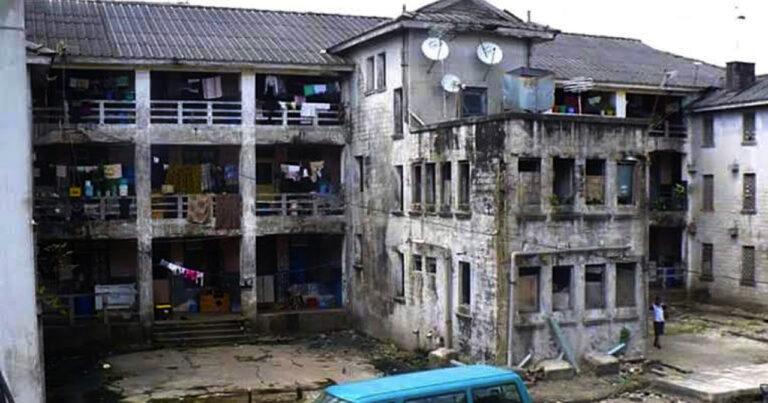
Some months ago, I decided to focus on the spiritual life of people. I took that decision because, somehow I had become tired of talking about government and the attitude of its officials. You don’t do governance on the pages of newspaper or television. The activities of government must produce positive benefits for the people. That is why I am not happy with the way things are today in parts of rural Lagos. And it is not just Lagos State alone. When I go to Oyo, Osun, and many other states, I see the same situation in the rural areas. However, the case of Lagos is different because it is claimed as the Centre of Excellence, that is moving to become a mega city with the kind of infrastructure you would expect in such a modern big metropolis. I have seen posters that proclaim, “A Greater Lagos Rising.” Yet, you find several neglected rural communities in Lagos, the trumpeted Centre of Excellence. Why should it be so? As at today, we have three tiers of government – national, state and local governments. The local government has been rendered powerless and useless. The states have usurped the functions of the local governments and taken control of their statutory allocations from the Federation Account, and the state governors utilise the funds due to local governments anyway they please, and they cannot be held to account. It is sad and indeed a terrible situation. Considering the case of Alonge Island-Isaja, which is at the back of Obadore, in Alimosho LGA, just off the Isheri-LASU Road, you see clear evidence that it is a neglected area that is a water-logged for long periods. When the LASU-Isheri Road was being constructed, the exit point where water from the natural canal in the area flows into the lagoon was blocked during the construction of a major bridge on that road. After the construction work was completed, the exit channel was not re-opened the way it used to be. Now, that is the cause of the flooding that drives residents away from their homes every rainy season. What should be done is that the local governments should be empowered with clear constitutional provisions and real statutory allocations to deal with local problems. It is good that the Lagos State government is building bridges, the Blue Line train service and all that, but the rural areas where the majority of the people live have been neglected for decades since the creation of Lagos as a state in 1967. People are living in the areas which are neglected in the scheme of governance. When I came to Lagos in 1976, whenever rain fell you had to wear rain boots to go out, not shoes. Till today, there are still places like that in Lagos. In such places, no development in terms of tarred roads or good drainage, has taken place. Meanwhile, people live in those places, they come out and strive to earn a living. In the specific case of Alonge Island-Isaja, and as in some other rural parts of Lagos that are prone to flooding and are water-logged for many weeks or even months, you find that the people have to walk on wooden platforms to reach their homes or to go out from the communities. Again, take the case of Baruwa, also in Alimosho, there is a road to link the area to the four-lane Isheri-LASU road. When Bola Ahmed Tinubu was governor, during his first term which was between 1999 and 2003, the government began the work but soon after corruption took over and it was abandoned. There is another road in Ayobo that can link you to Agbara Estate in Ogun State. The Lagos State government did not work on the road. If it had been done, it would have opened up the area and brought vital socio-economic development to that part of rural Lagos. Today, almost everyday, there is heavy traffic from Igando to Isheri and Iyana Ipaja. If the government had done a number of the side or link roads in the rural parts of the metropolis to connect to the main roads, this would have substantially reduced the traffic on the main roads, as motorists would have taken advantage of the link roads to reach their destinations, avoid terrible traffic on the axis and save the man-hours lost in bad traffic. When Akinwunmi Ambode became governor in 2015, God used him as an instrument to construct most of the roads in the old Alimosho Local Government Area. He created a beautiful road network in Alimosho LGA. I learnt that constructing the roads in Alimosho was one of the “sins” he was said to have committed for which he was denied the second-term ticket to contest as governor in the 2019 election. He used direct labour under the Lagos State Public Works Corporation (PWC), all the way to where African Independent Television (AIT) is located. Ambode built solid roads and opened up Alimosho. What he did offended a notable political person who had previously considered Alimosho road projects as his private fiefdom. Ambode did not award the contracts to the notable politician instead he empowered the Lagos State Public Works Corporation (a direct labour agency of the government to do the excellent job done.) So, the politician was angry and lobbied the powers that be, to truncate his second term ambition. In the rural parts of Lagos metropolis, people are still trying to build their houses in these water-logged areas, though there are no roads. Yet, the government is so oppressive. Even when the people levy themselves to construct the roads in their areas, yet the government will still not allow them do it, instead its officials will demand that money raised should be given to the government to execute the project. That is clear corruption because such money would be embezzled. This is a clear minus for the government.
You mentioned that state governments have taken over the responsibilities of the local governments. How do you feel about the fact that the constitutional amendment to achieve fiscal independence of the local governments from the state governments is yet to be passed by the state assemblies?
Again, the problem is corruption. The local governments should be allowed to function and to control their statutory allocations. It is the greed of the state governors that drives them to want to control the statutory allocations of the local governments from the Federation Account. The local governments are closer to the people. A lot of the things done by state governments are better suited to be handled at the local level. When the local governments are allowed to function properly as envisaged by the 1976/77 local government reform programme, then development will spread to the local government areas. At that time, chairmen of local governments were elected on non-party basis for a period of three years, during the military regime headed by Olusegun Obasanjo as Head of State. It was only in 1979 that they were elected on party basis, and that was also when the crippling of the local governments began because the state governors and their parties started to hand-pick loyal party members to contest as local government chairmen. Personal competence, capacity and track record were no longer given premium weight; it was more important to be loyal party member. It became a position to be used to settle party members, who would not challenge the governors over the issue of local government statutory allocations from the Federation Account, which they began to control through the state and local government joint account. We need a true rebirth of leadership, and restructuring, which will create true fiscal federalism and completely separate the local governments from the financial control of the states. I do not see anything wrong in chairmen and councillors of local governments coming from two or three different parties unlike what you have under the current arrangement, where only the party in control of the state government will rig the election through the so-called State Independent Electoral Commissions, which have been fully compromised. Effective development of the rural areas can only happen when the local governments become financially free from state government control and there are stringent constitutional provisions that would allow people in the local government areas to hold their chairmen and councillors accountable to them. This can be done by having provisions in the constitution for the recall of the elected chairmen or councillors, through signed petitions by the electorate in the area demanding for the recall.
In barely two weeks, the general elections will start on February 25 with the Presidential and National Assembly elections. Looking at the present state of affairs, in terms of the economy and insecurity, and considering that you interact with people, do you get the feeling that the people are really eager to see change in the political leadership and direction of the country?
My simple assessment is that people are only praying for change, they want to vote, but they are afraid that their votes will not count. They believe that some presidential candidates have enormous financial muscle to influence the outcome of the election. They have the dollars and naira to rig the election and get into office. Of course, I quite agree that the Independent National Electoral Commission, INEC, has been bringing some credibility into the electoral process through the introduction of technological safeguards and reform of the physical processes that govern the elections. I want to commend INEC for the strong efforts it is making to enforce provisions of the amended Electoral Act, which would allow the use of the Bimodal Voter Accreditation System (BVAS) for electronic transmission of accreditation data of voters and the result of the voting done at the polling unit straight to the server at INEC headquarters. This would remove the incidence of ballot box snatching and stuffing with fake thumb-printed ballots as well as snatching of election result sheets during transfer from polling units in the ward to the local government collation centres and onward to the state collation centres. Going by the outcome of some recent elections conducted under the new Electoral Act in Anambra, Osun, Ekiti, Edo and several by-elections across the country, I earnestly hoping that INEC can get it right this time around in the general elections. We want a break from the past.
Do you think that the decision of the Central Bank of Nigeria, CBN, to redesign some denominations of the Naira (200, 500 and 1000) will prevent vote-buying, the age-old practice of politicians and their parties?
If the CBN redesigned the currency and is also implementing policies that restrict availability of the new notes, then it is going about the objective in the wrong way. It has so far only caused pain and anguish for Nigerians, because the same politicians have been able to circumvent the measures put in place by using bank managers and branch operations officers who are their sympathisers to obtain and amass the new notes. Only the masses are suffering from the severe scarcity of both the new and old notes. The recent discoveries by CBN inspectors that large volumes of new notes were stocked in the strong rooms of the bank branches without being dispensed through the ATM or even across the counter will tell you the extent some unscrupulous individuals would go to defeat every good government intention. The politicians are still able to get large quantities of the new notes for the purpose of rigging the election. Was it not the Kaduna State governor, Nasir el-Rufai, who revealed after the All Progressives Congress (APC) governors met with President Muhammadu Buahri, that one of them, got N500 million of the redesigned notes. If that particular governor could get such humongous amount at the same time the CBN was trying to restrict withdrawal of the new notes, then other major political actors would equally source the new notes in millions through sympathetic bank managers for the purpose of vote buying. In Lagos State, for instance, with the poverty and hunger in the land, which poor person will be given N10,000 and the poor person would reject it in Lagos, for instance? I seriously doubt that the CBN policy will prevent vote buying. Only the masses are suffering, who are now having to buy Naira from the POS operators at very exorbitant prices. Of course, the CBN has explained that the restriction on weekly withdrawals per person is part of the cashless policy that will compel people to utilise electronic funds transfer channels, however, there are transactions that definitely require cash. For example, will the woman that sells tomatoes and pepper in the market give you POS machine to pay? Or the conductor of a commuter bus going from Ikotun to Egbeda use POS machine to collect his money from passengers? Or the woman operating a kiosk nearby, where you can buy soft drinks and biscuits?