Follow Us on Google
From Ajiri Daniels, Abuja
Consumer advocates, health professionals, and policymakers on Thursday called for urgent regulatory reforms to eliminate added sugars in infant foods, warning that current standards may be exposing Nigerian babies to avoidable long-term health risks.
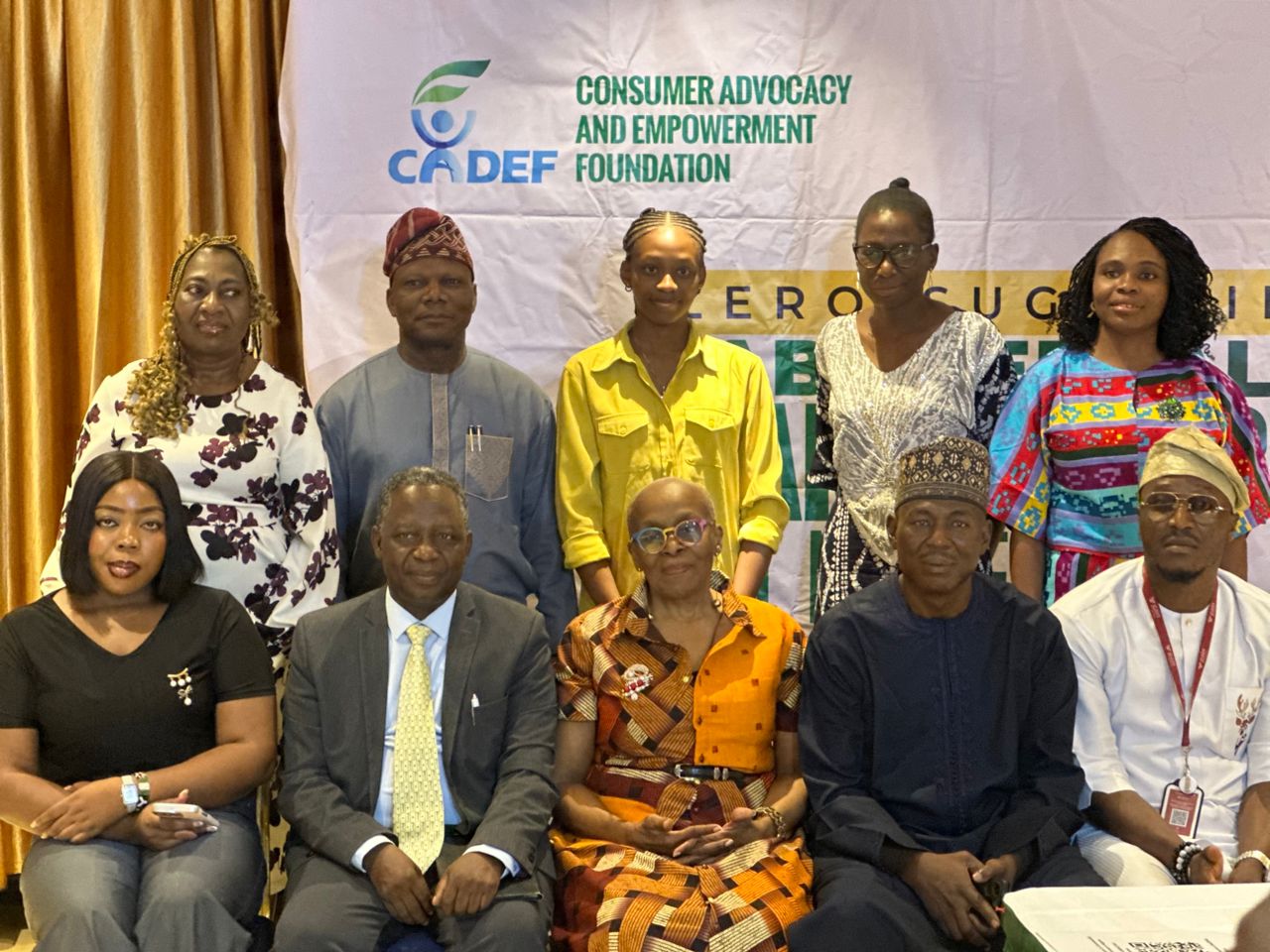
The call was made at a high-level stakeholders’ convening in Abuja organised by the Consumer Advocacy and Empowerment Foundation (CADEF) in partnership with Public Eye, where new findings on sugar content in baby foods sparked concern among participants.
At the centre of discussions was evidence showing that several infant cereals and formulas sold in Nigeria contain notable levels of added sugar—often not clearly communicated to consumers due to complex labelling and marketing practices.
Opening the session, CADEF’s Executive Director, Chiso Ndukwe-Okafor, warned that “African babies are being fed sugar Europe would never accept,” highlighting disparities in product formulation across markets.
She revealed that recent research by the foundation found “over four grams, almost five grams of sugar” in certain baby foods, particularly cereal-based formulas. However, she clarified that manufacturers are not currently violating existing laws, as these products fall within Nigeria’s regulatory standards, which are based on longstanding global benchmarks.
“They’re meeting the current regulations, which is based on the Codex standards from over 30 years ago,” she said, stressing that the real issue lies in the outdated nature of those standards.
CADEF maintained that early exposure to added sugars can shape children’s taste preferences and increase their vulnerability to obesity, diabetes, dental disease, and other non-communicable conditions later in life. This position aligns with guidance from the World Health Organization, which advises against the inclusion of added sugars in infant foods.
While acknowledging that the sugar levels observed fall within Nigeria’s current Codex-based framework, the foundation argued that the standard is increasingly inadequate to safeguard infant nutrition, underscoring the need for urgent regulatory review.
The organisation emphasised that its concern is specifically with sugars deliberately added as sweeteners or enhancers, not naturally occurring sugars found in ingredients such as grains.
Participants at the convening called on key regulatory bodies—including the Standards Organisation of Nigeria (SON) and the National Agency for Food and Drug Administration and Control (NAFDAC)—to update national standards for infant cereals and enforce clearer, more transparent labelling requirements.
CADEF stressed that every parent deserves access to clear and accurate information when making nutritional choices for their children, adding that Nigerian consumers should benefit from the same level of product integrity and protection available in other parts of the world.
Among its key recommendations are the introduction of mandatory front-of-package labelling that clearly identifies and separates sources of sugar, as well as policy measures to drive reformulation toward zero added sugar in infant foods.
Other News
“We need front-package labeling in simple language that separates the source of sugar on each product,” Ndukwe-Okafor said, noting that regulators and paediatric stakeholders present at the meeting expressed support for reform.
Contributing to the discussion, Mr. Adeyemo Adebayo of the Nutrition Division at the Federal Ministry of Health emphasised that effective policy must be matched with sustained public advocacy to achieve real impact.
He stressed that health education should extend beyond formal legislative processes, recommending engagement with traditional institutions and religious leaders to ensure that key messages—such as the fact that infants do not require added sugar—reach grassroots communities.
Also speaking, Mr. Jubril Mohammed, representing the Standards Organisation of Nigeria (SON), outlined the agency’s role in setting national food standards, emphasising that its mandate is to facilitate consensus rather than impose unilateral decisions.
He explained that standards are developed through a deliberative process involving multiple stakeholders, where proposals—such as removing added sugar from infant formulas—must be backed by evidence and broad agreement. He added that while timelines may vary, standards review processes typically take up to a year.
From the clinical and child health perspective, Dr. Anthony Bawa, representing the Paediatric Association of Nigeria (PAN) President, Petronila Tabansi, called for stronger multi-sector collaboration to address the risks associated with added sugars in infant foods.
He emphasised the need to engage academia, health ministries, and professional bodies, noting that organisations such as PAN have a key role in supporting advocacy tied to the well-being of children and mothers. He also highlighted the importance of National Assembly involvement in developing effective legislation.
Other stakeholders, including representatives of the Standards Organisation of Nigeria and the Federal Ministry of Health, jointly underscored the health risks associated with added sugars in infant meals, reinforcing the urgency of coordinated regulatory and public health responses.
The convening also highlighted global precedents. In India, for example, sustained advocacy and regulatory pressure have led manufacturers to introduce multiple no–added-sugar variants of infant formulas, demonstrating that change is both feasible and achievable.
As part of immediate guidance, advocates urged families to limit processed foods, avoid sugary drinks and sweets for young children, and prioritise natural alternatives such as fruits.
“Don’t give children soft drinks, period. Don’t give them sweets,” the CADEF director advised, recommending healthier options like bananas and mangoes.
The coalition announced plans to engage senior policymakers and the National Assembly with proposals to institutionalise stricter standards, including a zero–added-sugar benchmark for infant foods in Nigeria.
Stakeholders agreed that combining regulatory reform, industry accountability, and consumer education will be critical to protecting infant health and building a healthier future for the nation.