Follow Us on Google
By Damiete Braide
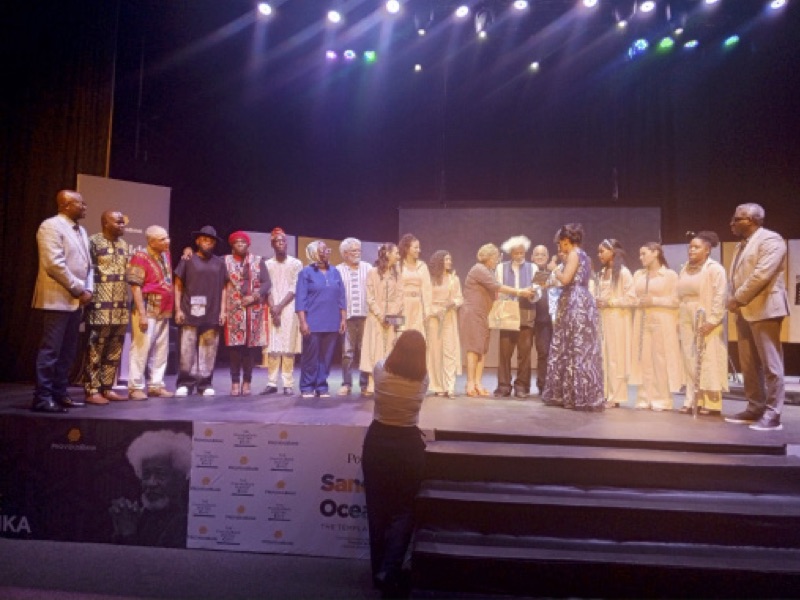
The air at Terra Kulture Theatre Arena in Lagos on March 21, 2025, was thick with rhythm, history, and poetry as the city celebrated World Poetry Day. This year’s event, themed “Poetry as a Bridge for Peace and Inclusion”, was a fusion of cultures, bringing together Nigeria and Cuba in a shared moment of artistic reflection.
The evening pulsed with the vibrant beats of samba and calypso, resonating with the trans-migratory rhythms that have linked the two nations for centuries.
Originally billed as Providus Bank Poetry Café: An Evening with Wole Soyinka, the event’s patron and Nobel laureate himself suggested it might have been more appropriately titled An Evening with Cuba, as the Latin American nation was the ‘Special Guest Nation’ for the 2025 edition.
With a gathering that included esteemed poets, musicians, and dignitaries, the night became a symbolic reunion of African descendants with their ancestral homeland.
The Cuban delegation, led by Ambassador Miriam Morales Palmero, joined Nigerian creatives and audiences in an artistic exchange that underscored the resilience of cultural memory.
The Lagos celebration adopted the sub-theme “Sand Dune and Ocean Bed: The Template of Dispersal”, a poignant reflection on the forced migration of Africans to the Americas during the Transatlantic slave trade and their artistic and spiritual return centuries later. With Cuba’s strong Yoruba heritage and shared historical ties, the night unfolded as a bridge of remembrance and renewal. The performances were a mesh tapestry of music and poetry, interweaving African and Afro-Caribbean influences. The Camarata Cortes, an all-female Cuban musical quartet, led by the director, Jose Luis Cortes, set the stage with their classical aesthetics blended with traditional calypso and samba rhythms. Their masterful wind instrumentals captivated the audience, transporting them to the heart of Havana.
As their melodies soared, poet and musician Emiliano Sardinas, clad in all white, took the stage. His voice, powerful and evocative, echoed the journey of his ancestors who had once crossed the ocean in chains but whose spirit had never been broken. In a moving act, he knelt in reverence, touching the Lagos soil as if in homage to those who had longed to return home but never could.
The Nigerian performances matched this depth of emotion. A Yoruba bata dance troupe opened the evening, setting the tone with traditional rhythms that spoke of ancestry and continuity. Poets Rotji Gokir and Yusuf Balogun (Aremo Gemini) explored the theme of displacement, their verses tracing the brutal voyages that had scattered African people across the world.
Chinelo Nworah and Kafayat Quadri continued this narrative, questioning the dreams that drive migration and whether the answers sought abroad are, in fact, already present at home. Guitarist and poet Tijani Usman enhanced his performance with a gripping audiovisual display, juxtaposing the agony of the Middle Passage with the triumphs of those who fought for freedom.
Evelyn Osagie closed the Nigerian segment with a piece that resonated with the weight of history, before the Cuban poets took over. Alex Pausides, his appearance reminiscent of the legendary Uli Beier or even Socrates, delivered verses in his native Spanish, each word steeped in the echoes of a displaced people. Edelmis Vega’s elegiac poem reminded the audience of life’s fleeting nature, while Ifa priest Israel Dominguez paid homage to the spiritual ties that continue to bind Nigeria and Cuba.
Against this artistic backdrop, Wole Soyinka delivered a powerful reflection on migration and displacement. He spoke not only of the transatlantic slave trade but also of more recent displacements, including the 1990 demolition of Maroko, a once-thriving Lagos community that was forcibly evicted to make way for modern development. He emphasised that, while migration could sometimes be voluntary, history had shown that it was often forced, with devastating consequences. Yet, he reminded the audience that cultural exchange, even when born from pain, could foster resilience and renewal.
The significance of the event extended beyond poetry. It marked the first year of the Second International Decade for People of African Descent, declared by the United Nations in December 2024. This decade, with its theme “People of African Descent: Recognition, Justice, and Development”, seeks to highlight the enduring struggles and contributions of African descendants worldwide.
Walter Akpani, Managing Director and CEO of Providus Bank, reflected on the journey of the poetry café, now in its sixth consecutive year of sponsorship. “Poetry is not just a nudge; it is a force of nature,” he said. “As shifting dunes and changing tides shape landscapes, so does poetry shape minds and foster unity.”
Ambassador Palmero, dressed in a fusion of Cuban and Yoruba attire, expressed deep gratitude for the honour bestowed upon Cuba. “This gathering is more than a celebration; it is a testament to the power of poetry to reunite lost kin,” she remarked. “Cuba and Nigeria share a history, a spirit, and a destiny.”
As the evening drew to a close, the audience was left with a profound sense of connection, a reminder that poetry, music, and history have the power to transcend borders. What began as a celebration of verse became a moment of cultural homecoming, proving once again that while displacement may scatter a people, art and memory will always bring them back together.