Follow Us on Google
By Damiete Braide
The Association of Nigerian Authors Lagos Monthly Reading for August brought together writers, poets and literary enthusiasts from different parts of the world for a wide-ranging conversation on the state and future of Nigerian poetry.
Held virtually via Zoom under the theme “Considering Contemporary Nigerian Poets,” the interactive session provided an opportunity for participants to examine how Nigerian poetry has evolved, the influence of African culture on literary expression, the emergence of spoken-word poetry, the changing expectations of readers and the implications of artificial intelligence for the creative process.
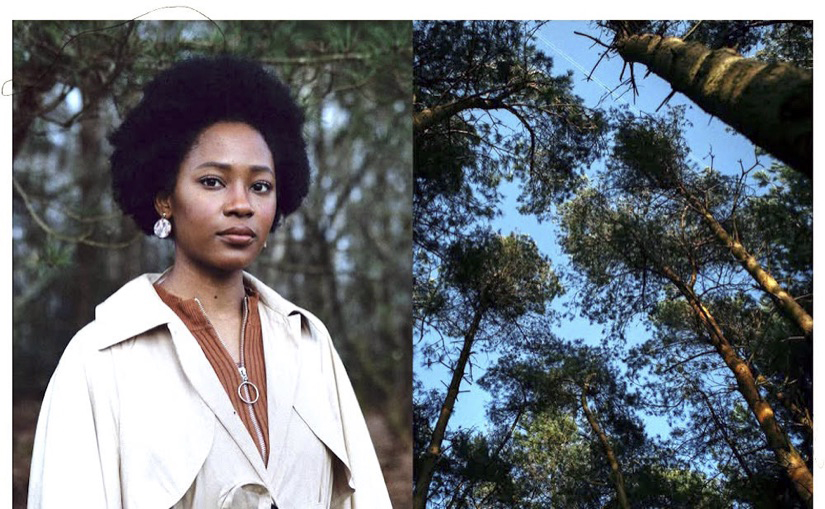
The session was moderated by Professor Chris Anyanwu, with Professor Tanure Ojaide and Theresa Lola serving as panelists. Dr Olatunbosun Taofeek, chairman of ANA Lagos, Dr Usman Oladipo Akanbi, president of the Association of Nigerian Authors, and poet Ogaga Ifowodo were among those who attended the programme. Dami Ajayi also reviewed Theresa Lola’s book during the event.
At the centre of the discussion was the question of what makes Nigerian poetry distinct and how contemporary poets can remain connected to their cultural heritage while responding to the realities of a rapidly changing world.
Professor Ojaide, reflecting on the development of Nigerian poetry, recalled the literary environment of the late 1960s and early 1970s, when writers such as Christopher Okigbo and other African literary figures commanded enormous attention among students and emerging writers.
He explained that, although the works of earlier African poets were respected, a group of young writers became increasingly interested in developing a form of poetry that was more deeply connected to African culture and experience.
According to him, literature is fundamentally a cultural production and poetry should reflect the culture and society from which it emerges. He pointed to the works of literary giants such as Wole Soyinka, Chinua Achebe and Ngugi wa Thiong’o as examples of writers whose literary identities could not be separated from their cultural backgrounds.
Ojaide said his exposure to African oral literature also influenced his understanding of poetry. Having been raised by his grandmother, he recalled listening to songs in the home that he considered deeply poetic and rich in imagination.
That experience, he said, contributed to a broader realisation among his generation that African traditional forms possessed sufficient artistic strength to provide a foundation for modern poetry.
He recalled how he and other writers, including Niyi Osundare, became interested in creating a poetry movement that would respect earlier literary figures without simply reproducing their methods.
For Ojaide, the goal was not to reject foreign literary traditions but to avoid making European or American traditions the sole measure of literary excellence. He argued that Nigerian poets should be confident enough to develop a recognisable literary voice rooted in their own experiences.
He maintained that the cultural background of a people enriches their poetry, just as folklore and traditional forms have contributed to poetry across different societies.
While acknowledging that times have changed and that contemporary writers now have access to social media and other digital platforms, Ojaide stressed that technological advancement should not lead poets away from their cultural foundations.
He also argued that poetry should not deliberately become obscure simply to appear sophisticated. In his view, good poetry can be simple, provided the poet is able to handle imagery, language and technique effectively.
The poet and teacher of poetry explained that the strength of a poem lies not only in what the poet says but also in how the poet says it. He contrasted this with approaches that make poetry unnecessarily difficult for readers to understand.
Ojaide said traditional African poets generally sought to communicate with their communities. Whether the tradition was Yoruba, Urhobo, Efik or another African culture, poetry historically had a relationship with the people for whom it was created.
That relationship, he suggested, remains important for contemporary writers who want their works to connect with readers.
He further cautioned that respect for earlier literary masters should not become an instruction for younger writers to imitate them completely. According to him, each generation inherits the achievements of those before it but must also find new ways of responding to its own circumstances.
Ojaide extended the argument to literary scholarship, questioning the tendency to place African poetry primarily within ancient European frameworks associated with thinkers such as Plato and Aristotle.
He argued that Africa had its own poetic traditions long before colonisation and that contemporary African writers should study, preserve and modernise those traditions rather than simply reproducing Western literary models.
For him, literature must evolve within the culture, society and experiences of the people who produce it. Although writers can learn from other traditions, their work should not become an instrument for elevating another culture at the expense of their own.
The discussion also addressed the rise of spoken-word poetry and its growing popularity among younger Africans.
Ojaide acknowledged spoken word as a legitimate form of poetry but distinguished it from what he described as literary poetry. He observed that contemporary social realities, including political and economic conditions, have created an environment in which many people use digital platforms to express themselves.
For writers who may find it difficult to publish traditionally, social media and other digital outlets provide opportunities to reach audiences directly.
He said spoken-word artists deserve respect for the work they are doing and argued that contemporary developments should be understood as products of their time. Rather than rejecting new forms, the literary community should broaden its understanding of what poetry can encompass.
Theresa Lola offered another perspective on the changing character of contemporary poetry. She noted that poets across the world have historically engaged political issues, citing the tradition of war poetry in the United Kingdom as an example.
However, she observed that contemporary younger poets increasingly combine political concerns with personal experiences, confessional writing and more lyrical approaches.
For Lola, this does not mean that younger African poets have abandoned the political concerns that preoccupied earlier generations. Rather, the themes are being approached differently.
She argued that human experience remains universal. Longing, grief, hardship and other emotions can resonate with readers regardless of where a poem is written.
She cited the continued relevance of Niyi Osundare’s “Not My Business,” which she studied while in secondary school in the United Kingdom, as evidence that poetry grounded in Nigerian experience can travel beyond its immediate cultural setting.
According to her, great poetry is capable of crossing geographical and cultural boundaries, while successive generations of poets can continue to reinvent the way familiar issues are expressed.
Lola also described poetry as a highly compressed artistic form that combines emotion, sound, rhythm and carefully arranged language to communicate what ordinary language may struggle to express.
She raised concerns about the growing number of people who describe themselves as poets, particularly in an era when digital platforms have made it easier for writers to bypass traditional publishing structures.
Rather than focusing solely on who qualifies to be called a poet, she said greater attention should be paid to strengthening the craft of emerging writers.
The digital environment, she observed, has reduced some of the traditional barriers to publication by allowing writers to present their work directly to audiences. However, this freedom also creates a responsibility to ensure that writers have opportunities to improve their skills, understand their craft and develop their work before publication.
She called for stronger pathways connecting writing, mentorship, development and publishing so that enthusiasm for poetry can translate into sustained literary growth.
The panel also reflected on the achievements of earlier generations of Nigerian poets. Lola suggested that the circumstances in which the first generation of prominent Nigerian poets worked were significantly different from today’s literary environment.
Their accomplishments, awards and influence reflected the historical period in which they emerged, making direct comparisons with contemporary writers difficult.
The conversation eventually moved to one of the most pressing questions facing contemporary writers: the future of poetry in the age of artificial intelligence.
Lola acknowledged that AI is now an unavoidable part of the creative and technological landscape. She recognised that some writers may use AI as a shortcut for producing work, while others may use it as a tool to assist with everyday tasks.
However, she stressed that writing goes beyond producing words or completing a manuscript. At its heart is the thinking process, the questioning, frustration, reflection, memory and emotional engagement that shape a writer’s individual voice.
She argued that artificial intelligence cannot replace the human experiences that give poetry its distinctive character. A machine does not possess a writer’s memories, personal history or emotional experiences.
Her concern was that excessive dependence on AI could encourage impatience among emerging writers. Instead of taking the time to develop their craft and discover their individual identities, writers may become too eager to produce and publish.
She also warned that AI-generated writing could lead to increasingly similar voices, particularly when emerging poets rely on existing successful styles rather than developing their own.
For Lola, the challenge is therefore not to reject AI but to establish clear boundaries around its use. Writers must determine what they are willing to allow technology to assist with and what aspects of their creative identity must remain distinctly their own.
The session also highlighted the broader social conditions affecting writers. Aj Dagga Tolar noted that literary production continues to face pressures and restrictions, arguing that writers cannot afford to remain disconnected from the realities surrounding them.
She challenged emerging writers, particularly those in the diaspora, to remain conscious of the conditions in which stories are produced. According to her, the absence of meaningful social transformation carries a serious literary consequence because many stories may remain unwritten.
The closing remarks came from Dr Olatunbosun Taofeek, Chairman of ANA Lagos, who commended participants and attendees for contributing to the discussion.
He disclosed that ANA Lagos was working towards a larger international literary gathering in Lagos, which it hopes to organise early next year. The proposed Lagos International Conference is expected to bring Nigerian writers from different parts of the world together for meaningful engagement on an annual basis.
The August reading ultimately reinforced the idea that Nigerian poetry remains a living and evolving tradition. Its future lies not simply in preserving the achievements of previous generations but in creating room for new voices, new forms and new technologies without losing connection with the cultural experiences that give the literature its identity.
The discussion demonstrated that contemporary Nigerian poetry was neither static nor isolated, having continued to negotiate between tradition and modernity, local experience and global readership, established literary forms and emerging digital expressions.
At its strongest, the conversation suggested, Nigerian poetry could embrace change without surrendering its cultural voice. It could also learn from other literary traditions without becoming dependent on them, use technology without allowing technology to determine its identity, and speak to contemporary realities while remaining grounded in the memories, languages, histories and experiences of the people from whom it emerges.
That balance might ultimately determine how the next generation of Nigerian poets is remembered, not merely for how closely they followed those who came before them, but for how courageously they created something of their own.