Follow Us on Google
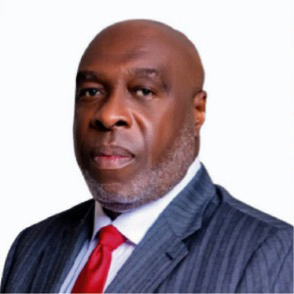
By Maduka Nweke
Chudi Ubosi, the Principal Partner of Ubosi Eleh & Co., a Nigerian firm of Estate Surveyors and Valuers, has a message for government at national and sub-national levels: make it easier for Nigerians to get land titles and ultimately develop the economy.
According to him, land title delays are keeping Nigeria’s wealth locked up as 90% of the country’s land cannot be fully used.
His firm, founded in 1991, has championed the need to free Nigeria’s land from title document horror.
In this interview, he spoke on land titling and other real estate-related matters.
He stated that Nigeria today sits on 927,000 square kilometres of land, and less than 10 percent of that land area has adequate, registrable, recognisable legal title. The implication is that the remaining 90 percent is just land that little or nothing can be done with.
Do you think the government should regulate real estate activities everywhere?
We need the government to begin to act everywhere, in every local government, in every state government. There should actually be, at a Director level, or even a Commissioner whose job is different from the Commissioner for Lands.
His job is to facilitate and issue title to land.
He should be given a target every year. Have 50,000 Certificates of Occupancy signed. Because for every one of us who gets those titles to their properties, it is almost like their passport to financial freedom. It means that even the land in the village is awakened and can become premium property. One can use it to get a loan from a bank and use it as an investment for a joint venture project. One can build on it; you can do so much with it, but unless these lands have title, they are just lying there as dead capital. Nothing can be done with it. 90 percent of land in Nigeria is simply dead capital. The government needs to come to terms with that, and we need to free up that land, showing that title is given to them.
How can real estate cushion the effect of hardship in the country?
Well, we should try not to look at real estate as a commodity that can be produced overnight. The supply is inelastic, with long times to develop and produce a building. It can go from three months to three years, even with the new modular forms of construction now.
Maybe with a new modular means of construction now, developers can finish some of those developments in a couple of days, because we have a peculiar situation in the Nigerian space with a huge housing deficit.
People need homes to retire at the end of their day. Affordable homes. People need to free up their landed assets by getting title to them. This will enable them to get into commercial enterprises a lot easier. Do business. Earn a living.
Do you think interest rates support project development?
No, the high interest rates immediately make those projects unviable, and many times not feasible. Apart from financing, we must remember the fact that most of our building materials are still imported. With the exchange rates, cost of importation, duties, etc., one can only imagine the cost of building materials. Again, we must look at the technology of building. The world over, development is moving from the practice of one block on top of another to modular systems where you can virtually fabricate homes and produce large quantities in very short time frames.
Do you think the government policies aid in the development of real estate in Nigeria?
Not at the moment. I am not sure that the policies that are in place today aid the development of real estate.
I would say that a lot of them actually do not aid at the moment. You know, in terms of things like the Land Use Act, and so on. They need to tweak a lot of sections in the Land Use Act. Certain sections need to be removed to enable easier access to real estate ownership. Access to titles should be eased as much as possible. You know, access to title should be such that people can, if they walk into a government office with all their documents, they should be able to get their title in one week, not the runaround that can take up to five years. Then a lot of the control that is exercised by the government, the taxes, the levies, and so on and so forth, need to be eased up to enable people to really go into large-scale development.
Things like tax concessions for developers should come into place, so that people will be able to focus their finances and their energy on developing real estate to meet the needs of the masses. One of the things we see today in this industry is that projects are targeted at the high end. So, you have houses that are built and they are all for the top end. These properties range from N300 million to N500 million. The real pressure is at the bottom of that pyramid, where we need houses; possibly less than even N4 million price tags for the average Nigerian who just needs to get some place to lay his head that he can call his home.
Let me also just digress a little. This issue of the average Nigerian being able to afford his own property is the bedrock of any economy. When a man is settled and can return daily to his own property, he is secure, he is stable. He is able to know that tomorrow he is not going to be driven out of this home, or he may not be able to afford to pay his rent. I assure you that wherever he works, his productivity will be at least 40 percent more than it is today.
Do you think mortgage financing is feasible and accessible in Nigeria?
Mortgage financing is feasible in Nigeria. Everything is feasible in Nigeria. We just need to have stronger institutions. We need to have an enabling environment, so that people can really begin to understand. Let’s take the average man who goes to a bank to borrow money and does not pay the bank. The bank cannot foreclose on his property without a long litigation, which can be anything from one year to five years or seven years, in which time the bank is losing money because the courts are not strong enough to dispense with those cases within two to three weeks. So that is why we need new orientation as Nigerians to understand that when you borrow money from a bank, you need to pay because it is not your share of the national cake, or whatever we call it. If you don’t, then it is not only for yourself; it is also for the bank, and even the mortgage itself cannot work. And that’s why I say we need stronger institutions in terms of enforcement of the rules that will guide mortgages.
Do you think the low-income earners are accommodated in the share of real estate production?
In Nigeria, we have all kinds of clichés, and those clichés tend to give a lot of very false impressions. I know many years ago we had this cliché of housing for all by the year 2020. I don’t know whether you remember or whether anyone remembers. There is no country in the world that can house all its citizens. What is critical is that those who cannot own their own properties should be able to earn enough to rent adequate accommodation that meets international standards or UN standards in terms of bedrooms, in terms of infrastructure, in terms of services, in terms of conveniences, and so on, in terms also of the rent that they will pay for the accommodation, which is why in many countries you have what is called social housing. The government takes from the private sector and subsidises the rent for the lower category of people that may not be able to buy houses. The key thing is you may not be able to afford to own, but you will definitely be able to afford the rent, no matter how low you are.
What advice do you have for the government about manufacturing building materials locally?
In terms of local manufacturing of building material, we already have the Nigerian Building and Road Research Institute (NBRRI), which has come up with a lot of results, or a lot of research. These things should be put together to help push back the importation of foreign building materials in Nigeria. So even companies that want to bring in factories, even factories that want to set up to take advantage of these research results in terms of producing local building materials can do so.
Government leaders need to encourage a lot more investment in local building materials, because it is using these local building materials that will bring down the cost of housing. If the cost of housing drops down and people can buy these houses at maybe N5 million or whatever, it will end up bringing down rent. And the government will then be able to say that housing is at least available to the majority of Nigerians. They may not be able to buy it, but they will certainly be able to pay an annual rent.
Are there other things you would like to discuss with us in terms of real estate development in Nigeria?
One of the things that we keep talking about, especially from our perspective as professionals, is the need for the government to ease access to land titles. We have a great need for the government to ease access to land titles so that the delays in processing land titles will be eradicated. It is something that we have said over and over again.
Nigeria today sits on 927,000 square kilometres, and less than 10 percent of that land area has title. It means that the remaining 90 percent is just land. Dead capital. Yes, I may know that a certain land belongs to, say, Paul, but does that mean I can invest in it too? No. The following morning, somebody else could show up that actually it’s Paul’s brother that owns it. But if you have legal title, the person contesting the land can’t do anything. This issue of titling is what we say the government should focus on. Give it serious priority and see the economy blossom.