Follow Us on Google
Autochthones poised for action over killings in region
From Jude Dangwam, Jos
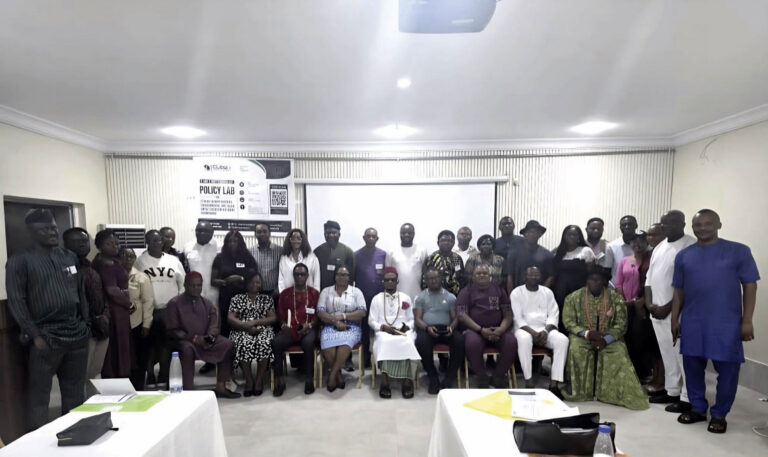
The Conference of Ethnic Nationalities Community Development Associations (CONECDA) revently raised the alarm over the wanton killing of innocent people in the middle belt area and are set to observed “Black Thursday” in Nigeria. According to them, it will be replicated every last Thursday of the month in the country.
The CONECDA pointed out that for years, it has insisted that assessment of attacks across communities revealed the involvement of both amateur warriors and well-trained terrorists who explore ethnic, religious, economic and political differences in recruiting members, in vailing their activities and in promoting their cause at the expense of the lives of their people.
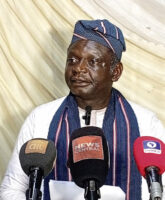
The National Secretary General of CONECDA, Suleman Sukukum, disclosed that in the last couple of months, they have seen various developments in the security situation across the country. These, he said, include the series of attacks across Niger, Kwara and Kogi States. He said that these attacks affecting these states appear as a new frontier of the violent killings affecting many communities. He, however, noted that nothing is really new because the attacks continued in Benue, Plateau, Nasarawa, Taraba, Borno, Adamawa, Bauchi and Kaduna etc.
“There is also report of massive influx of herders into Southern Nigeria and inaccessible part of the FCT. This influx has serious security threat to the entire FCT. There are reports indicating that nearly all forests and grazing reserves in the country now host sleeper or active terrorists’ cells.
“It is in the light of this that CONAECDA has declares the last Thursday of every month is a Black Thursday. The day shall be used to highlight the value of life and the need to protect Nigerian lives irrespective of religion, ethnicity or class,” he stated.
For the organisation, the declaration of black Thursday is beyond mere words, but it is going to be backed with actionable steps, including wearing of black clothes by Nigerians and media engagements, among others.
“Every Nigerian should, if possible, wear black on last Thursday of the month starting from June 2026. CONEACDA and partner organizations will make public community reports on the security situations around the country. This will include an incidence reports and activities of security situations around the country”, Sukukum stated
The chief scribe reiterated that CONEACDA will partner various community association, NGOs, CBOs and human rights organisations to produce T-shirts, fez caps and posters highlighting the day while appealing to all media houses to join the movement by providing a Black Thursday page where appeals and adverts on the importance of protecting Nigerian lives will be advertised.
“Electronic media and new media are also expected to make public adverts or placements that will emphasize the need to protect lives. New media are also expected to use the day to keep the security agenda on the front burner of the Nigerian media space,” he explained.
Sukukum said the recent killing of the second in command of ISWAP indicates the established place and importance of Nigeria in the global Jihadist terror agenda.
“The current security situation has resulted in various narratives reflecting the usual exploitation of the insecurity to advance various religions, ethnic, economic and political agenda.
“While some activists continue to advance excuses and reasons why some groups take up arms against the Nigerian state and against innocent citizens, we should understand that such excuses only motivate those using violence to continue to do so and also increases animosity and hatred among Nigerians,” he expressed concern
“Following the declaration by the United States of America USA that the killing of Christians in Nigerian has reached genocidal scale, many groups, including the government rose to condemn this declaration. Their reason is that there is no genocide of Christians because Muslims and the government are not committing genocide against Christians. It is important to state that such an excuse is lame and lacks intellectual integrity.
Those responsible for genocide against Christians are terrorists and are also responsible for genocide against other sections of the Nigerian population such as Muslem in Gwoza, in Zamfara and in Kwara. They also extended their measures as well to native Muslims in Gwoza, Zamfara and in Kwara states.”
The organisation insisted that autochthonous community refers to aboriginal people who first settled, occupied and have continuously possessed specific geographical locations from time immemorial, thereby making such places their ancestral homelands. As a result, “their ancestral homeland have become integral parts of the worldview, psychology, pride, culture, religion, identity, livelihood and survival.
“CONAECDA is an institution dedicated to addressing the challenges of such peoples and communities in the Middle Belt and Northern Nigeria.”
The CONECDA President, Danladi Jeji, gave some insight into the issue of Northern Nigeria thus: “Northern Nigeria is a creation of the British colonial Government from the Royal Niger Company area of influence to the Northern Region of Nigeria. The area known as Northern Nigeria was brought together through treaties and conquest.
“The region was made up of over 400 ethnic nationalities that were grouped by the British into two major areas.One area is occupied by the predominantly Muslim Hausa, Fulani and Kanuri (commonly known as the Sokoto Caliphate and the Borno Sultanate), while the other was the so-called ‘Pagan Belt’ consisting of the non-caliphate areas.
“These two areas made up the northern Provinces. The peoples of the southern part of Northern Nigeria (Central Nigeria) have for various reasons been treated as the Northern minorities. With state creation in the 1970s to 1990s, we now find these ‘ethnic groups’ in all geopolitical zones of the Northern states, but predominantly in 14 states and the FCT where the ‘minority ethnic groups’ form the majority of the population.
“While there are Hausa, Fulani and Kanuri elements (emirates and settlements) in Central Nigeria, the population of non-indigenous peoples is marginal. There are also marginal populations of non-Hausa-Fulani-Kanuri groups in the Caliphate areas,” he stated
The duo explained that the Middle Belt of Nigeria is the geographical space as well as cultural environment covering areas and peoples of the current North-Central, North-East, and North-West geo-political zones. The area consists of the southern parts of Kebbi, Kaduna, Yobe, Bauchi, Gombe and Borno States, marking the northern limits of Central Nigeria and Central Nigeria is bounded in the south by the South-South, South-East and South-West geopolitical zones.
The area comprises of the highest concentration of ethnically, culturally and linguistically divers but related peoples and cultures in Nigeria in particular, and Africa in general. With ethnic nationalities numbering about four hundred (400), the unique nature and circumstances of these peoples have created unique problems deserving special attention. Furthermore, their untapped potentials and unrealized aspirations also need to be actualized.
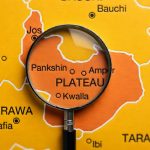
They questioned the interpretation of the Palm Sunday killings at Angwan Rukuba in Jos North local government area of Plateau State, where they alleged so many reasons were pushed forward by certain individuals as a yardstick for the consistent taking of innocent lives in the state and other Middle Belt area of the country.
“We are deeply concerned when following the terrorists attack in Angwan Rukuba in Jos Plateau State. The attackers who refused to own up to the attack left different stakeholders in the state debating the cause of the attack and other attacks on the Plateau.
“Among the reasons advanced for violence on the Plateau are harder/famer conflicts, land grabbing and religious persecution on one side and indigene settler dichotomy, lack of political inclusion on the other side. Irrespective of the reasons advanced, CONAECDA firmly restates its position that all lives are sacred and should never be trifled with.
“CONAECDA leaders have severally addressed issues surrounding the violent conflicts affecting our member communities and will not be addressing all issue today. However, there are issues raised by stakeholders from Plateau State at a stakeholders’ meeting with the President of the Federal Republic a few weeks ago in Aso Rock. Among these issues which is not limited to Plateau are: indigene settler question, political inclusion of non-indigenes among others.
“CONAECDA secretariat is by this conference reminding Nigerians that issues relating to indigene versus settlers was settled by the colonial masters through the recognition of native tribes, native lands, natives’ rights and the establishment of native authorities, which included recognition of traditional rulers.
“Despite the poor implementation of native rights in the defunct Northern Nigeria, both the Northern House of Chiefs and House of Assembly membership and the leadership of the various native authorities reflected recognition of native rights.
“It is therefore unfortunate that those who aggressively pursue the destruction of native rights and its replacement with universal citizenship rights consistently present their native hosts as the aggressors and lawbreakers. A case of the charcoal calling the kettle black. When therefore, the natives (the autochthons) of Jos and Plateau chose to defend their rights from been eroded because of what they see happening to native minorities in other places, they must not be victimized nor vilified,” they stated
The leaders pointed that “across Nigeria, the local government authority, which is the successor to the native authority along with the traditional council are the only recognized authority that issue indigene papers. In all local government areas across Nigeria, only natives are entitled to the indigene certificate, why should it be different in Plateau State and the Middle Belt?
“On the issue of political inclusion, it is a well-known fact that the constitution provides that citizens have a right to contest for all political offices across all tiers of government throughout the country. This provision is covered as citizens’ rights and not under native rights. It is because of this constitutional provision that many non-natives across the country (Plateau inclusive) have contested and won elections to every existing category of political office.
“Non-natives are able to run and win political races only where they are able to win the confidence of the relevant constituency. Plateau has produced non-native political office holders and it remains the right of citizens to elect native or non-natives.
“The President has no constitutional powers to force the choice of political office holders on any section of Nigeria and this also applies to Plateau State. Of equal concern to CONAECDA is the situation prevailing in many states where political leaders controlling political structures continue to deny the legitimate aspiration of the native populations, we call on all communities that are so deprived (including any such groups on the Plateau to organize themselves and wrest political power from those who deny them their rights.
“We also call INEC to ensure that the primary democratic value of free and fair elections is conducted across the nation. We also use this opportunity to call on all non-natives living outside their native lands to focus on issues of their citizens right which is grounded in the constitution of the Federal Republic of Nigeria and is enforceable by all the relevant law enforcement agencies.
“To the natives of Plateau, the ethnic nationalities of the Middle Belt, the southern ethnic nationalities, the Hausa ethnic nationality, we assure you of our brotherhood, appreciate your hospitality and respect your native rights,” they stated.