Follow Us on Google
By Raymond Na’anlep Delmut
For much of the past decade, global discourse on China’s economic rise has been framed through the language of competition, disruption, and strategic rivalry. Debates surrounding trade imbalances, industrial overcapacity, technological competition, and supply chain realignments have increasingly portrayed China’s continued economic ascent as a source of uncertainty for the international system. The emergence of the phrase “China Shock 2.0” reflects growing concerns that China’s next phase of industrial and technological development could reshape global markets in disruptive ways and intensify strategic competition among major economies.
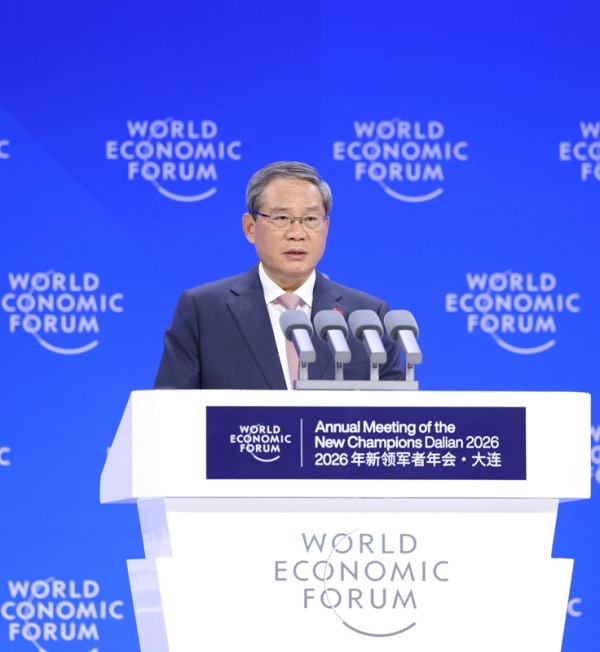
Yet this narrative is neither universal nor inevitable. At the 2026 Annual Meeting of the New Champions, popularly known as the Summer Davos Forum in Dalian, Premier Li Qiang presented a fundamentally different vision of China’s future role in the global economy. Rather than accepting the premise that China’s technological progress represents a global shock, he advanced the concept of “China Opportunity 2.0” Which is a new stage of development driven by innovation, scientific advancement, industrial upgrading, market openness, and international cooperation. This vision challenges the assumption that China’s success necessarily comes at the expense of others. Instead, it suggests that China’s innovation-driven economy can become a source of shared prosperity, particularly for developing countries seeking new pathways to modernization.
This shift in narrative is far more than political rhetoric. It reflects the profound structural transformation taking place within China’s economy. For more than four decades, China’s remarkable growth was associated with abundant labour, export-oriented manufacturing, large-scale infrastructure development, and integration into global value chains. Today, however, the country’s development model is increasingly driven by scientific research, artificial intelligence, advanced manufacturing, quantum technology, biotechnology, renewable energy, digital infrastructure, and green industries. This transformation extends beyond China’s domestic development and raises an important question for the Global South: should China’s technological rise be viewed primarily as a competitive threat, or as an opportunity for partnership, knowledge exchange, and shared development?
As a Nigerian diplomat and public policy practitioner privileged to participate in the Dongfang Scholars Programme at Peking University, I have had the opportunity to observe this transformation from within rather than through headlines or geopolitical narratives. My experience in China has taken me beyond classrooms into research laboratories, advanced manufacturing facilities, artificial intelligence centres, automated ports, ecological restoration projects, technology parks, and institutions dedicated to scientific innovation and governance. These experiences have profoundly reshaped my understanding of the forces driving China’s contemporary modernization.
One lesson quickly becomes apparent. China’s innovation story cannot be explained solely by technological breakthroughs or the success of globally recognized companies. Innovation has become embedded within a comprehensive national ecosystem linking universities, research institutes, industries, financial institutions, government agencies, infrastructure, and long-term strategic planning. Innovation is not viewed simply as the responsibility of entrepreneurs or private companies. It is treated as a national development philosophy that integrates education, research, governance, industrial policy, and economic planning.
Premier Li described this transformation through four defining characteristics of China’s contemporary economy: stability, innovation, dynamism, and integration. At a time when many economies continue to grapple with geopolitical tensions, inflationary pressures, fragmented supply chains, and slowing growth, China has sought to maintain economic resilience while accelerating technological advancement. Scientific innovation has become the principal engine of the country’s next stage of development, supported by sustained investment in research, education, industrial upgrading, and institutional capacity.
This transformation has not occurred by chance. It reflects decades of patient investment in research and development, higher education, scientific institutions, and long-term industrial policy. China’s growing expenditure on research and development illustrates an important principle often overlooked in international discussions: innovation cannot be imported or created through short-term policy interventions alone. It requires sustained investment, institutional continuity, strategic patience, and an environment that encourages scientific experimentation and technological risk-taking.
Perhaps the most distinctive feature of China’s innovation model is its ability to connect scientific discovery with industrial application. In many countries, important scientific discoveries remain confined to laboratories without reaching commercial production. China has sought to bridge this gap by strengthening collaboration among universities, research institutions, manufacturers, investors, and technology companies. This integrated ecosystem enables scientific ideas to be tested rapidly, refined through large-scale market application, and commercialized across an extensive industrial network.
My own observations across Chinese research institutions consistently reinforced this reality. Whether examining advances in artificial intelligence, intelligent manufacturing, digital governance, or green technologies, research was rarely conducted in isolation from practical application. Scientific inquiry was expected to contribute directly to industrial modernization, healthcare improvement, environmental sustainability, public administration, and national competitiveness. This close relationship between scientific knowledge and practical implementation has become one of the defining characteristics of China’s modernization.
Artificial intelligence illustrates this transformation particularly well. While many international debates focus primarily on AI competition or technological risk, China has placed equal emphasis on practical deployment. Artificial intelligence is increasingly integrated into manufacturing, healthcare, transportation, education, agriculture, logistics, urban management, and scientific research. Rather than remaining confined to experimental laboratories, AI is becoming an operational tool supporting productivity and public service delivery across multiple sectors.
Another defining characteristic of China’s innovation ecosystem is its remarkable capacity for scale. Scale should not be understood merely as a consequence of population size. It reflects the interaction of manufacturing capability, digital infrastructure, logistics networks, consumer markets, policy coordination, and industrial capacity. New technologies can be tested across vast markets, generating continuous feedback that accelerates improvement and commercialization. This combination of scale and institutional coordination has enabled China to move rapidly from technological experimentation to industrial leadership in several emerging sectors.
These developments have significant implications beyond China itself. For decades, international companies invested in China primarily because of lower production costs. Increasingly, however, they are investing to participate in one of the world’s most sophisticated innovation ecosystems. The transition from “Made in China” to “Created in China” reflects a broader transformation in which scientific research, industrial capability, and technological innovation increasingly define China’s comparative advantage.
For many African observers, these developments invite a fundamental reassessment of China’s role in global development. Much of the international conversation asks whether China’s rise threatens established economic powers. A more relevant question for developing countries may be how Africa can position itself to benefit from China’s transition toward an innovation-driven economy. This requires moving beyond narratives of dependency or competition toward a more strategic understanding of partnership.
For Africa, and particularly for Nigeria, the emergence of “China Opportunity 2.0” coincides with a decisive period in the continent’s own development. Africa possesses the world’s youngest population, rapidly expanding digital markets, abundant renewable energy resources, growing entrepreneurial ecosystems, and considerable natural wealth. Yet it continues to face infrastructure deficits, limited industrial diversification, technological dependence, and insufficient investment in research and innovation. These challenges cannot be addressed through traditional commodity exports alone. They require deeper engagement with knowledge economies, scientific collaboration, technological development, and industrial transformation.
China’s experience demonstrates that innovation extends beyond inventing new technologies. It involves building institutions capable of nurturing talent, connecting research with industry, investing consistently in human capital, and maintaining long-term strategic direction. These principles cannot simply be copied, as every country possesses its own historical, political, and economic circumstances. Nevertheless, they offer valuable lessons for countries seeking structural transformation in an increasingly knowledge-driven global economy.
The opportunities become even more significant when viewed through the lens of China–Africa relations. If the first phase of engagement was largely characterized by infrastructure development, construction, natural resources, and trade, the next phase is increasingly being shaped by innovation, technology, industrial upgrading, and knowledge exchange. This emerging reality lies at the heart of China Opportunity 2.0. Rather than viewing China’s technological rise as a zero-sum competition, the concept recognizes that innovation itself can become a shared developmental asset capable of generating new opportunities for developing countries.
One of the clearest examples of this new approach is China’s decision to expand zero-tariff treatment for dozens of developing countries while increasing market access for foreign products. This policy should not be interpreted merely as a trade concession. Rather, it represents an invitation for developing economies to participate more actively in China’s expanding consumer market and increasingly sophisticated industrial economy. For African countries, however, the true significance of this opportunity depends less on preferential tariff treatment than on their ability to produce competitive, value-added goods capable of meeting international standards.
Nigeria is particularly well positioned to benefit from this transformation. Instead of relying primarily on crude oil exports, the country can expand exports of processed agricultural products, leather goods, textiles, pharmaceuticals, digital services, creative industries, manufactured consumer products, and renewable energy technologies. Such diversification would generate greater employment, encourage industrial development, and strengthen economic resilience. Achieving these objectives, however, requires coherent industrial policy, investment in manufacturing, improved logistics, stronger quality standards, and sustained support for innovation.
China’s experience also demonstrates that market access alone cannot substitute for productive capacity. International trade rewards countries capable of producing competitive goods and services. Consequently, Africa’s engagement with China should increasingly focus on strengthening domestic industrial capabilities, technological innovation, and value addition rather than expanding commodity exports alone.
This evolution points toward a broader transformation in international cooperation. The future of China–Africa relations should no longer be measured solely by the number of infrastructure projects completed or the volume of bilateral trade. Instead, it should increasingly be evaluated by the quality of collaboration in scientific research, higher education, renewable energy, artificial intelligence, biotechnology, digital infrastructure, green development, and industrial modernization.
The rise of innovation diplomacy represents one of the most important dimensions of this transformation. Traditional diplomacy has often focused on political agreements, trade negotiations, and development financing. While these remain important, the emerging global economy increasingly requires diplomacy that facilitates scientific cooperation, technology transfer, educational exchange, joint research, start-upscollaboration, and knowledge creation. Such partnerships are essential for addressing complex global challenges, including climate change, food security, healthcare innovation, digital transformation, and sustainable development.
My experience in China reinforced the importance of this transition. Across universities, research institutions, and technology parks, scientific inquiry was consistently linked to practical problem-solving and national development priorities. This integration of research, education, industry, and public policy offers valuable lessons for Africa as it seeks to strengthen its own innovation ecosystems.
The future of China–Africa relations therefore depends not only on expanding economic cooperation but also on building stronger partnerships in education, science, technology, governance, and human capital development. Africa’s youthful population represents one of its greatest comparative advantages, but demographic potential alone cannot guarantee prosperity. Long-term investment in education, scientific research, digital skills, entrepreneurship, and innovation ecosystems will determine whether the continent becomes a leading participant in the knowledge economy.
Ultimately, the concept of China Opportunity 2.0 represents an invitation to rethink development itself. It challenges developing countries to move beyond dependence toward innovation, beyond infrastructure toward knowledge ecosystems, beyond technology consumption toward technology creation, and beyond transactional diplomacy toward collaborative problem-solving. Rather than asking whether China’s rise constitutes a threat, policymakers should ask how China’s transformation can contribute to more inclusive and sustainable global development.
As someone who has experienced both Nigeria and China first-hand, I remain convinced that the future of China–Africa relations will be shaped less by political slogans than by shared innovation, mutual learning, and long-term human development. China’s continued investment in scientific research, education, technological advancement, and strategic planning offers important lessons for countries pursuing modernization. Africa, with its youthful population, entrepreneurial dynamism, and abundant resources, possesses enormous potential to become an active partner in this transformation.
The coming decades will not simply be defined by which countries possess the most advanced technologies. They will be defined by which societies invest most effectively in people, strengthen institutions, encourage innovation, and build partnerships capable of transforming knowledge into shared prosperity. If China and Africa can jointly pursue this vision, China Opportunity 2.0 may ultimately become something even more significant, with a Global Opportunity 2.0, in which innovation serves not the interests of a few nations but the shared aspirations of humanity.
Raymond Na’anlep Delmut is a Nigerian diplomat, policy analyst, Dongfang Scholar at Peking University, and author of several books. His research focuses on diplomacy, governance, leadership, modernization, development policy, comparative public administration, and South–South cooperation.