Follow Us on Google
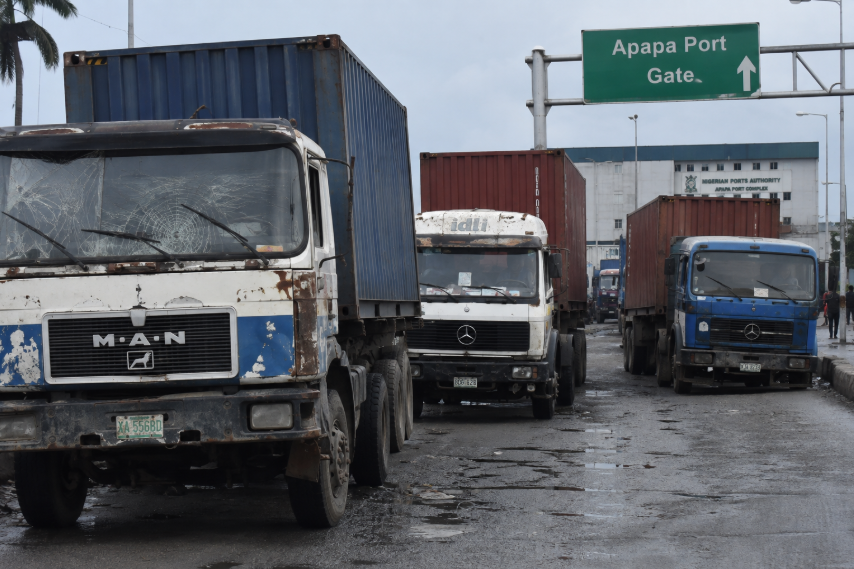
Vandalism of trucks and extortion of truck drivers have been a recurring decimal on the Lagos ports access roads. This menace, coupled with bad roads, has made it difficult for operators to maintain standard and safe trucks. The challenges have deepened logistics crisis.
Investigation by Daily Sun revealed that louts and touts are usually seen vandalising trucks by smashing iron rods, pipes and different weapons on the container trucks on the port access roads.
This often happens when truck drivers refuse to part with money demanded by the hoodlums. In some cases, drivers have complained that the criminals make away with their batteries, jacks, wheel spanners, mobile phones and other valuables.
Port users said these criminal activities often have a ripple effect on importers and clearing agents, as consignments are delayed and spend longer periods in transit before reaching their destinations.
Meanwhile, reports indicate that more than 60 per cent of privately owned trucks operating at the Lagos ports are increasingly struggling to remain roadworthy, with operators blaming poor road infrastructure, multiple illegal charges, vandalism and mounting operational pressures.
Operators, who spoke on the growing number of dilapidated trucks accessing the ports, acknowledged that compliance with the Nigerian Ports Authority (NPA) Minimum Safety Standard (MSS) remains mandatory. However, they argued that the difficult operating environment has made it increasingly challenging for many truck owners to maintain their vehicles in good condition.
Last week, the Association of Maritime Truck Owners (AMATO) issued an urgent advisory to all maritime haulage operators, mandating immediate compliance with basic vehicle safety requirements following reports of non-roadworthy trucks operating within the haulage sector.
In an official notice to the truck owners, fleet managers and drivers, AMATO President, Chief Remi Ogungbemi, expressed deep concern over the increasing number of heavy-duty vehicles operating without compliance with essential safety features, specifically functional headlamps, working rear lights, and reflective tapes.
Ironically, it is disheartening that thousands of rickety trucks continue to ply major access routes to the Lagos ports despite existing safety regulations.
Many of the trucks sighted were operating with defective or missing headlamps, cracked or broken windscreens, damaged side mirrors, faulty brake lights, worn-out tyres and poorly secured container-locking mechanisms. These defects pose serious risks to other road users, cargo and the smooth operation of the ports.
Some of the vehicles were also seen emitting thick exhaust fumes, while others struggled to navigate the port corridors because of obvious mechanical faults. Despite their condition, the trucks were still able to gain entry into and exit the port gates.
Speaking on the issue, the Secretary of the Association of Maritime Truck Owners (AMATO), Bala Muhammed, said truck owners are expected to ensure that their vehicles have functional headlamps, brake systems, reflector lights and other critical safety components before they are allowed to operate.
According to him, the Nigerian Ports Authority (NPA) inspects trucks before issuing the Minimum Safety Standard (MSS) stickers, stressing that vehicles that fail to meet the required standards are denied access to the ports.
He noted that the inspection regime has compelled many truck operators to improve the condition of their vehicles, although some trucks deteriorate after inspection due to circumstances beyond the control of their owners.
Beyond vehicle maintenance, however, Muhammed attributed the worsening condition of some trucks to the activities of hoodlums, illegal revenue collectors and the proliferation of agencies operating along the port access roads.
“Truck owners spend huge sums repairing damage caused by hoodlums, local government revenue collectors and transport union members who allegedly harass drivers and vandalise vehicles,” he added.
He alleged that windscreens are smashed, trucks are damaged and drivers intimidated whenever breakdowns occur, making it difficult for operators to channel resources into proper vehicle maintenance.
“We have trucks that meet the minimum safety standards, but before they return to the ports, something may have happened. Hoodlums may have vandalised them, or some of the safety features may have been damaged on the road.
“The government is collecting outrageous charges from truckers, while hoodlums vandalise trucks on the roads. Area boys harass our drivers whenever trucks break down. The government needs to address these issues to complement our efforts at enforcing safety standards,” he said.
An importer, Felix Akogun, said apart from bad roads and poorly-maintained vehicles, people had imbibed bad attitudes that see hoodlums damaging trucks at each extortion point.
“We will blame the government for not enforcing traffic rules and ensuring that roads are in good condition. Aside from this, most operators don’t have the financial muscle to get brand new trucks. A brand new truck is worth over N55 million, if I am correct. That is why you see most of the trucks are 40 years old and they are still allowed to carry consignments from the ports.
“I wondered why vehicles were issued roadworthy certificates, and heavy-duty trucks permits and all sorts of tests were claimed to have been conducted before issuing these certificates, yet they were not done. The government should be blamed for issuing certificates for vehicles that are not roadworthy.
“They (government) don’t check anything. Let the Lagos State government come out to tell us the inspection point where heavy-duty trucks were inspected before they were issued road-worthiness certificates. Let them come out and say this; let them come out and say where. They have not been conducting any checks, yet they have been collecting money. It has been revenue generation, and that is why we are experiencing all of these. So, the authority needs to up their game in this area,” he added.
Also, a truck owner, Mr Kunle Ajayi, identified poor roads as the biggest factor responsible for the deteriorating condition of trucks operating around Lagos ports.
According to him, the rainy season further compounds the problem as road maintenance becomes difficult while heavy traffic prolongs vehicle exposure to damaged roads.
He also alleged that some law enforcement officers and other roadside operatives are damaging trucks during enforcement activities.
He recalled an incident where a truck’s headlamp was allegedly smashed during an encounter with security personnel, only for another enforcement agency to impound the same truck for being unroadworthy because the headlamp had been broken.
He argued that such incidents impose additional financial burdens on operators already battling rising operating costs.
“Private truck owners account for between 60 and 65 per cent of trucks serving the ports, making them the dominant players in the haulage business. However, unlike large corporate transport companies, private operators lack the financial strength to promptly repair or replace damaged vehicles,” he said.
He said that corporate logistics firms operate under structured maintenance systems, deploy recovery trucks whenever breakdowns occur and are less likely to be harassed on the roads.
Meanwhile, he called on the government to prioritise rehabilitation of port access roads and eliminate illegal checkpoints and extortion along the corridors, insisting that these measures would significantly improve truck safety and reduce the number of rickety vehicles operating into the Lagos ports.
“If a corporate truck breaks down, they immediately bring another truck to tow it. Nobody disturbs them. But once they see our trucks, area boys, enforcement officers and others descend on us,” he lamented.