Follow Us on Google
By Moses Akaigwe
The Director-General and Chief Executive Officer of the National Automotive Design and Development Council (NADDC), Otunba Oluwemimo Joseph Osanipin, has said the clean draft of the proposed National Automotive Industry Bill would be ready for transmission to the National Assembly in November 2026.
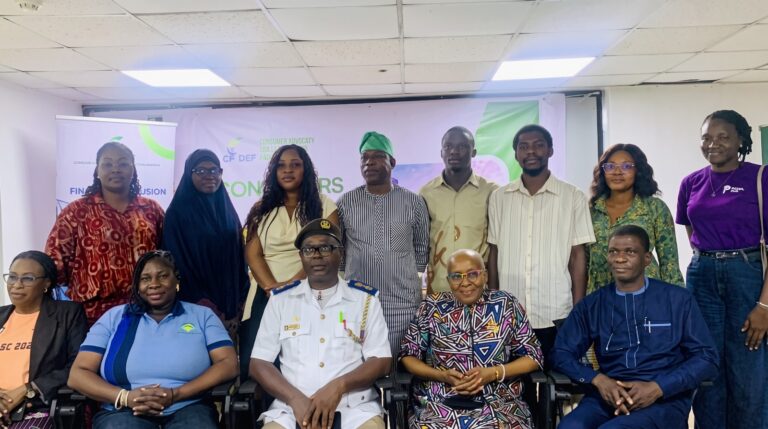
Osanipin disclosed this at the stakeholders’ engagement on the draft bill, in Lagos, where key players in Nigeria’s automotive sector reviewed the proposed legislation and made recommendations for its improvement.

According to him, the bill is being developed through a broad consultation process involving automotive industry experts, manufacturers, government agencies and other regulators whose activities are linked to the sector.
“We are putting it together. We gather all the stakeholders to look at the bill one after the other,” Osanipin said, explaining that the process would involve incorporating relevant contributions from stakeholders before the document proceeds to the next stage.
He said the existing legal framework, particularly the 2014 Act establishing the NADDC, was no longer adequate to regulate an automotive industry undergoing significant technological and structural changes.
Osanipin noted that the existing law does not sufficiently address emerging developments such as compressed natural gas (CNG), electric vehicles (EVs) and other new automotive technologies.
He said the proposed legislation would therefore go beyond the mandate of the existing council to provide a comprehensive legal framework for the entire automotive industry.
The bill is expected to address local content development, patronage of locally produced automotive products, local vehicle assembly, enforcement of industry regulations and consumer protection, among other areas, he stressed.
The NADDC boss stated that after the current engagement with industry stakeholders, the Council would consult other government ministries, departments and agencies, including regulators and institutions involved in standards, policing, customs and finance, before the bill is transmitted to the National Assembly.
Osanipin said the proposed legislation was designed to transform Nigeria’s automotive ecosystem from an assembly-focused sector into a robust industrial value chain anchored on local content, component manufacturing, vehicle electrification and regional market integration.
He said the proposed transition of the NADDC into the National Automotive Design and Development Commission would provide stronger regulatory and enforcement powers, while legally safeguarding incentives and implementation structures under the Nigerian Automotive Industry Development Plan.
In their submission at the stakeholders engagement forum, the Nigerian Automotive Manufacturers Association (NAMA) called for substantial amendments to the proposed legislation, arguing that the bill must do more than establish regulatory structures.
NAMA Chairman, Mr. Bawo Omagbitse, said the industry supports the enactment of a strong automotive law, but warned that the current draft appeared stronger as a regulatory and institutional framework than as an industrialisation law.
He said the legislation must make it commercially attractive for investors to manufacture vehicles and components in Nigeria rather than rely on imports.
Other News
NAMA proposed a predictable framework for automotive tariffs, investment protection, local content development and an Automotive Development Fund, with dedicated financing for vehicle and component manufacturing, tooling, research and development, skills development and clean mobility.
Omagbitse also called for government procurement of locally manufactured vehicles, affordable vehicle financing and incentives tied to measurable commitments on investment, production, employment, local content, supplier development and technology transfer.
Also, the Motorcycle Manufacturers Association of Nigeria (MOMAN), whose membership covers tricycle manufacturers, was represented at the stakeholders’ engagement by Rev. Lambert Ekewuba, who pledged the association’s support for “the overall objectives of the National Automotive Industry Bill, 2026.”
However, to convert the objectives into sustainable industrial development, MOMAN recommended that the bill should clearly reward genuine manufacturing and assembly investment, ensure predictable regulation, establish workable local-content pathways, and protect consumers and responsible investors.
Ekewuba spoke further: “In view of the above, the Motorcycle Manufacturers Association recommends a three-phased deletion programme for motorcycles and tricycles.
“First, maintain a substantial and commercially meaningful tariff gap between locally produced parts and imported ones.
“Two, grant 0 percent import duty on CKD (completely knocked down) kits to the motorcycle/tricycle assembly plants that have invested heavily in the industry with backward integration programmes.”
Speaking on behalf of Honda Manufacturing Nigeria Ltd., Ota, Ogun State, the Divisional Manager for Sales & Customer Service, Olabade Badejo, told the forum: “Honda completely welcomes and supports this Bill” as what the industry needs for development and growth.
Badejo disclosed that the company had articulated and submitted 34 recommendations and some amendments to sections of the draft bill to the NADDC, and hoped that they would be reflected in the final draft that would go to the Legislature later.
He also harped on a key area that recurred at the forum – the need for critical volume and economies of scale that can drive real investment into the automotive industry and protect that investment.
Other participants who underscored the importance of high volumes and economies of scale were the representative of Elizalde Nigeria Ltd. and the Motoring Editor of The Sun newspapers, Moses Akaigwe.
The Honda Manufacturing representative tied his argument to new-car sales volumes of not up to 30,000 units in Nigeria per year, while imported used, scrapped and unroadworthy vehicles run into several hundreds of thousands of units imported into Nigeria annually.
“No major investment will be attracted if the Nigerian Government or this Bill does not prohibit used, scrapped, unroadworthy vehicle importations by individuals or entities who are profiteering big and are also well connected with and lobbying the political elites,” he stated.
To buttress his point, Badejo gave the example of Honda’s huge investments in the late 1970s in Ota to set up a comprehensive factory with welding, painting, machining and assembly lines, among others, along with other major investments by Leventis and several other major stakeholders in the past, who did not recover the majority of their investments because of policy somersaults and inconsistencies from the 1980s till date.
Such policy flip-flops, according to him, should be avoided as a new era beckons because several of the companies that were victims of the previous policy inconsistencies have either gone moribund or completely moved out of Nigeria.
Badejo informed the stakeholders that Honda Manufacturing Nigeria Ltd. (the motorcycle maker) and Honda Automobile West Africa Ltd. (the car plant) “have formally merged into one entity as Honda Manufacturing Nigeria Ltd. from September 1.”
This, he said, was part of efforts to consolidate its operations in Nigeria for future expansion.