Follow Us on Google

From Ndubuisi Orji, Abuja
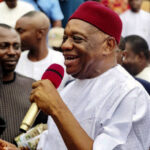
The deputy spokesman of the House of Representatives, Philip Agbese, has implored the Nigeria Labour Congress (NLC) not to join the ongoing warning strike by the Academic Staff Union of Universities ( ASUU).
Agbese, while speaking with journalists, after Tuesday’s plenary, appealed to the NLC, ASUU and all stakeholders in the education sector to exercise restraint, in the overall interest of the country.
The lawmaker cautioned that further industrial action could derail the laudable reforms being implemented in the education sector by the Minister of Education, Tunji Alausa.
The NLC had threatened to join the strike should the Federal Government fail to conclude negotiations with all tertiary institutions-based unions within stipulated time.
Other News
However, Agbese urged the labour to rather, support the ongoing reforms initiated by the Education Minister, which according to him, are focused on repositioning Nigeria’s educational system for global competitiveness.
He explained that the Federal Ministry of Education, under Alausa, has taken bold steps to address long-standing challenges in tertiary education,including reforms in university administration, funding transparency, and renewed emphasis on research, innovation, and digital learning.
According to him, “as stakeholders, we must see ourselves as part of the Nigerian project. Strikes have never solved our problems; they only make matters worse.
“These issues can always be brought before the National Assembly, where there are mechanisms for dialogue and intervention. We have done it in the past, and we can do it again. The current Speaker Abbas Tajudeen understands the struggles of the academic community and he always ready to intervene.”
Agbese reiterated the commitment of the National Assembly to serve as a bridge between the government and stakeholders in the education sector, so as to ensure that grievances are resolved through dialogue rather than confrontation.