Follow Us on Google
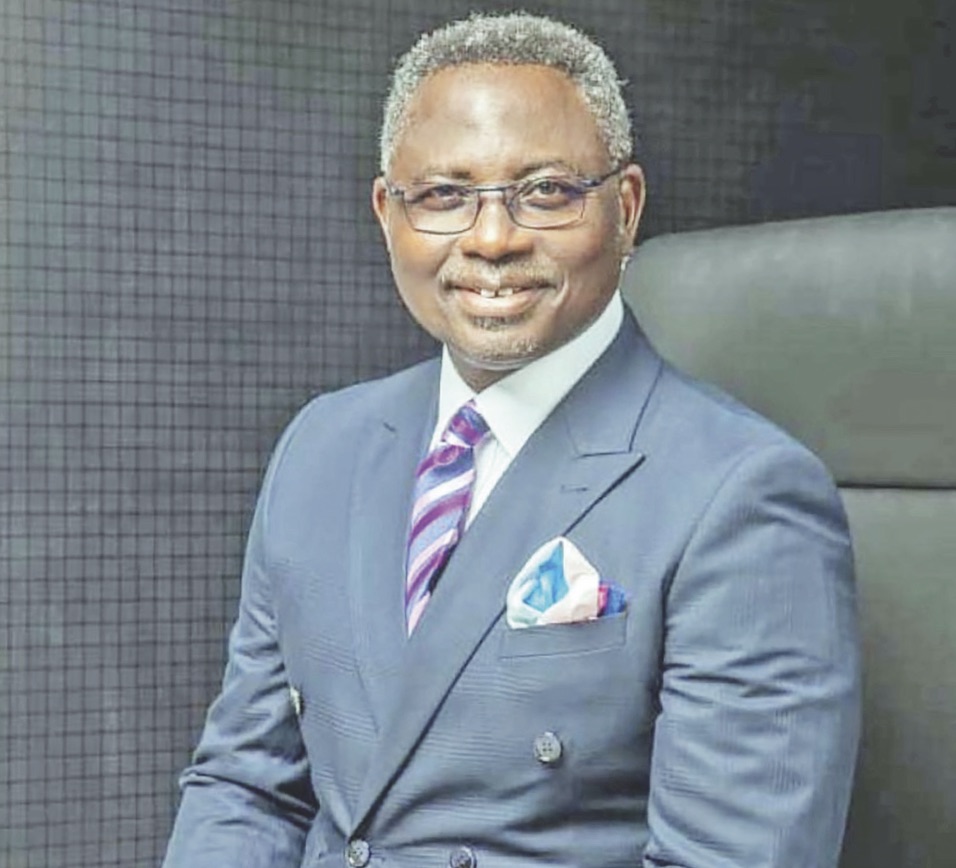
By Christy Anyanwu
Pastor Matthew Ashimolowo is a renowned Nigerian clergyman, author and philanthropist. He is the Senior Pastor of Kingsway International Christian Centre (KICC) in London.
Ashimolowo converted to Christianity from Islam at 22. He has written over 100 books, including “The Power of Positive Prayer Bible,” and hosts the popular television and radio ministry “Winning Ways,” which inspires millions globally.
The cleric also founded Christ Compassion to the Rural World (CCRW), providing humanitarian aid and evangelism to remote communities.
Ashimolowo’s influence extends beyond the church, as he advocates for Christian unity and speaks out against persecution.
In this interview with Saturday Sun, he spoke about the forthcoming CCRW outreach in Port Harcourt, Rivers State, his life and times and ongoing issues around violence against Christians in Nigeria, among others.
Are you still active on the pulpit? Do you still preach in KICC London?
I preach in KICC London every Sunday. Even if I’m abroad, I do a live broadcast. I’m almost in church every Sunday in London, and I’m as strong as ever.
Even at 73, you are doing so much. It seems you are not retiring. There was a time someone said you were retiring, but it seems you are re-firing. What’s going on?
People just make statements. I’ve never known anything called retiring. I’m excited with what I do. I do a lot of exercise. I preach a lot, and I keep my vision alive. The key thing in life is to keep your vision alive. Once your vision is strong and alive, there is nothing you cannot achieve.
What lessons have you learned about life in these 73 years?
The lesson about life is that you should always have a vision and a dream. Once you have a vision and a dream, it makes you young, makes you new, makes you focused, and makes you not to feel tired but to actually want to wake up to do more.
What are your thoughts about the state of affairs in Nigeria?
I believe, despite people’s opinions, Nigeria is getting better, the currency is getting stronger.
I think many do not realise that they need to give this government kudos and to show patience, from all indices. It seems things are going to get well, the currency is getting stronger, therefore, it means that the economy is becoming better and balanced. People should be more patient and they are going to see things turn around for good.
There is the issue of US President Donald Trump threatening military action in Nigeria. What is the Christian body doing about the so-called Christian genocide?
I am not speaking for the Nigerian church because I don’t live here, I live in England. I may come and preach, hold meetings, but for this question I cannot take a position. You can see, when there is a PFN conference, my name is not there. I still live in England. I have lived there for 41 years. So, I cannot speak for the Nigerian church. I can only speak based on my own observation as a person.
My opinion on the genocide question is this: The dictionary defines genocide as the deliberate and systematic killing or persecution of a large number of people from a particular national or ethnic group with the aim of destroying that nation or group of people. And with that definition, I’m going to turn my answers to a question or questions. Let me give my responsive background.
I was born in 1952 in Zaria. I was born in the military barracks. I grew up in Kaduna. In Zaria, Kaduna.
So, my answer does not come out just from the newspaper but from experience. The first riot I ever experienced, with all due respect, was against people from the East. I was there during the Zaria riots when your crime was that you were Igbo. They didn’t tell me, I saw it. People were being killed right before my eyes.
And there was a soldier trying to prevent it. And I remember the man coming back with a deep dent in his military helmet as the guys were screaming and walking the roads of Zaria and screaming, ‘Tawai,’ Tawai means: our eyes are open, following the first coup by Kaduna Nzeogwu.
So, there certainly was genocide because people were being dragged out of their house and killed. But then when it comes to the hot case on hand, is there religious genocide in Nigeria? Firstly, I’d like to say that whatever issue in Nigeria, because it was not dealt with, it became a snake with five or more heads. And so, when you are looking at each case, you need to know which head you are dealing with.
Banditry is a head. Terrorism is a head. Fulani herdsmen carrying guns and invading people’s farms, chasing them out, is another head. The guy who demands money, kidnapper, is a head. And there are many more heads.
And then, deliberate chasing of people away from their land and immediately putting another tribe there is a head. So, are these things happening in Nigeria or not? I’ll just take you down some historical cases and I’ll ask you, is it really happening in Nigeria?
Maitatsine, in the 1970s, the man who rose and began to teach a form of Islamic cleansing that anybody who was not of that particular belief must die.
Was that not genocide? And is that heard in a secular nation? There was Zangon Kataf. In case you don’t know, what you know as Kaduna State was once including Katsina. And on grounds of religion, Katsina State was cut off because the majority of Katsina State was Islamic.
And what remained as Kaduna State was majority what we call Sene Kaduna, Zangon Kataf and people who were assumed so by the ones controlling the tribes. And despite Katsina now leaving Kaduna State, the sound of Kaduna State is 99 per cent Christian, producing Prof. Ishaya Audu, first vice-chancellor, Ahmadu Bello University; producing General Ishaya Bamaiyi, producing former Deputy Governor, Central Bank, Prof. Obadiah Mailafia. Somebody was still not satisfied and wanted their land.
And particularly under the watch of a particular governor, probably 23,000 of these people died. Is it so, is it not so? And then in Zangon Kataf, people were being hacked, cut like animals because you wanted their land and because they didn’t follow your religion. Is that genocide or not?
Other News
There was a riot in Kano, because Reinhard Bonnke came to hold a crusade, Christian crusades were not allowed. They destroyed the equipment, they cut Christians. Is that genocide or not?
Deborah Samuel, a girl in a polytechnic in Nigeria, in the North. She saw on the platform of her class that people were posting religious anti-Semitism. “This platform is for our study, not for religion.” They went, they killed her.
And when she became a court case, 52 barristers who hold a religious faith different from hers showed up to defend the guys who killed her. Is that genocide or not?
Evangelist Eunice in Abuja, went out at 5 a.m. to do what we (normally do, preaching) down south here. She was killed. I remember as a kid, I was a Muslim. My name is Ahmed. My mother is Aisha. My brother is Mubashir. My sister is Khadijat. My dad is Salau.
People who wake up people to prayer, that was what Evangelist Eunice did, and they hacked her to death. If all that is not genocide, and if it’s just religious intolerance, what happened?
When Mailafia came out and said, “I’m from Southern Kaduna, and 23,000 of our people died, and after a woman called people who should come and defend them, the military, the police, they didn’t show up.
“It was after the people were gone that they showed up. And they said they had it on good record that some mysterious helicopters were coming to give these people equipment.”
Is that not a plan of genocide? If you say that is not genocide, what shall we say of what’s going on, particularly in states in the North that are of Christian conviction, Benue State?
Even newspaper reports on the local government where people were hacked, and the plan is to chase them out, and some people would come to occupy, and when I say some people, let me be bold to say Fulani herdsmen.
I haven’t answered your question yet. But let me just say, 270 girls were carried out of a school. These were all Christians. The people who carried them committed five crimes. One, child molestation, because Nigeria’s criminal laws, even if you put that in one (way), 18 is the age of consent, it’s a crime. They raped those girls.
Two, if you carry a person against their will across the border, I know we have human trafficking laws. Three, you force these people to change religion. Four, you force them into marriage.
That is the fourth criminal offence. Five, some of them were violently raped. And then six, some of them were killed.
The same people who committed this crime, you say you forgive them. Who forgave them? Where were they forgiven? Which court of law? Is it the government that said, okay, we suspend the criminal laws of Nigeria in the case of Okuwara, who carried these girls, whatever, of the hydra heads carried the girls? Who did it? So, if you now say you forgive them, where are they? It is rumoured that some of them are now repented and they brought them into the army.
How can a man who killed and committed all these crimes now qualify to be a defender of the nation? It is rumoured that some of them are in the air force. How can a man like that defend the Federal Republic of Nigeria? How can we trust him? In the country where I live at the moment, in England, If you touch a child, you know rape, if you touch a child in an indecent way, you will be in the register of child molesters. At the moment you change local government from one local government to the other, you must now report yourself and be in the books of child molesters.
Once the court has passed a case against you that you molested a child, anytime you move, you don’t need the police to do it. You have to go and report yourself. There are jobs you cannot get.
But in our own case, we said these guys are forgiven. One, who forgave? Two, where were they forgiven? Three, where did we see their repentance? Four, where is the fruit of their repentance? So, we cannot say that there is no genocide. But if you say there is no genocide, answer my questions.
Two, we cannot say there is no religious intolerance. If you say there is no religious intolerance, explain to me why in 1987 I went to Maiduguri. I came from England. I went to Maiduguri to see somebody. The following morning, while I was waiting in my hotel, I called a taxi to drive me around Maiduguri. I had lived in the North but never been there.
As he was driving me around, I said, do you know where this church is? He said there was just one area. I said, where do you live? He said, all churches were not permitted to be around the town but in one area. So, the churches were grouped in one area.
I said, take me there. This was called Bulumkutu. When I got there, three quarters of the churches were burnt.
So, it was easy to know where they were anytime you would like to burn a church. So, there are two Nigerias. How come that, in one Nigeria, churches cannot operate, churches can be broken down, people can be hacked?
I didn’t say there is genocide. You will have to answer if there is genocide or not. My last response was the Nigerian Civil War.
But guess what? Despite the intensity of that terrible war that fragmented and hurt Nigeria and hurt the people of a particular section of the nation, they are fragmented for years. How come you cannot end the war effectively? My mother used to say, if a child is throwing stones and throwing stones and the stones do not end, there is a supplier.
As you are preparing for the Port Harcourt crusade of your organisation from 24-29 of this month, tell us more about it and what the project means to you
It is Christ Compassion to the Rural World. When we go to all these crusades, we de-emphasise one church. On this platform there are five different churches/organisations. What we do is to enter a city and let them know clearly that the crusade is for the Body of Christ. There will be 9,000 volunteers. That is, from the Anglican, Baptist, White Garment church, PFN, CAN. It’s my ambition to break the barriers, to remove the things that have divided us. And once people hear our hearts, see the vision and feel the fire of what we want to do, everybody just mellows down.
Our crusade chairman is from the Church of God Mission, Archbishop Benson Idahosa. We have different people like that. That collaboration is making it possible. Salvation Ministry, Pastor David Ibiyeome, has been more than extremely helpful. Again, from each state you can tell the kind of conversion the executive of the state has in working with the people. I commend the Rivers State government. The governor was telling his commissioners, this must be done, that must be done. Coming to security, the police sent out 300 policemen and the army is more shocking. They are giving us 100 soldiers; the governor is giving us their hospitals and they are asking if we need anything else. It makes you feel this is truly Nigeria. So, there’s great collaboration, there’s great unity and there’s great coming together. The crusade is the effort of so many people.
And, amazingly, we were still in shock. The governor really empowered Rivers State Teaching Hospital, University of Port Harcourt, to work with us and take about three primary medical centres. That is apart from the other hospitals we are in.
But it’s been just wonderful, particularly in the area of medicals. Medical costs are close to N500 million. Our desire is to see souls saved. So we want to believe that for 30,000 people to make a commitment to Christ. We’re sending 154 buses to bring people.
But we’re excited. We’re glad. We will be giving 150,000 packs of rice, 150,000 packs of garri, 150,000 packs of beans, 100,000 packs of Noodles, 20,000 packs of sugar, 20,000 packs of salt, 20,000 bottles of oil, actually, 170,000 of clothes, trousers, shirts, gowns for old and young, but 10,000 Ankara for people who are 60 years and above, 25,000 buckets. We have 1,000 mattresses for old people, about 20,000 bars of soap. From the night of opening of the crusade, if you want to receive the goodies on Tuesday, you have to be there on Monday night to get your coupon to enable you access to the relief items on Tuesday.