Follow Us on Google
By Chinenye Anuforo
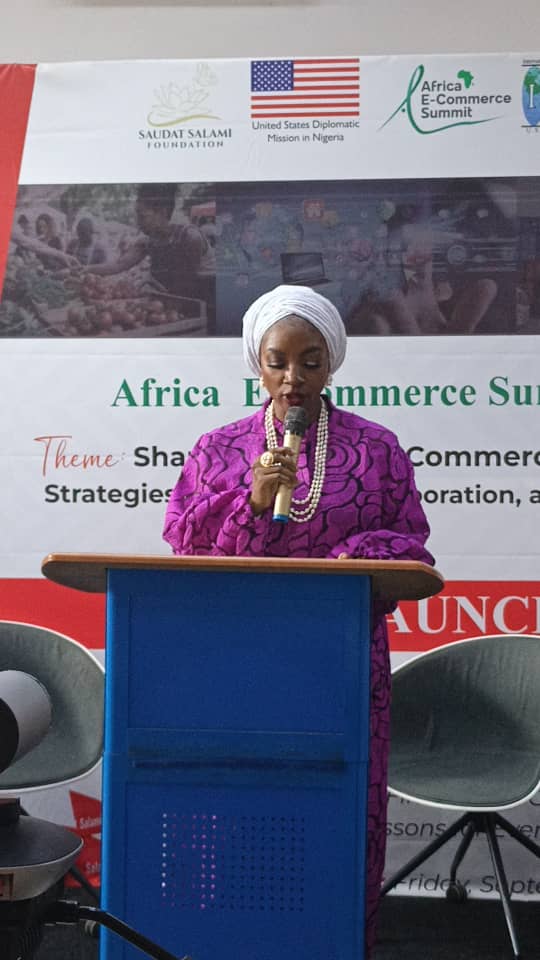
The inaugural Africa E-Commerce Summit in Lagos opened a robust dialogue on the future of digital trade in Africa, with policymakers, innovators, and business leaders coming together to explore regulation, infrastructure, and cross-border collaboration. At the same event, e-commerce pioneer Saudat Salami also celebrated her 50th birthday and launched her memoir, Selling Pepper Online.
The summit kicked off with a high-level panel on E-commerce Regulations, Policy Frameworks, and the African Continental Free Trade Area (AfCFTA), moderated by Ms. Ifeoma Oma Ehiri, Technical Advisor at GIZ. Panelists included trade policy experts, customs officials, and agricultural leaders, who examined how coherent regulation, streamlined border processes, and robust infrastructure could accelerate Africa’s digital trade ecosystem.
Mr. Bernard Tayo, Head of Project at GIZ, highlighted AfCFTA’s potential: “It creates a structure that allows Africans to trade among themselves with limited obstacles. Digital trade makes it even easier, enabling businesses to reach customers without moving from their base.”
Chief Superintendent of Customs, Ijeoma Ayoka, detailed Nigeria’s progress, including the new Unified Customs Management System (UCMS) for electronic goods declarations and faster parcel processing for SMEs.
From an agricultural perspective, Lagos State Ministry of Agriculture Director, Mrs. Oluranti Oviebo, stressed the importance of cold rooms, conditioning centers, farmer training, and private-sector partnerships to make agri-ecommerce scalable. At a regional level, ECOWAS has developed a strategy to harmonize e-commerce policies across its 12 member states, with GIZ support, to facilitate smoother intra-African trade.
A second panel focused on Grocery Delivery, Agriculture, and Accelerating Growth in the Sector, highlighting innovations in logistics, digital platforms, and private-sector leadership as drivers of Africa’s food systems, job creation, and SME growth.
While the panels set the summit’s agenda, Salami’s personal journey as Africa’s e-commerce pioneer provided a real-world anchor for the discussions. She founded Nigeria’s first online grocery platform, TV Shop, in 2001 with just $15 and later built and scaled Easyshop Easycook, the continent’s first online grocery delivery service.
“What if women could buy groceries online and come home to fresh food ready to cook? That question changed my life,” she said, reflecting on early challenges in sourcing, logistics, food safety, and raising capital. Her memoir, Selling Pepper Online, offers lessons for entrepreneurs navigating Africa’s complex business environment.
Salami also emphasized the need for cross-sector collaboration to realize the continent’s digital trade potential: “We cannot build the future alone. We need policy, infrastructure, investment, and partnerships. This summit is our lighthouse, a call to action.”
The event closed on a note of optimism, with participants agreeing that Africa’s e-commerce future depends on innovation, collaboration, and the active participation of women, youth, and SMEs. By centering the panels while connecting them to real-life entrepreneurial experience, the summit underscored both the opportunities and challenges in shaping Africa’s digital economy.