Follow Us on Google

From Charity Nwakaudu, Abuja
Senior Pastor of Matthew Ashimolowo has urged Christian leaders to emulate the sacrificial leadership, kingdom-minded vision and selfless lifestyle of Korede Komaiya.
Ashimolowo made the call during a visit to the newly dedicated Dreamland Complex at Master’s City, Warri, Delta State, where he ministered on the theme, “Timely Technology for Timeless Truth.”
He said the present generation requires leaders who are spiritually grounded, intellectually equipped, emotionally stable and financially prudent to meet contemporary challenges.
“What we see here today is the result of Pastor Komaiya’s kingdom-mindedness, heart and unwavering commitment to God’s work,” he said.
Praising the vision behind the multi-billion-naira facility, Ashimolowo said many leaders would have chosen to build luxurious personal mansions instead of investing heavily in God’s kingdom.
“Many people would not build something this massive when they could build mansions for themselves. Yet, he still lives more or less in a rented place and modestly because his heart is kingdom-first,” he said.
He stressed that leaders must demonstrate sacrifice and commitment if they expect followers to support the vision of their ministries.
“Kingdom-mindedness is not common in this generation, especially among founders. If you cannot invest in your own ministry, how do you expect your members to invest? People are watching your priorities and your commitment,” he added.
Ashimolowo also revealed that he was deeply moved when he first saw photographs of the completed complex.
“I had never been here before, but when they sent me pictures after the finishing touches were completed, I was overwhelmed. I found myself speaking in tongues because I did not know what else to do,” he said.
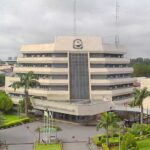
The newly dedicated Dreamland Complex, located at Master’s City, KM 3 Refinery Road, Warri, Delta State, comprises two four-storey wings fitted with elevators, a central heating, ventilation and air conditioning (HVAC) system, and a world-class main auditorium built to international standards.