Follow Us on Google
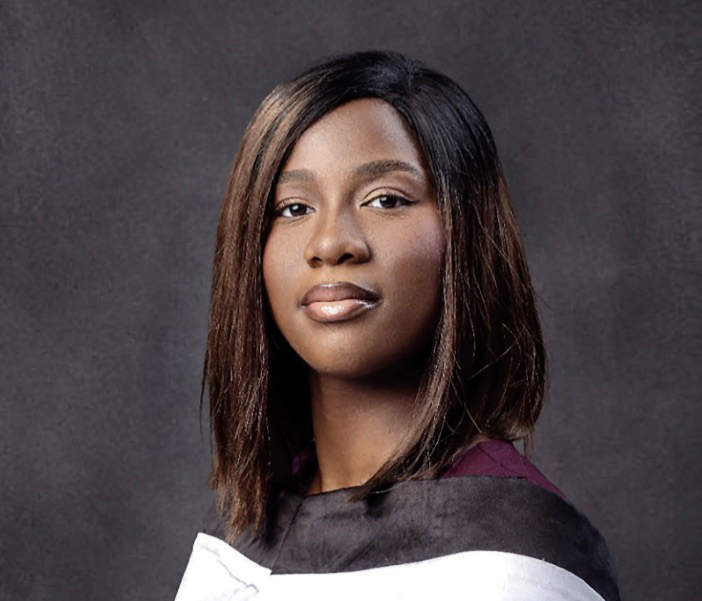
•It’s outcome of commitment to excellence –Amosu, Babcock varsity overall best graduate
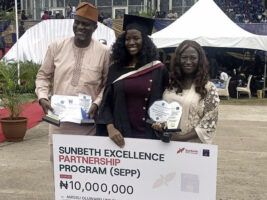
At the recent convocation ceremony of Babcock University (BU), Ilishan-Remo, Ogun State, Oluwapelumi Oluwatobiloba Amosu, was celebrated as the overall best graduating student with 4.96 CGPA. She went home with 11 awards including N10million by Sunbeth Excellence Partnership Programme (SEPP).
In this interview, the whiz kid shared her journey to BU, her interest in Economics, past academic achievements, preparation for exams, social life on campus, relationship with classmates, how a healthy academic enironment contributed to her success, settting goals provided direction to academic feat and her next journey.
How did you fare in primary and secondary schools?
I have always enjoyed learning, so striving for academic excellence became a natural part of who I am from an early age. I attended Prime Montessori School in Satellite Town, Lagos, for my nursery and primary education. They gave me a strong foundation. Then I attended S-Tee High School in Festac, Lagos. Throughout my six years in secondary school, I consistently topped my class and graduated as the Valedictorian. I also served as a member of the Student Council, which helped me develop leadership and teamwork skills alongside my academics.
I scored 309 in the Unified Tertiary Matriculation Examination (UTME), including 95 in Economics, the subject that would later become my field of study.
How did you find yourself in Babcock University?
Choosing Babcock University was a deliberate decision. While researching universities, I wanted an environment that combined strong academics with opportunities for personal development and leadership. My older sister was already studying there, so I also had firsthand insight into the university’s culture.
Babcock gave me opportunities to grow academically, take on leadership responsibilities, build meaningful relationships and challenge myself beyond the classroom. Those experiences played a significant role in shaping the person I am today.
Was studying Economics your choice or your parents imposed it on you?
Studying Economics was entirely my choice. My interest in the subject began in secondary school because I was fascinated by how economic decisions influence businesses, governments and the lives of ordinary people. I enjoyed understanding why economies grow, why inflation happens and how public policies affect society.
My performance reflected that interest, as I scored 95 out of 100 in Economics in the UTME.
One of the reasons I chose Economics is because of its versatility. It provides analytical and problem-solving skills that are applicable across finance, consulting, policy and business. During my undergraduate years, I further strengthened that foundation by qualifying as a Chartered Accountant, allowing me to combine economic thinking with financial expertise.
Did you set a target for yourself?
Yes, I did. I believe goals provide direction. They help you stay focused, remain disciplined and make better decisions, especially when distractions arise.
Since secondary school, I had set a personal goal of graduating with a high First Class degree because it represented an objective standard of excellence that I wanted to achieve. However, I did not set out to become the Overall Best Graduating Student. Becoming the overall best was simply the outcome of that commitment to excellence over several years.
How did you usually prepare for exams?
I tried not to prepare for examinations only when they were close; I prepared throughout the semester. I broke my coursework into manageable portions instead of leaving everything until the last minute, so I never had to rely on all-night reading sessions. My goal was always to understand rather than memorise.
After attending lectures, I would make my own notes in simple language to confirm that I truly understood the topic. I also used mnemonics, practical examples and additional learning resources whenever I needed clearer explanations or a different perspective.
I preferred studying at night, but I was flexible enough to study during the day or early in the morning whenever necessary. Another habit that really helped me was teaching others. This was more pronounced during my tenure as Assistant Academic Director of the Economics Students’ Association. Part of my responsibilities involved organising and leading tutorial sessions. Preparing to explain concepts to other students challenged me to develop a deeper understanding of the material myself. When examinations approached, I revised with friends, but only after I had first studied the material independently. Group discussions were a way to test my understanding, but they did not replace personal study.
Interestingly, I never followed a strict study timetable. Instead, I kept a running list of tasks that needed to be completed and worked through them consistently. I actively ‘sharpened the saw ‘. I made time to rest, watch movies, spend time with friends and recharge because I believe sustained excellence requires balance as much as hard work. I also relied on my faith. I always believed that prayer should be accompanied by diligent preparation. After doing my part, I trusted God with the outcome.
Which of your classmates put you on your toes?
I was fortunate to be surrounded by many brilliant classmates, most of whom were also friends. Economics at Babcock had students who were hardworking, intelligent and constantly striving to improve themselves. I did not see them as competitors, but as people who challenged me to become better.
We celebrated one another’s successes, shared ideas and learnt from each other. I believe that a healthy academic environment contributed greatly to my own performance.
How much of social life did you enjoy on campus?
I had a well-rounded university experience. Academics were important to me, but they were not the only part of my life. I served as Assistant Academic Director and later Financial Secretary of the Economics Students’ Association. I was also a member of the Babcock Writers’ Community, where I won second place in the 2024 Annual Writing Competition in the Poetry category.
In addition, I represented my department in debate and was a member of the Babcock Investors Club. Aside from leadership and extracurricular activities, I enjoyed spending time with friends, attending events and building relationships. Some of the greatest lessons I learnt at university came from conversations outside the classroom.
Share your success story with aspiring first class students?
One lesson I have learnt is that excellence is usually less dramatic than people imagine. It is built through small decisions repeated consistently over time. There were days when studying was difficult, days when I was tired, and moments when things did not go as planned. What made the difference was showing up anyway.
At the same time, I know that none of this happened in isolation. I was fortunate to have an incredible support system, friends who challenged me academically, encouraged me when I felt overwhelmed, celebrated every milestone, and reminded me to keep going. My HOD, lecturers, mentors, and family, nuclear and extended, also played an important role, and I am deeply grateful for their belief in me.
I would encourage students to focus on genuinely understanding what they are learning, developing character, building meaningful relationships, and making the most of every opportunity university offers. Do not throw away your shot.
I believe every student has opportunities placed before them, whether in the classroom, through leadership, competitions, research, or internships. The challenge is to recognise those opportunities and give them your very best. You may not control every outcome, but you can always control your preparation, your attitude, and your willingness to show up.
If given the opportunity to advise Mr. President on economic issues, what would you tell him?
The present administration’s economic reforms have recorded some gains, particularly in the relative stabilisation of the naira. However, true success must translate into increased productive capacity, diversified exports, local value addition, job creation, and improved purchasing power and living standards for ordinary Nigerians.
Apart from the need to do more in basic infrastructure and security, the President should focus on untapped sectors, particularly solid minerals, given their significant multiplier effects. Local value addition should be a condition of every mining licence, requiring significant domestic processing before minerals are sold or exported. This would boost foreign exchange earnings, industrialisation, technology transfer, and job creation.
These policies must be supported by an independent framework for monitoring and enforcement, as Nigeria’s major challenge has often been poor implementation rather than a lack of good policies. Leakages and corruption must be tackled decisively, subsidy savings transparently redirected into infrastructure, agriculture, and human capital, and the cost of borrowing eased for small businesses.
The CBN monetary policy and government fiscal policy must also be better coordinated so that economic reforms translate into sustainable growth and tangible improvements in the lives of ordinary Nigerians.
How many awards did you bag at the convocation?
I received 11 awards at the convocation, an honour that I am deeply grateful for. They recognised academic excellence, leadership, character and service throughout my time at Babcock University. Each one is a testament to years of consistency, discipline, encouragement from family and God’s faithfulness throughout my university journey.
What next moving forward academically?
My immediate focus is to complete my National Youth Service Corps (NYSC) programme while building a career in roles related to finance, consulting and strategy, where I can combine my background in Economics and Accounting to help organisations solve complex business and economic challenges.
After gaining industry experience, I plan to pursue a master’s degree, most likely in Financial Economics or in a field that sits at the intersection of data analytics, artificial intelligence and finance. I believe these areas will become increasingly important in shaping economic decision-making and the future of business.
Academia is certainly something I can see myself exploring in the future. But I would like it to come after I have accumulated professional experience. I think research and teaching become even more valuable when they are informed by real-world practice.
Tell us about yourself and family.
I am Oluwapelumi Amosu, the overall best graduating student of Babcock University’s class of 2026. I graduated with a First Class degree in Economics and also qualified as a Chartered Accountant while completing my undergraduate studies.
I am 20 years old and hail from Ogun State. I come from a family of four, and I am the younger of two children. My family has always placed a strong emphasis on integrity, education and service, values that have shaped the person I am today.