Follow Us on Google
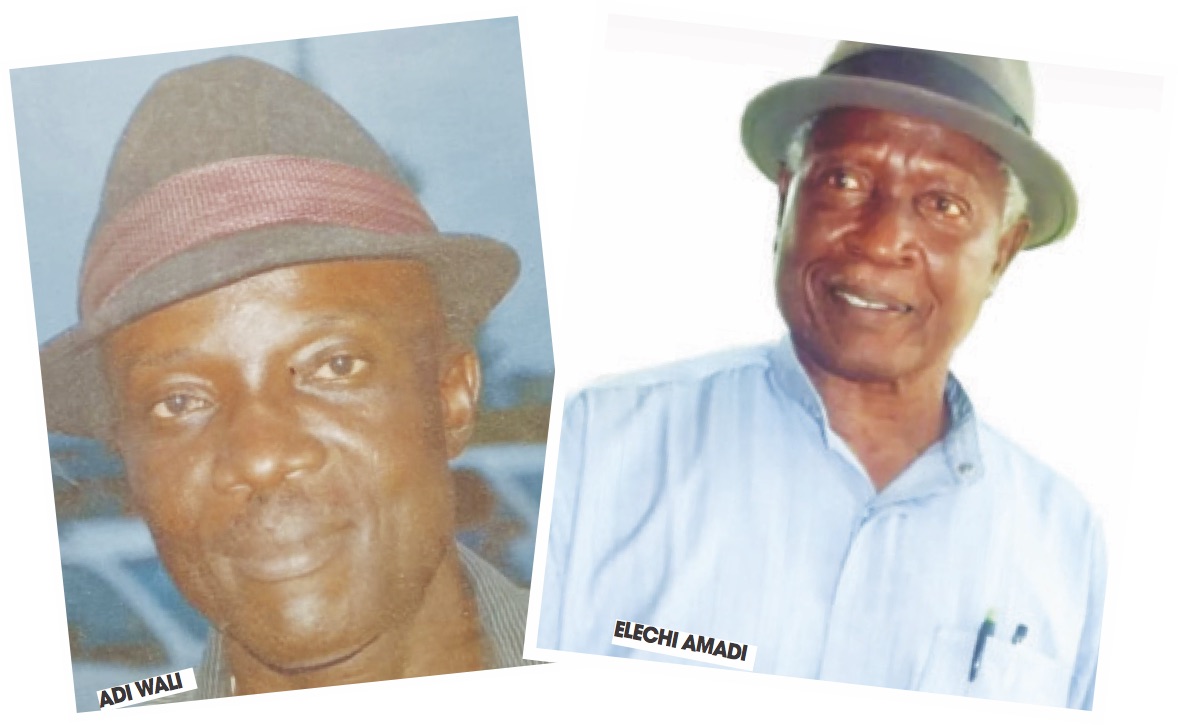
When you mention Mbodo, Aluu, community in Port Harcourt, River State, perhaps the first name that comes to your mind in the cultural sector is the legendary writer, Elechi Amadi. But there is another writer who has stepped into his shoes since his passage: Chief Adi Wali. Wali is a graduate of Advanced Writing and Reporting Skills (AWARES 2), 2008 class of the prestigious Pan African University School of Media and Communication, Lagos. A former student of journalism (NIJ), Lagos; Empire Journalism Centre (EJC), Port Harcourt, he has a Postgraduate Diploma (Journalism). He also studied Mass Communication in 1985 at the University of Ibadan Joint Education Project, College of Arts, Mgt, and Technology, Aba. Government Secondary Commercial School, Ibaa. He is on the board of Ken Saro-Wiwa International Residency.
Two of his works are currently on Amazon: Strangers on the Jungle (a novel) and Tears of the Bereaved. He is also the author of Our Stories (short stories), Stepping Up the Ladder (biography), Memories of Facts (fiction), Kolou My Country (fiction). Chief Wali has served as Chairman of ANA Rivers States and has contributed immensely to the growth of literature in his state and Nigeria. Recently, he was admitted into the prestigious college of ANA fellows at the 44th ANA Convention held at the Mamman Vatsa Writers’ Village, Mpampe, Abuja, and he is on the Board of the Ken Saro-Wiwa Writers’ Residency, run by ANA National body at the writers’village.
“It is a very rare honour bestowed on me at this time,” he told The Sun Literary Review. “And this is the dream of everything I have worked for all my life, to be among the people who have been writing to shape the nation, to shape the environment and shape myself. Indeed, it is a thing of joy. ANA is a formidable association, where you find scholars and nationalists like Chinua Achebe and my late uncle, Elechi Amadi.
“ANA is a place where you find intellectuals, people of worthy character, who have contributed a great deal to make literature great and ensure that the society keeps afloat. This is why I am happy today to be among these people. It gives me great joy to be so honoured by the leadership of ANA.”
Wali doesn’t fail to mention about the Elechi Amadi influence on his writings. “Today, my uncle in his grave is a happy man – a happy man for his own son is so honoured. I think he must be happy ,because he worked hard to see me as a great writer. Before he passed on, he anointed me. He said, ‘My son, take up the mantle’. I never knew he was going to die. Before then, he invited me to his house for a private session. He said to me in our local Ikwerre dialect, ‘Do you know you will do more than I am doing?’ Keep writing; keep writing. Never give up. So, even if I die today, I have left a son. Not just anybody, but a worthy son who can take over the mantle and take it to far places’.” From his oeuvre, Wali has done well for himself, though his brilliance is yet to resonate like that of Amadi.
Wali admitted in an earlier interview with The Sun Literary Review: “Captain Elechi Amadi had had domineering influence on my writing; I had the privilege of reaching him at will whenever the need arises. Prior to my foray into creative writing, he was an inspiring fan of my editorial page of the monthly magazine I edit, Rivers Informant, a monthly publication of the Rivers State Govt House Press Unit. He read a feature entitled “Sharia And Zamfara Economy” in one of national dailies, National Interest newspapers, now defunct, when the debate about Sharia law and practices in a secular nation-state like Nigeria was at its peak. Another was the editorial “Agboro As A Figure of Speech in Abia”, which was reacting to the ineptitude/unethical behaviour of the then Abia State Commissioner for Information and Strategy during Gov. Theodore Orji’s regime. I think those writings, among others, intrigued him so much that he dubbed them as masterpieces from an ingenious master craftsmanship; I felt so flattered but at this time challenged.
“Precisely, he encouraged and urged me into literary writing. I think he was desirous of a successor not far from him! My first published work, Our Stories, a collection of short stories, had its part four; a kind of oral literature and Proverbs. He expressed his happiness but advised me to do a revised edition to do away with the section on proverbs and develop a new creative writing that would serve as African oral literature. “Proverbs are where African philosophy is domiciled,” he postulated. Based on that wise counsel, I’m rounding up a new novel, Oknazinkpa, otherwise represented in English language as “Thoughts of Conscience”, enriched with our indigenous values, mores… proverbs and fables.”
At the 2025 ANA Convention he echoed: “Elechi Amadi believed that through my works, I will represent him anywhere in the literary world. He confessed that my works were better than what he did for literature. He said I shouldn’t relax or allow anybody to stop or disturb me. And so, here we are today. It is a glorious moment for me to have lived to see the blessing come true”.
Wali thanked ANA for the fellowship. Be also thanked his friends in the media who had always been there for him. “It has been a wonderful journey so far. So far, so good. I want to tell Nigerians like I have always said, that literature should be taken seriously. Yes, it has to be taken seriously by everyone. We grew up with it; it is here and it will continue to be here. Read. Find time to read, to see how literature can shape your life. Literature is our history. Literature is life. It is one thing you cannot control or fiddle with. It is the conscience of the people. It is time to continue to read, whether you use electronics or whatever means, please keep reading,” he echoed. He also advised those writing to keep writing, for “There is a need to impact reading in our society, in the system generally. This, he said: “Go to a physical and not ICT library. Get hold of books and read. Get ideas and issues into your head. Expand your knowledge-base. Get to see the world through books. The world out there is in the books people write. History does not die when you keep it physical.”
He has always been an advocated for physical books. As far as he is concerned, “Literature should be made compulsory at all levels, from primary, secondary through the university. I have been a vanguard of reading and promoting literature. This honour will spur me on to do more, to write more, to also advocate more and write more