Follow Us on Google
From Sunday Ani
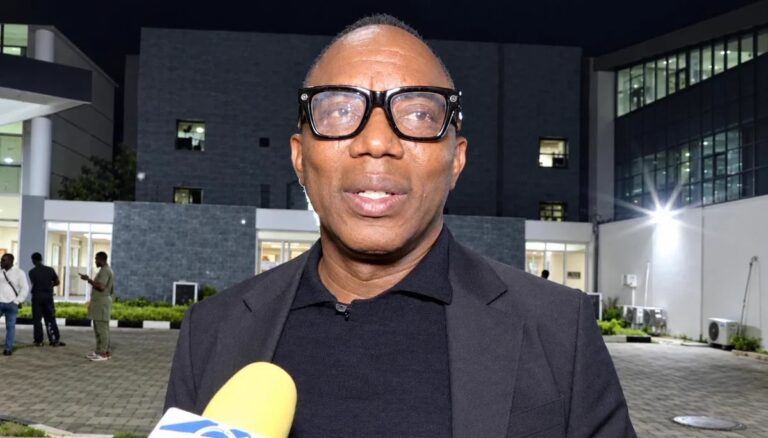
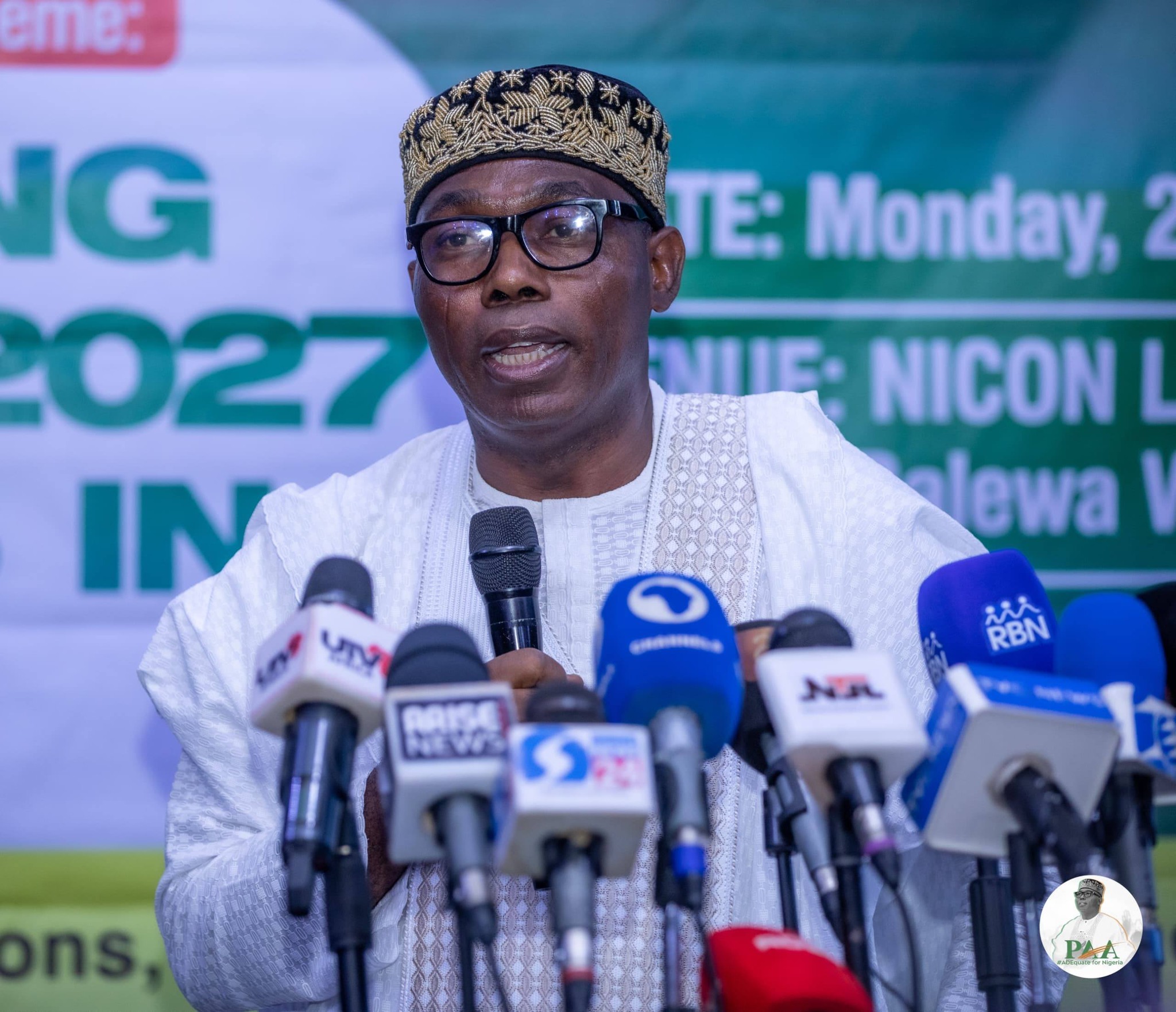
The Social Democratic Party (SDP) presidential candidate Prince Adewole Adebayo’s warning four years ago has drawn renewed attention as Nigeria confronts two of its most persistent challenges: insecurity and economic distress.
Speaking as a presidential candidate ahead of the 2023 elections, some of the positions he advanced, particularly on state policing, revenue generation and economic management, are still dominating current policy conversations in Nigeria.
Responding to questions on why anyone would seek to govern a country burdened by rising debt, inflation and unemployment, he had argued that leadership should not run away from crises but confront them.
Using the analogy of a firefighter running towards a burning building rather than running away from it, he had described Nigeria’s problems as opportunities for service rather than as reasons to avoid public office.
According to him, Nigeria’s economic difficulties were less a reflection of resource scarcity and more a consequence of poor governance, weak accountability and leadership failure.
He maintained that Nigeria’s revenue challenge was overstated, insisting that the country was collecting only a fraction of what it should ordinarily generate.
Adebayo argued that rather than imposing additional taxes on struggling citizens and businesses, the government should focus on stopping leakages, curbing crude oil theft and formalising revenue collection.
He said the economy had been weakened by what he described as widespread diversion of public resources and the failure to secure productive sectors.
On taxation, he rejected proposals for blanket increases, warning that irrational tax administration often pushes businesses towards informality and corruption.
Drawing from personal experience, he recounted receiving a large tax demand on a company that allegedly recorded no profit, arguing that taxation should be tied to actual earnings and transparent accounting rather than arbitrary assessments.
He proposed a more integrated system where company filings and tax obligations would be streamlined to improve compliance and reduce opportunities for extortion.
He also pointed to untapped sectors, including solid minerals, claiming that large-scale illegal extraction of resources across parts of the country represented lost national wealth.
According to him, better governance and tighter control of natural resources would significantly expand government income without increasing citizens’ burden.
However, it was his position on security and policing that appears most aligned with current national conversations.
Other News
Reacting to incidents of police brutality and unlawful killings at the time, he had called for deep structural reforms of law enforcement.
He argued that policing in Nigeria had become disconnected from communities and too centralised to deliver justice effectively.
According to him, police should operate primarily as protectors of citizens rather than instruments of state authority.
He proposed that policing should be within a broader justice framework. He also proposed strengthening the role of the Attorney General as defender of public interest rather than merely the government’s legal representative.
Most significantly, he openly endorsed state police and local government policing.
His argument was hinged on the principle that every level of government empowered to make laws should also possess limited authority to enforce those laws.
He questioned the logic of states creating criminal laws while relying entirely on a centrally controlled police structure headquartered in Abuja.
Using examples ranging from traffic enforcement to major criminal offences, he argued that effective policing requires proximity to the communities affected.
He cited situations where governors must depend on federal police authorities in matters that occur entirely within their states as evidence of structural imbalance.
For Adebayo, community-based policing would improve accountability, speed of response and citizens’ confidence in law enforcement.
He further warned that unless the government rebuilds trust between security institutions and citizens, broader social instability would persist.
Beyond policy, the SDP leader framed governance itself as a question of accountability and public trust.
He repeatedly argued that leadership should focus less on political calculations and more on solving concrete issues, including poverty, insecurity, infrastructure failure and economic productivity.
While acknowledging that his party was not considered a frontrunner at the time, he insisted that issue-based politics would ultimately prove more sustainable than campaigns built around personalities, ethnicity or political structures.
Four years after the interview, with debates over constitutional amendments, state police and economic restructuring currently dominating public discourse, his remarks have resurfaced as an example of ideas that remain part of Nigeria’s unresolved governance conversation.