 Follow Us on Google

By Juliana Taiwo-Obalonye
From understaffed clinics in Nigeria’s capital to the continental drive for two million community health workers by 2030, women on the frontline are carrying an enormous burden, often without adequate pay, protection or career prospects.

At the Apo Primary Healthcare Centre in Abuja, Nigeria’s capital, the task of delivering basic healthcare to a growing community rests on the shoulders of just eight workers: seven community health workers serving as volunteers and one midwife.
Their responsibilities stretch far beyond the confines of the facility. They conduct routine immunisation, visit communities several kilometres away, provide health education, offer antenatal care, attend to women in labour, treat minor ailments and refer complicated cases. They also screen patients for hypertension and diabetes, provide HIV testing and support treatment services.

For the women among them, the workload is compounded by the demands of family and domestic responsibilities outside the health facility.
Victoria Frederick, an officer in charge of the centre, says the biggest challenge confronting the facility is inadequate manpower, which places enormous pressure on the few available workers and affects the efficiency of service delivery.
With only one midwife and seven community health workers, staff are required to cover multiple services, sometimes simultaneously. The workers also undertake outreach to communities located two kilometres or more from the facility.
The situation illustrates the human resource challenges facing primary healthcare delivery in Nigeria and across Africa, where community health workers remain a critical link between health systems and underserved populations.
But behind the statistics and policy commitments are women whose labour sustains essential services, often without the financial security, professional recognition and institutional support that should accompany their responsibilities.
Frederick says some of the volunteers at the centre have worked for years, hoping that their services will eventually translate into formal employment.
For Faith Martin, another community health worker at the facility, the uncertainty surrounding volunteer work is one of the biggest threats to the sustainability of the workforce.
She estimates that some volunteers receive less than N50,000, depending on how long they have served and the contributions they make. She stresses that she is not in the salary department, so the figure is her estimate rather than an official pay scale.
The low remuneration, she says, has pushed some volunteers to leave, while others who remain are forced to shoulder responsibilities beyond their capacity.
“One person can be in charge of family planning, routine immunisation and hypertension,” Martin explains, describing how staff shortages leave individual workers covering several service areas.
She also identifies the absence of clear career pathways as a major challenge, noting that some community health extension workers eventually change professions because they cannot see a sustainable future in the field.
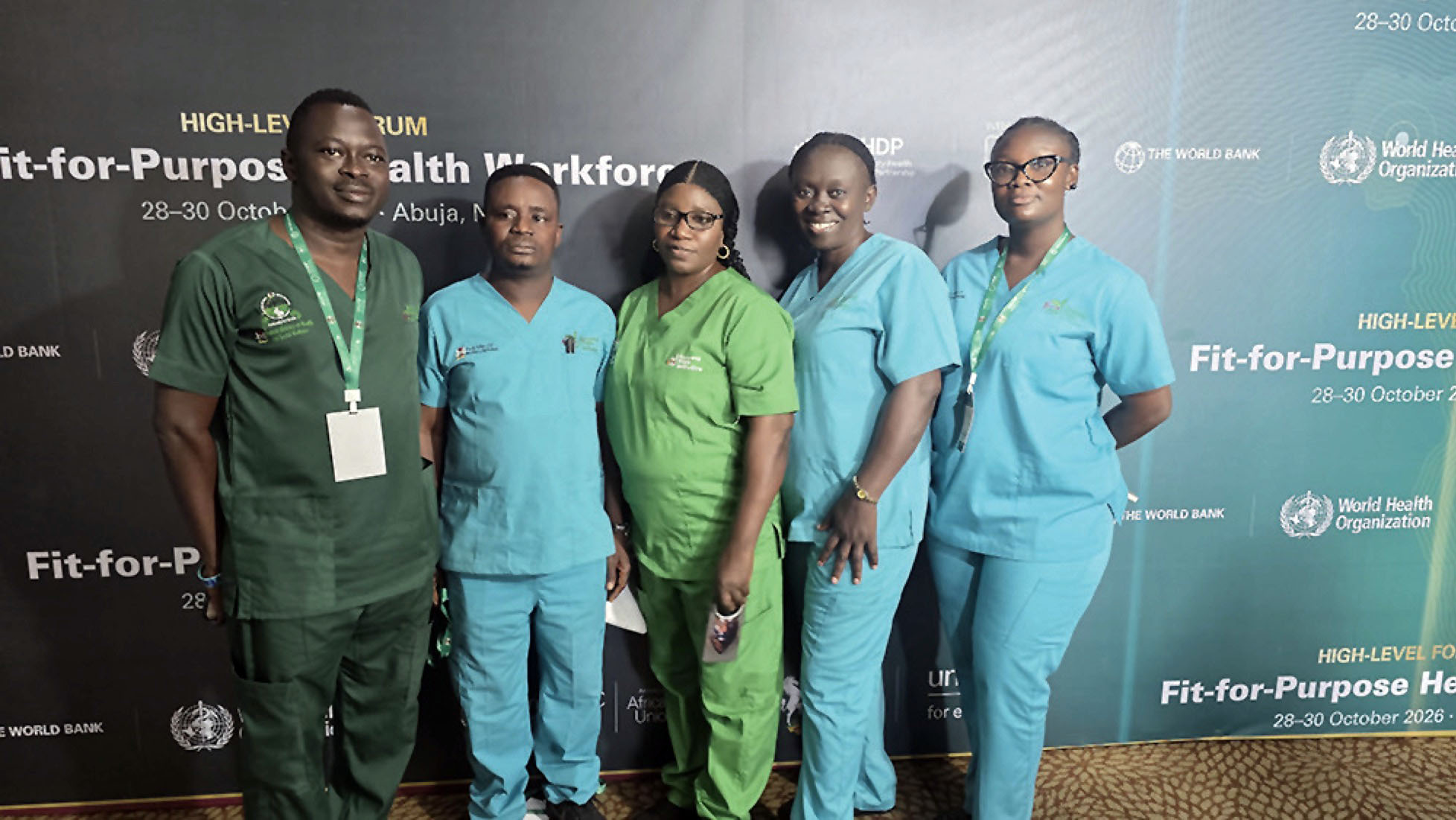
The concerns raised by the two workers reflect a wider continental challenge that was at the centre of the High-Level Forum on Fit-for-Purpose Health Workforce, held in Abuja from October 28 to 30, 2026.
The forum brought together representatives from close to 55 African Union member states, more than 200 delegates and over 36 partners to discuss how to strengthen the continent’s health workforce.
It also provided the platform for the launch of the Continental Acceleration Plan for Community Health Workers, by Vice President Kashim Shettima at the State House.
The plan is part of Africa’s drive to increase the number of trained community health workers from about 1.2 million to two million by 2030, in recognition of their role in delivering essential services, particularly in rural and underserved communities.
Yet, as the continent seeks to recruit and retain more workers, the experiences of women such as Frederick and Martin raise a fundamental question: who supports the women caring for Africa’s communities?
The burden behind the numbers
Dr. Folake Olayinka, director of immunisation at the Africa Centres for Disease Control and Prevention (Africa CDC), says the contributions of women to community healthcare must be considered alongside the conditions under which they work.
She describes women in the community health workforce as carrying a “triple burden”: caring for their own young children, looking after sick family members and making up a significant proportion of the workforce responsible for providing healthcare to communities.
According to her, the challenge is not simply to increase the number of women working as community health workers but to ensure that they have the resources, protection and institutional support required to perform their duties.
She also raises concern about women’s limited representation in leadership, saying fewer than 25 per cent of community health workers are in leadership positions.
For Olayinka, the expansion of the workforce must be accompanied by deliberate efforts to create safe and supportive work environments, strengthen workforce policies and increase women’s participation in decision-making.
Her position underscores the need to move beyond recruitment figures to examine the quality of employment, working conditions and professional opportunities available to those delivering services at community level.
At Apo Primary Healthcare Centre, the consequences of inadequate support are evident in the daily experiences of workers who must attend to patients despite limited personnel and resources.
Frederick says community health workers often put the needs of patients first, even when they are unwell themselves.
She recalls the satisfaction of saving a patient’s life as one of the experiences that makes the work worthwhile but says the commitment of frontline workers should not be taken for granted.
She acknowledges interventions by the Nigerian government and development partners, particularly the Basic Health Care Provision Fund (BHCPF), which she says has helped improve activities at the facility.
The solarisation of the centre in 2026 has also improved electricity supply, making it possible to attend to patients and conduct childbirth at night.
She says resources available through the BHCPF enabled the facility to engage a midwife, strengthening its capacity to provide maternal healthcare.
However, she insists that more support is required, particularly in addressing the shortage of personnel.
From volunteers to a sustainable workforce
The challenge of retaining community health workers is also a major concern for Africa CDC, which says the continent must address its dependence on external funding if it hopes to build a sustainable workforce.
Dr. Jean Kaseya, director-general of Africa CDC, says Africa has approximately 1.2 million trained community health workers serving a population of about 1.53 billion across 55 African Union member states.
The target is to increase the number to two million by 2030, but he warns that the financing structure of the existing workforce raises questions about sustainability.
According to him, about 85 per cent of community health workers are financed by external partners, making domestic investment essential to securing their future.
He argues that African governments must take greater responsibility for financing, recruiting and retaining community health workers rather than relying heavily on development assistance.
The continental investment case presented at the forum estimates that every dollar invested in community health could generate a return of about $19, while an estimated $4.3 billion annually would be required to achieve the two-million-worker target by 2030.
Dr. Landry Dongmo Tsague, lead of the Centre for Primary Healthcare at Africa CDC, says the investment is justified by the potential to prevent illnesses, reduce maternal and child deaths and detect disease outbreaks early.
He argues that strengthening community health is not merely a development intervention but an issue of sovereignty and health security.
The forum also heard that overseas development assistance has declined, increasing the urgency for African countries to mobilise domestic resources.
Although African governments committed under the Abuja Declaration to allocate 15 per cent of their national budgets to health, many remain far from meeting the target.
Nigeria’s recruitment drive
Nigeria has outlined plans to expand its community health workforce as part of the continental commitment.
Dr. Sid Mohamed Mohamed, director of Primary Care System Development at the National Primary Health Care Development Agency, says President Bola Tinubu, in his capacity as African Union Champion for Human Resources for Health and the Community Health Delivery Partnership, has made a commitment to strengthening the country’s community health workforce.
He says the President directed the Coordinating Minister of Health and Social Welfare to recruit community health workers across the country.
More than 5,000 workers have been recruited at the last count, according to him, while the national target is to recruit more than 88,000.
Under the Community-Based Health Worker Programme, the plan is to have 10 workers in each ward across more than 8,000 wards.
Mohamed says states are expected to develop five-year strategic plans, although some may begin with three workers per ward and expand recruitment according to available resources.
He identifies Kaduna, Plateau, Ebonyi, Taraba and Benue among the states that have developed plans or taken steps towards recruitment and absorption of community health workers.
Kaduna, he says, has a plan to recruit 1,800 workers annually.
He adds that the Basic Health Care Provision Fund is among the mechanisms supporting recruitment, while the Federal Government wants states and local governments to move beyond temporary engagement towards full absorption into the civil service.
The responsibility for sustainable employment, absorption and career development, he says, rests substantially with state and local governments.
For workers such as Martin, however, the issue is not only whether more people will be recruited but whether those already serving will be given the recognition and opportunities needed to remain in the profession.
She says improved remuneration, recruitment and clear career pathways are necessary to prevent trained workers from abandoning the sector.
A voice for frontline workers
Although the Abuja forum brought together policymakers, development partners and health experts to discuss the future of community healthcare, the experiences of frontline workers also exposed a gap between policy conversations and the people expected to implement the decisions.
Frederick says she was initially unaware that discussions on the future of community health workers were taking place at the continental level.
She describes her participation in the Abuja engagement as a privilege, particularly because it offered her an opportunity to see representatives and leaders from different African countries discussing issues affecting the workforce.
Martin, however, says the two frontline workers were not given an opportunity to speak directly during the main forum, while their supervisors were allowed to make contributions.
Her observation raises questions about how effectively the experiences of workers at the lowest levels of the health system are reflected in policy decisions.
For a programme that depends heavily on community-level implementation, the voices of those who understand the daily realities of service delivery are crucial to ensuring that commitments translate into practical improvements.
Africa CDC DG, Kaseya, has called for stronger domestic financing, improved training, digital technology to reduce paper-based reporting and better access to essential health commodities.
Prof. Aliko Baba Ahmed, representing the Africa CDC DG for West Africa, says the continent must move from discussions to implementation, stressing that community health workers must be trained, remunerated and supported.
He also identifies training capacity as a major consideration as countries work towards the 2030 target.
Olayinka says community health workers must be equipped to provide preventive, maternal, child, curative and rehabilitative services, with appropriate training, supervision and support.
She also highlights the importance of immunisation in the community health strategy, citing an estimated 7.1 million zero-dose children in Africa — children who have not received routine vaccination.
According to her, every dollar invested in immunisation could yield returns of up to 54 dollars, reinforcing the importance of deploying trained community health workers to reach underserved populations.
Minister of State for Health and Social Welfare, Dr. Iziaq Salako, says the forum is expected to translate technical discussions into concrete political commitments and implementation plans.
Among the expected outcomes are country roadmaps covering the next 12 to 18 months, commitments on domestic financing, payroll reforms and policy measures, as well as agreement on continental priorities.
He urged participating countries to ensure that the consensus reached at the forum leads to action at national and community levels.
The two-million target and the human cost of delay
For Frederick, the prospect of increasing the number of community health workers to two million by 2030 is encouraging because it could improve service delivery and reduce the pressure on existing personnel.
But the target will mean little to workers if recruitment is not matched with fair remuneration, adequate staffing, professional development and improved working conditions.
At Apo Primary Healthcare Centre, seven volunteers and one midwife continue to provide services that touch almost every aspect of community health, from immunisation and antenatal care to deliveries, referrals and the management of chronic conditions.
Their experience illustrates the contradiction at the heart of Africa’s community health ambitions: the continent needs more workers, but those already on the frontline are struggling with shortages, low pay and uncertain career prospects.
For women, the burden extends beyond the clinic, where professional responsibilities compete with the demands of caring for their own families and communities.
The High-Level Forum on Fit-for-Purpose Health Workforce has placed the need for a larger, better-trained and more sustainable workforce on the continental agenda.
The challenge now is to ensure that the women and men delivering care are not treated merely as numbers in a recruitment target, but as essential health professionals whose welfare, dignity and voices matter.
Until that happens, the ambition of two million community health workers by 2030 risks being measured by how many people are recruited, rather than by how many are adequately supported to remain in service.
For the seven volunteers and one midwife at Apo, the difference between those two measures is not a policy debate. It is the reality of delivering healthcare every day.