Follow Us on Google

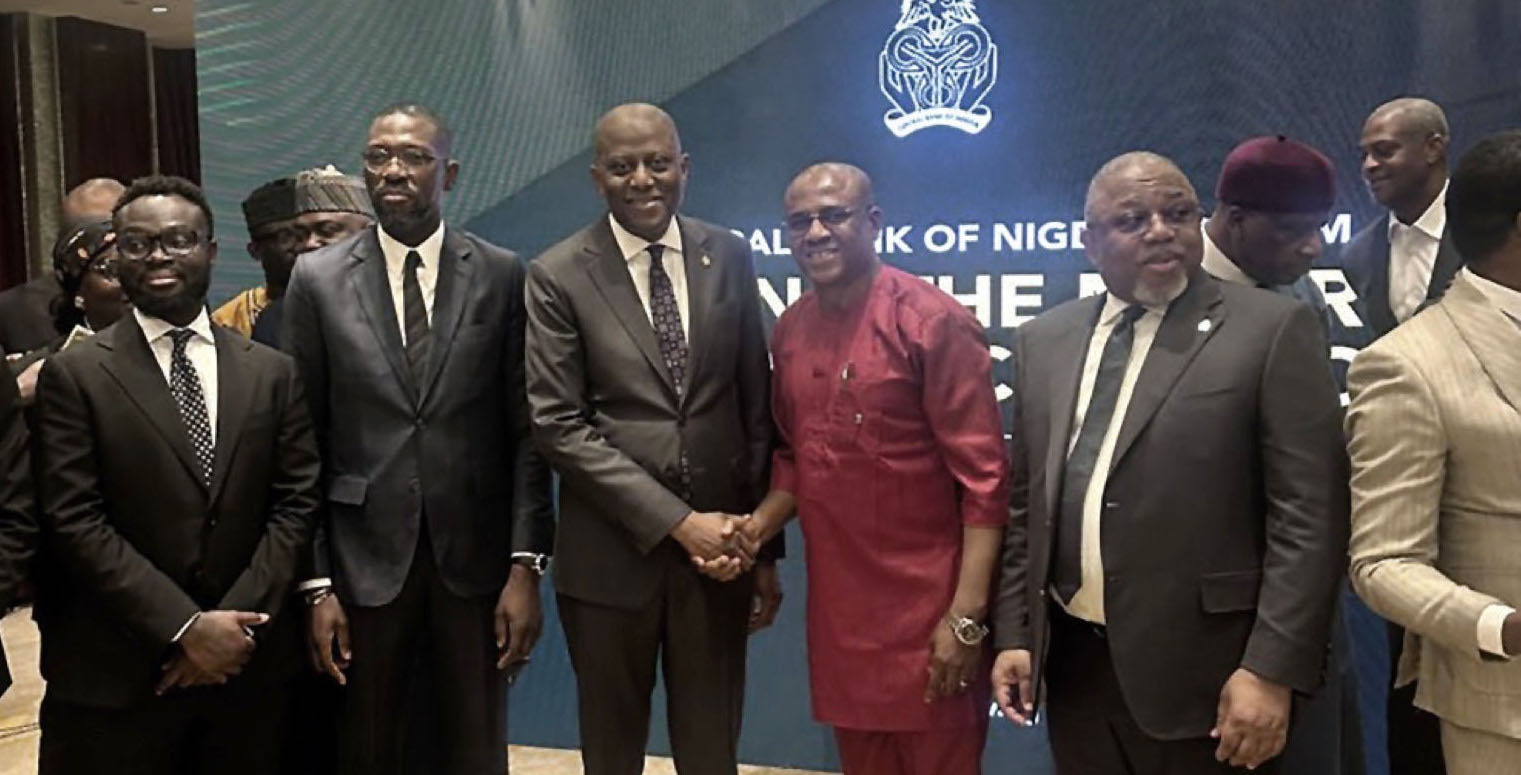
Last month, the governor of the Central Bank of Nigeria (CBN), Mr. Olayemi Cardoso, was in Beijing, China, to lead high-level engagements aimed at strengthening financial and economic ties between Nigeria and China.
Themed “Strengthening the Nigeria-China Financial Corridor”, it was an intimate conversation with business, financial and industry leaders actively engaged in the Nigeria-China corridor.

The roundtable explored opportunities to strengthen financial connectivity between Nigeria and China, improve cross-border payments and settlement, support trade and investment flows and hear directly from those operating across the corridor about the opportunities and practical constraints they encounter.
The business and financial roundtable convened at the Pan-Pacific Beijing focused on easing cross-border payment barriers, streamlining settlement arrangements and expanding Nigerian banking presence in China. Cardoso urged deeper Chinese investment in Nigerian financial markets, including naira-denominated financial instruments.
Discussions included top officials from major Chinese financial institutions, such as the Industrial and Commercial Bank of China (ICBC) and the People’s Bank of China (with Governor Pan Gongsheng).
The CBN governor stressed the importance of direct engagement with businesses to understand the opportunities and constraints affecting financial activities between the two economies.
The CBN’s deputy governor for economic policy, Philip Ikeazor, delivered the opening remarks, highlighting the need to translate improvements in Nigeria’s macroeconomic fundamentals into increased investment and stronger financial markets.
Nigeria’s Ambassador to China, Lt.-Gen. Abdulrahman Bello Dambazau (retd.), also spoke at the event.
In his speech, international logistician, Mr. Festus Mbisiogu, made a case for Nigerian banks to establish their presence in some cities in China, including Beijing, Guangzhou and Shanghai, where importers can be debited from their naira accounts.
Maintaining that many in the business community do not understand the RMB swap with Chinese government, he urged the Central Bank of Nigeria to strengthen collaboration with Chinese financial institutions, particularly in payment systems, cross-border transactions and knowledge-sharing.
He explained that trade depends not only on goods, but also on money, trust, and efficient transactions.
Mbisiogu, who is the chairman, Uzotex Bonded Terminal and Blue Diamond Group, said that delayed payments, exchange rate uncertainty and limited access to reliable settlement channels can disrupt supply chains, increase costs, and affect consumers.
Similarly, Mbisiogu advocated for smarter cargo solutions to tackle Nigeria’s logistics challenges. He made the charge on October 20, 2026, at an interactive session titled “Beyond the Bottleneck: Rethinking Nigeria’s Logistics Challenges and Unlocking Smarter Cargo Solutions,” held in Yiwu, China.
The session, attended by logistics executives and industry practitioners, examined challenges associated with cargo clearance, rising operational costs and measures to improve efficiency across Nigeria’s supply chain.
Mbisiogu identified inaccurate documentation as one of the major causes of cargo delays, additional charges and disputes in international trade.
He said discrepancies in invoices, packing lists, bills of lading, permits, customs declarations and other shipping documents could lead to prolonged cargo examinations, demurrage, penalties and avoidable financial losses.
He urged importers and their agents to ensure that shipment descriptions, quantities, declared values, weights and consignee details were consistent across all relevant documents.
According to him, businesses should embrace pre-arrival checks, digital document management and standardised verification procedures to identify and correct errors before shipments reach their destinations.
“Many of the most expensive logistics mistakes occur before cargo reaches Nigeria,” he said, stressing that compliance should be treated as an investment in protecting cargo, capital and customer confidence.
On the role of bonded terminals, Mbisiogu said they could serve as strategic logistics hubs rather than mere storage facilities.
He explained that properly managed bonded terminals, operating in compliance with customs regulations, could improve cargo visibility, provide storage flexibility, support distribution planning and help businesses control costs.
He added that they could also ease pressure on congested ports, improve inventory management and strengthen coordination among customs authorities, shipping lines, clearing agents and transport operators.
However, he cautioned that the benefits of bonded terminals depended on accurate record-keeping, adherence to customs requirements and transparent operational procedures and charges.
Addressing the broader challenges confronting Nigeria’s logistics sector, Mbisiogu identified incomplete documentation, regulatory delays, congestion, poor communication, weak transport coordination and limited supply-chain visibility as factors contributing to rising costs.
He called for a shift from reactive problem-solving to preventive logistics management, urging stakeholders to identify potential risks early, monitor shipment milestones and communicate promptly when delays occur.
He also emphasised the need for stronger cooperation among importers, freight forwarders, clearing agents, shipping lines, terminal operators, customs authorities and transport providers.
According to him, effective coordination among these stakeholders is essential to reducing unnecessary delays and ensuring that cargo moves through the supply chain more efficiently.
Other News
Participants at the session were encouraged to verify shipping documents, permits and total landed costs before dispatching cargo, conduct pre-arrival checks and promptly address discrepancies.
Other recommendations included maintaining accurate customs, cargo and payment records; improving terminal tracking, inventory control and gate management; and coordinating cargo release, truck scheduling and empty-container returns.
The forum also highlighted the importance of measuring logistics performance through indicators such as cargo-clearance time, container dwell time, demurrage costs, delivery reliability and customer complaints.
Mbisiogu said these measures would help businesses identify operational weaknesses, improve accountability and make informed decisions about their logistics processes.
He maintained that improving efficiency in the sector required a collective commitment from all participants in the supply chain, noting that no single stakeholder could eliminate every bottleneck without cooperation from others.
The logistics executive urged industry players to abandon the assumption that avoidable delays and documentation errors were inevitable features of international trade.
He said better preparation, timely communication, professional accountability and disciplined execution could significantly improve cargo movement and reduce the financial burden on businesses.
The engagement in Yiwu concluded with a call for greater compliance, innovation, transparency and collaboration in Nigeria’s logistics industry.
Mbisiogu stressed that successful cargo delivery depended on accurate information, coordinated execution and adherence to regulatory requirements, adding that these principles were essential to building a more reliable and cost-effective logistics system.
Again, determined to boost trade between Nigeria and Japan by strengthening freight movement, customs clearance and logistics coordination, Blue Diamond Strategic Concern entered into a strategic partnership with Nahfkenn Associates PLC.
Announcing the partnership in Lagos last month, the Chairman of Blue Diamond Group, Mr. Festus Mbisogu, said it was designed to improve cargo movement from Japan to Nigeria by integrating international shipping coordination with local customs clearance and logistics infrastructure.
Mbisogu, who disclosed this in a statement, said the agreement establishes a framework for commercial cooperation between the two companies, aimed at improving logistics services and expanding business opportunities for importers and international trading companies operating across both markets.
He stated: “Under the arrangement, Nahfkenn Associates PLC will coordinate and promote shipments originating in Japan, support related business development and serve as Blue Diamond’s exclusive commercial representative in the Japanese market.
“Blue Diamond Logistics, on its part, will be responsible for customs clearance in Nigeria.
“The partnership brings together Nahfkenn’s Non-Vessel-Operating Common Carrier (NVOCC) licence in Japan and Blue Diamond’s licensed bonded warehouse and dry-port terminal operations in Nigeria.
“The integration is expected to improve coordination between international shipping and destination logistics, providing importers with a more connected process for moving cargo from Japan to Nigeria.
“For Nigerian businesses importing goods from Japan, the arrangement is expected to facilitate communication between international shipping operators and local logistics providers, particularly in coordinating cargo movement, customs clearance and onward handling.
“The collaboration reflects a shared commitment to developing practical logistics solutions that address the needs of Nigerian importers and international trading partners.
“The agreement establishes a clear division of responsibilities between the two companies, with Nahfkenn handling shipment coordination and commercial representation in Japan, while Blue Diamond Logistics oversees customs clearance in Nigeria.
“The arrangement is designed to streamline coordination between the origin and destination points of cargo shipments, helping businesses manage the different stages involved in international freight movement.
“Effective coordination between international shipping and destination logistics is important to importers seeking better cargo visibility, improved operational planning and more efficient management of cross-border trade.
“Through the partnership, the companies aim to establish stronger commercial relationships with importers, cargo owners, manufacturers, distributors and international trading companies seeking logistics support for trade between Japan and Nigeria.
“The collaboration also provides a platform for both companies to expand their commercial networks and explore further opportunities within the international logistics market.
“Blue Diamond Strategic Concern, a subsidiary of Blue Diamond Logistics China, is responsible for advancing the group’s strategic commercial partnerships and international business development activities.
“Through Blue Diamond Logistics, the group operates within Nigeria’s logistics sector, providing services that include bonded warehousing, dry-port terminal operations, cargo handling and customs clearance.
“By combining international shipping coordination with local logistics infrastructure, the companies intend to provide importers with a more integrated approach to cargo movement and destination services.
“The agreement comes as businesses engaged in international trade seek coordinated logistics arrangements to manage the movement of goods across markets.
“Blue Diamond Strategic Concern and Nahfkenn Associates PLC invite importers, manufacturers, distributors and international trading companies to explore opportunities arising from the partnership.
“The collaboration is expected to make the connection between international shipping and Nigerian logistics services more coordinated and accessible to businesses operating across both markets.
“We are optimistic that the arrangement will strengthen commercial cooperation between Japan and Nigeria while supporting the development of integrated logistics services for businesses engaged in bilateral trade.”