Follow Us on Google

As Nigeria moves towards the 2027 general election, the country’s democratic process is facing a growing threat that extends beyond the traditional challenges of vote-buying, electoral violence, ballot manipulation and political interference.
Artificial intelligence (AI), deepfakes, coordinated disinformation campaigns and foreign information manipulation are creating new vulnerabilities that could influence voter behaviour, undermine public confidence and complicate the work of electoral institutions.
From fabricated videos of political candidates to cloned voices, manipulated photographs and false election results circulating on social media, the ability to manufacture and distribute convincing false information is becoming increasingly sophisticated.

The concern is that next general elections could be fought not only at polling units but also across digital platforms, where a single fabricated recording or misleading political narrative could reach millions of people before the truth is established.
More troubling is the possibility that genuine evidence of electoral malpractice could also be dismissed as artificial intelligence-generated content, making accountability increasingly difficult.
These emerging threats, alongside longstanding questions about electoral transparency, vote-buying and public trust in the electoral umpire, dominated discussions at the ongoing Beyond the Ballot, National Summit on Electoral Information Integrity: AI, FIMI and the Integrity of Nigeria’s 2027 Election, held at Abuja.
The two-day summit, scheduled for November 2 and 3, 2026, brought together electoral stakeholders, journalists, policymakers, technology experts, civil society organisations and development partners to examine how Nigeria can protect the integrity of its 2027 elections against emerging information threats.
Convened by the International Press Centre (IPC), the Centre for Media and Society (CEMESO) and DAI under the European Union Support to Democratic Governance in Nigeria (EU-SDGN) programme, the summit examined the implications of artificial intelligence, foreign information manipulation and interference (FIMI), misinformation and disinformation for the country’s democratic future.
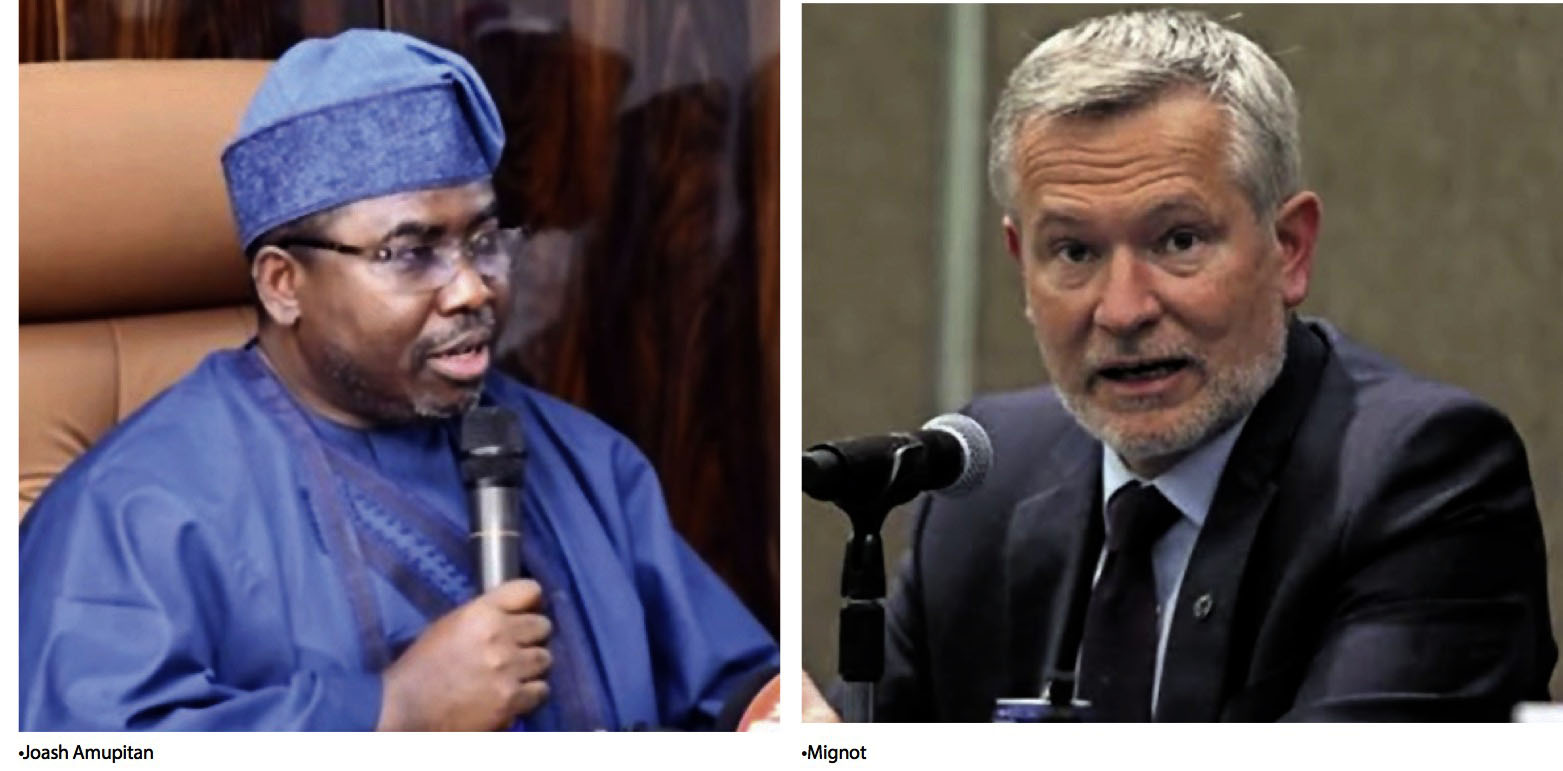
Among the prominent voices at the gathering were INEC Chairman, Prof. Joash Ojo Amupitan; former INEC Chairman, Prof. Attahiru Jega; European Union Ambassador to Nigeria and ECOWAS, Gautier Mignot; Executive Director of IPC, Dr Lanre Arogundade; Dr Toyosi Akerele-Ogunsiji; Ade Atobatele; and INEC’s Dayo Oketola.
While the conversations highlighted the urgent need to prepare for technology-driven electoral manipulation, they also exposed a fundamental question: Can Nigeria protect its 2027 elections from AI-driven disinformation without first addressing the transparency and accountability concerns that have continued to undermine public confidence in the electoral system?
Amupitan drew attention to the growing sophistication of artificial intelligence and its implications for electoral information integrity, particularly the emergence of deepfakes, synthetic media, voice cloning and automated content distribution.
“The development has significantly changed the information environment in which elections are conducted. Previously, producing convincing fabricated political content required considerable technical expertise and resources. Today, AI-powered tools have made it easier for individuals and organised groups to create realistic-looking videos, images and audio recordings with relatively little technical knowledge”, he said.
A political candidate could be portrayed as making a statement he never made. An electoral official could appear to announce a result that does not exist. A fabricated recording could be circulated to suggest that a candidate has withdrawn from an election or that an electoral institution has taken a controversial decision.
The danger is not limited to the content itself but also the speed and scale at which such material can spread.
In a politically charged environment, misleading information can generate anger, deepen divisions and influence public perception before the relevant institutions have an opportunity to respond.
For INEC, this means that protecting the credibility of the 2027 elections will require more than ensuring that voting procedures are properly conducted. The commission must also prepare for the possibility that false information could be deliberately deployed to discredit its processes and decisions.
However, the conversation at the summit was not restricted to artificial intelligence.
Akerele-Ogunsiji raised concerns about a particularly dangerous consequence of the growing availability of manipulated digital content: the erosion of public trust in genuine information.
She drew attention to what is known as the ‘liar’s dividend’, a situation in which the existence of deepfakes makes it easier for people to dismiss authentic evidence as fabricated.
Expressing her concern, she said: “My worry is the liar’s dividend…”. The concern is significant for Nigeria’s electoral environment. If a video genuinely captures an incident of electoral malpractice, those responsible could simply claim that the footage was generated using artificial intelligence. Similarly, an authentic audio recording exposing misconduct could be dismissed as a cloned voice, while fabricated evidence could be presented as genuine.
This creates a situation in which both truth and falsehood become difficult to establish in the public space.
The consequences could be particularly damaging during an election when political parties, candidates and their supporters are competing to shape public opinion.
Akerele-Ogunsiji also drew attention to Nigeria’s dependence on foreign artificial intelligence technologies and the digital inequalities that could limit the country’s ability to respond effectively to emerging threats. Her intervention raised questions about the need to develop local technological capacity, strengthen digital literacy and make AI education more accessible.
“For a country preparing for an election in which digital communication will play an increasingly important role, the ability of citizens to identify manipulated content should become a national priority,” she pointed out.
Beyond the technological threats, Atobatele challenged stakeholders to confront the electoral issues that have continued to generate concerns among Nigerians.
His intervention brought the discussion back to the credibility of the electoral process itself, particularly the transparency of INEC’s operations, vote-buying and the experience of voters in rural communities.
Atobatele questioned what happens to votes after accreditation and how Nigerians can independently verify the integrity of the process.
He stated: “My biggest concern remains what happens to your vote after it reaches the BVAS machine…”
The observation raises an important question about the relationship between electoral technology and public confidence.
INEC introduced the Bimodal Voter Accreditation System (BVAS) as part of efforts to strengthen voter accreditation and reduce electoral fraud. However, the deployment of technology does not automatically eliminate every concern surrounding the electoral process.
Voters still need confidence in the procedures through which accredited voters cast their ballots, results are recorded, transmitted, collated and declared.
The question of transparency becomes even more important when citizens cannot independently establish what happened to their votes after leaving polling units.
Atobatele’s concerns also highlighted the challenges facing rural voters, who may have limited access to digital information and fewer opportunities to independently verify electoral developments.
This raises the possibility that digital information integrity initiatives could fail to reach some of the very voters most vulnerable to manipulation.
The discussion also brought attention to vote-buying, which remains a serious challenge to the credibility of elections in Nigeria. While AI-generated propaganda may influence how voters perceive candidates, vote-buying directly affects the choices citizens make at polling units.
Consequently, efforts to protect the 2027 elections must address both the digital manipulation of voter information and the economic and institutional factors that make electoral malpractice possible.
Another important issue that emerged from the discussion concerned INEC’s Result Viewing Portal (IReV) and public expectations surrounding the electronic transmission and publication of election results.
Oketola provided clarification on the role of the portal, explaining the distinction between making polling-unit results publicly accessible and the formal collation of election results.
“IReV is designed to allow members of the public to view polling-unit result sheets uploaded to the platform. It is not the formal platform for the collation and declaration of election results”, he explained.
This distinction matters because the public often expects the immediate appearance of results on the portal to correspond with the formal declaration of results.
Where expectations are not properly managed, delays, technical difficulties or differences between what voters observe at polling units and what appears online could generate suspicion.
For the 2027 elections, INEC will need to improve public communication about the functions and limitations of its technological platforms. Citizens must understand how the various systems work, what information they provide and the procedures through which official results are established.
Equally important is the need for INEC to communicate promptly when technical challenges arise, rather than allowing information gaps to be filled by speculation and politically motivated narratives.
The participation of Prof. Jega, added an important institutional dimension to the discussions. Having previously supervised Nigeria’s electoral process, Jega’s presence underscored the importance of drawing lessons from earlier elections in preparing for the next general election.
One proposal he raised was the development of INEC-backed verification chatbots to help citizens establish the authenticity of election-related information.
Other News
Such platforms could provide voters with an accessible channel for checking suspicious claims, understanding electoral procedures and obtaining verified information directly from an authoritative source.
“For example, a voter who receives a viral message claiming that INEC has changed the date of an election could use an official verification platform to establish whether the information is authentic. Similarly, citizens could check information about voter registration, polling-unit locations and other electoral procedures.”
However, the success of such an initiative would depend on the accuracy, accessibility and credibility of the platform.
INEC would also need to ensure that such tools are available in formats that accommodate citizens with different levels of digital literacy and internet access.
Similarly, Dr Arogundade brought attention to the role of the media and the need for stronger collaboration among stakeholders.
The 2023 general elections demonstrated how quickly false narratives, manipulated information and unverified claims could influence public discourse.
For journalists, the 2027 elections will demand greater responsibility in verifying information before publication, particularly when dealing with viral videos, audio recordings, political statements and claims about electoral incidents.
‘The media must also avoid becoming an unwitting distribution channel for disinformation by publishing sensational claims without adequate verification.”
Arogundade’s reinforced the importance of developing coordinated responses that bring together the media, civil society, electoral institutions and technology platforms.
The European Union Ambassador to Nigeria and ECOWAS, Gautier Mignot, also highlighted the threat posed by information manipulation to public trust and democratic institutions.
The international dimension of the discussion is particularly relevant because information manipulation is no longer restricted by national borders. Political narratives, fabricated content and coordinated campaigns can originate outside Nigeria and be distributed to Nigerian audiences through digital platforms.
Foreign information manipulation and interference, therefore, present an additional challenge for a country preparing for a highly competitive election.
However, responses to these threats must also protect freedom of expression and prevent legitimate political criticism from being wrongly classified as disinformation.
This is an important balance for Nigeria, where democratic participation depends on the ability of citizens, journalists and civil society organisations to question public institutions and political leaders.
Interestingly, while artificial intelligence is creating new challenges for electoral integrity, it could also provide some of the tools needed to address them.
The proposed verification chatbots, for instance, could help citizens distinguish official electoral announcements from fabricated messages and misleading political claims. Such tools could also strengthen voter education and improve access to accurate information.
As the 2027 elections approach, journalists are likely to face one of their most difficult reporting environments.
The traditional responsibility of verifying information before publication is becoming even more important as AI tools make fabricated content increasingly convincing.
A video showing a political candidate making an inflammatory statement may appear authentic. An audio recording could imitate the voice of a public official. Images of violence or electoral misconduct could be generated or manipulated to influence public opinion.
In such circumstances, journalists cannot rely solely on the appearance of content or the speed at which it is circulating online.
Newsrooms will need stronger verification procedures, access to digital forensic tools and closer collaboration with fact-checking organisations.
They must also distinguish between reporting that a claim is circulating and establishing that the claim is true.
The responsibility extends to social media users, influencers and political commentators, whose platforms can amplify unverified information to large audiences.
The danger is that the competition for engagement, visibility and political influence could encourage the circulation of sensational content without adequate verification.
One of the important proposals discussed at the summit was the need for a coordinated national response to information manipulation.
A national protocol for electoral information integrity and the proposed Nigeria Electoral Information Integrity Partnership were highlighted as possible mechanisms for improving cooperation among relevant stakeholders.
Such collaboration would involve electoral institutions, media organisations, civil society groups, technology companies, fact-checkers and other relevant actors.
The objective would be to strengthen early detection, verification, public communication and coordinated responses to misleading information capable of threatening electoral peace and credibility.
The simulation exercise organised as part of the summit also provided an opportunity for participants to examine how stakeholders could respond to an AI-driven disinformation crisis.
Such practical exercises are important because the effectiveness of any national response will depend on how quickly institutions can identify emerging threats, share verified information and communicate with the public.
A disinformation campaign that goes unanswered for several hours could already have reached millions of people before an official response is issued.
This makes preparedness, rather than reaction alone, essential.
The discussions in Abuja have highlighted a reality that Nigeria cannot afford to ignore: the threats facing the 2027 elections are both technological and institutional.
Artificial intelligence may make it easier to create false political narratives, but it is the existing weaknesses in public trust, electoral transparency and institutional accountability that could make such narratives more effective.
A fabricated video alleging electoral malpractice may find willing audiences in communities where confidence in the electoral umpire is already low. Similarly, genuine evidence of wrongdoing could be dismissed as AI-generated because citizens have become increasingly accustomed to manipulated digital content.
The danger is that the distinction between truth and falsehood could become so blurred that public confidence in the entire electoral process suffers.
For INEC, the responsibility is to strengthen transparency, communicate effectively and ensure that electoral technologies inspire confidence rather than confusion.
Political parties and candidates must also recognise that the credibility of an election is more important than the short-term advantage that misinformation may provide.
Technology companies must strengthen their responses to coordinated manipulation, while media organisations must invest in verification and responsible reporting.
Civil Society Organisations, meanwhile, have a responsibility to promote voter education and hold institutions accountable.
For ordinary Nigerians, digital literacy must become an important part of democratic participation. Citizens must be willing to verify information before sharing it, question sensational political claims and seek confirmation from credible sources.
Ultimately, Nigeria’s ability to protect the 2027 elections will depend on whether these stakeholders can translate discussions into practical action.
The country cannot afford to enter another general election with institutions struggling to communicate effectively, voters uncertain about electoral procedures and digital platforms flooded with unverified political information.
Artificial intelligence may change the methods through which elections are manipulated, but it cannot replace the fundamental requirements of democracy: transparency, accountability, credible institutions and the right of citizens to make informed choices.
The real test of Nigeria’s 2027 elections will therefore not simply be whether INEC can deploy technology successfully or whether fact-checkers can identify deepfakes.
It will be whether Nigerians can trust the information they receive, believe that their votes count and have confidence that the institutions responsible for protecting their democratic rights will act transparently.
As the country moves closer to 2027, the question is no longer whether technology will shape the election. It is whether Nigeria is prepared to prevent technology, political interests and institutional weaknesses from undermining the people.