Follow Us on Google

By Noah Ebije, Kaduna
As the harmattan season approaches, bringing with it dry vegetation, dusty winds, falling humidity and heightened environmental risks, stakeholders in Kaduna State have raised the alarm over the growing threat of fire outbreaks, calling for urgent preventive measures to protect life, property and the environment.

The warning came against the backdrop of alarming fire statistics released by the Kaduna State Government, which disclosed that the state recorded 306 fire outbreaks in 2025, resulting in 10 deaths, 48 injuries and the destruction of properties estimated at approximately N6.4 billion.
The figures have renewed concerns among environmental advocates, emergency management authorities and other stakeholders about the need to strengthen fire prevention strategies, particularly as the dry season creates favourable conditions for the rapid spread of fires across residential communities, markets, farmlands, forests and other vulnerable locations.
At the centre of the growing campaign is the Kaduna State Climate Change Accountability Mechanism (KADCCAM), which has urged residents to adopt responsible environmental practices and exercise greater caution in their daily activities to prevent fire disasters during the harmattan period.
Co-director of KADCCAM, Ibrahima Yakubu, warned that the combination of dry vegetation, reduced atmospheric moisture and dusty winds associated with harmattan could turn seemingly minor incidents into devastating fires, if precautions were not taken.
He called on residents, particularly farmers, hunters, traders, households and business owners, to exercise greater responsibility when handling fire, cooking equipment, electrical appliances and other potential sources of ignition.
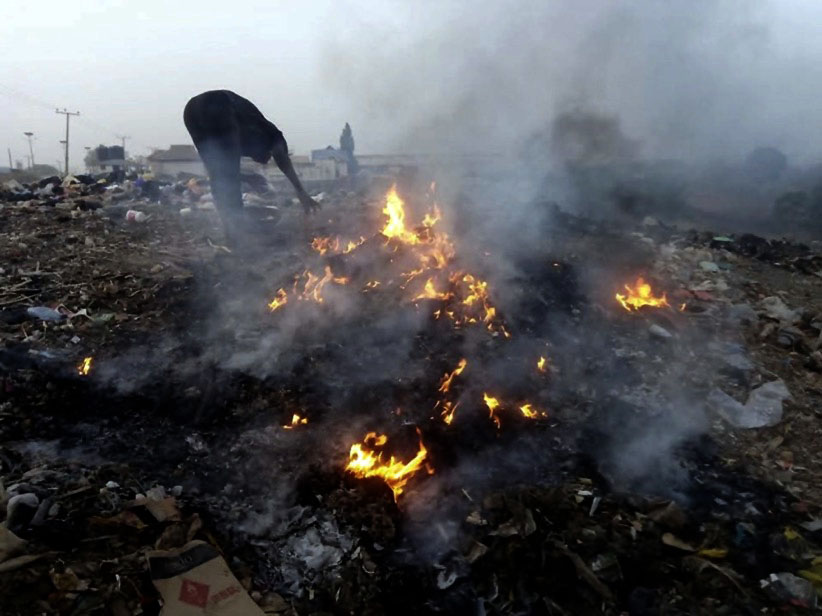
Yakubu specifically cautioned against indiscriminate bush burning, careless disposal of cigarette butts, open-air refuse burning and the storage of highly flammable materials close to heat sources.
He also urged residents to inspect electrical connections regularly, switch off unused appliances, provide basic firefighting equipment where possible and ensure that access roads and emergency exits remain unobstructed.
Beyond the immediate danger of fire outbreaks, KADCCAM expressed concern over environmentally harmful practices that could aggravate the impact of the dry season.
These include indiscriminate waste disposal, open-air waste burning, deforestation, destruction of vegetation and other activities that contribute to environmental pollution and ecological degradation.
The organisation particularly called on farmers and herders to embrace environmentally responsible land management practices, warning against uncontrolled bush burning and the destruction of trees and vegetation.
It stressed that trees and other vegetation play essential roles in maintaining ecological balance, protecting the soil and reducing land degradation, making their preservation particularly important in the face of increasing climate-related challenges.
The environmental warning is reinforced by the disturbing statistics presented by the Deputy Governor of Kaduna State, Dr. Hadiza Sabuwa Balarabe, who called for stronger collaboration among government institutions, businesses, community leaders and residents to improve fire prevention and emergency response.
Balarabe made the call during the opening ceremony of the 2026 National Fire Week, organised by the Federal Fire Service, Kaduna State Command, at the Federal Secretariat Conference Hall, Kawo, Kaduna.
Represented by her Senior Special Assistant on Stakeholder Relations, Engr. Martins Galadima, the Deputy Governor disclosed that Kaduna recorded 306 fire incidents in 2025, claiming 10 lives and leaving 48 persons injured, while destroying properties valued at approximately N6.4 billion.
Although she acknowledged that the number of incidents had declined considerably from the 523 recorded in 2019, she expressed concern that fire outbreaks had continued to average about 300 annually over the past three years.
For the Deputy Governor, the figures represent more than statistics; they reflect the human and economic consequences of preventable disasters and the urgent need for a more safety-conscious society.
She stressed that fire prevention must not be regarded as the exclusive responsibility of firefighters and emergency management agencies but as a collective obligation requiring the active participation of every citizen.
“Fire prevention should be regarded as a collective responsibility rather than a duty left exclusively to firefighters and emergency response agencies,” she emphasised.
According to her, electrical faults, improper use of electrical appliances, careless handling of fire, unsafe storage of flammable materials and indiscriminate bush burning remain some of the major causes of fire outbreaks.
She maintained that most of these incidents could be prevented through responsible behaviour, compliance with safety regulations and the adoption of simple but effective fire prevention measures.
As part of measures to minimise the danger, Balarabe urged households to conduct regular inspections of their electrical installations, avoid overloading sockets and switch off electrical appliances before going to bed.
She also advised residents to exercise extreme caution when handling cooking gas, kerosene and other combustible materials.
For business owners, market associations and petroleum station operators, the Deputy Governor emphasised the need to maintain functional fire extinguishers, provide accessible emergency exits and organise regular fire safety training for employees.
She further urged business operators to comply strictly with established fire safety regulations, noting that negligence and failure to observe basic safety standards could expose workers, customers and surrounding communities to unnecessary danger.
The call is particularly significant for markets and densely populated commercial areas, where combustible materials, electrical installations and human activities often combine to create potentially dangerous conditions.
She noted that a fire outbreak in such locations can spread rapidly, destroying shops, businesses and livelihoods within minutes, while placing lives at serious risk.
While prevention remains the first line of defence, the Kaduna State Government has also emphasised the importance of strengthening institutional capacity to respond effectively whenever emergencies occur.
Balarabe called for improved coordination among the Federal Fire Service, Kaduna State Fire and Public Safety Service, Kaduna State Emergency Management Agency (KADSEMA), National Emergency Management Agency (NEMA) and other relevant emergency response institutions.
She observed that a coordinated emergency response system, supported by adequate equipment, professional training and timely communication, would significantly improve the state’s ability to manage fire disasters.
The Deputy Governor commended officers and men of the Federal Fire Service for their courage, professionalism and dedication to protecting lives and property.
She also called on government institutions, corporate organisations and members of the public to support emergency response agencies through cooperation, adequate resources and responsible conduct.
The 2026 National Fire Week, she noted, provided an important platform for promoting public awareness, strengthening institutional partnerships and encouraging citizens to embrace fire safety practices in their homes, workplaces, markets and communities.
One of the highlights of the event was a series of practical fire simulation exercises demonstrating the operational preparedness, technical competence and combat readiness of Federal Fire Service personnel in handling fire emergencies.
While fire outbreaks remain a major concern during the Harmattan season, environmental advocates warn that the period also presents other challenges that require adequate public attention.
The dry and dusty conditions associated with Harmattan can increase exposure to airborne dust and worsen discomfort for people with respiratory sensitivities.
KADCCAM has therefore encouraged residents to reduce unnecessary exposure to dust, maintain proper hygiene, keep water sources clean and take appropriate precautions to protect vulnerable groups, particularly children, older persons and people with respiratory sensitivities.
The organisation also warned that indiscriminate waste burning and vegetation destruction could compound environmental challenges by worsening air pollution and undermining the natural protection provided by trees and other vegetation.
For farmers, hunters and herders, the warning is particularly relevant, as uncontrolled burning of bushes and farmlands during the dry season could quickly spread beyond intended areas, threatening settlements, farms, livestock, forests and other valuable environmental resources.
KADCCAM’s position is that environmental protection must be integrated into everyday activities rather than treated as an occasional campaign.
The emerging consensus among stakeholders is that preventing fire outbreaks and reducing environmental hazards require more than government directives or the periodic activities of emergency response agencies.
It demands a change in public attitude, greater environmental awareness and sustained collaboration among institutions and communities.
KADCCAM emphasised that preventing environmental disasters is a shared responsibility involving government institutions, traditional and religious leaders, community associations, civil society organisations and individual residents.
It urged residents to promptly report fire outbreaks and other environmental emergencies to the appropriate authorities rather than attempting to tackle dangerous situations without adequate training or firefighting equipment.
The warning is especially important during Harmattan, when dry vegetation and windy conditions can cause small fires to spread rapidly, leaving little time for intervention.
Ultimately, the challenge before Kaduna State is not simply how to respond when fires break out but how to prevent them from occurring in the first place.
With 306 recorded fire incidents, 10 deaths, 48 injuries and property losses estimated at N6.4 billion in 2025, the consequences of inadequate fire safety awareness are already evident.
Stakeholders agreed that as the state enters another Harmattan season, residents, farmers, hunters, traders, business operators and public institutions must recognise that seemingly minor acts of negligence can have devastating consequences.
As the Deputy Governor rightly emphasised, the most effective way to fight fire is to prevent it.
For KADCCAM, the message is equally clear: environmental responsibility must become a daily commitment.
Protecting trees, avoiding indiscriminate bush burning, reducing pollution, observing fire safety precautions and keeping communities clean are not merely environmental obligations; they are essential investments in public safety, sustainable livelihoods and a more climate-resilient Kaduna State.