Follow Us on Google
From Sola Ojo, Abuja
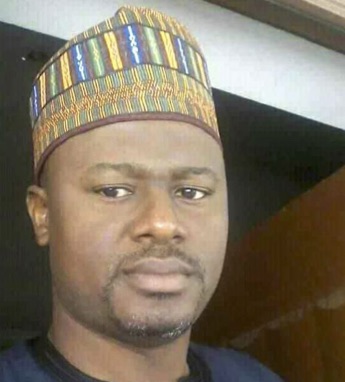
Sixty-five years after Nigeria gained independence from colonial rule, the North remains trapped in a cycle of neglect, inequality, and leadership failure, according to the Arewa Defence League (ADL) President, Murtala Abubakar.
In an exclusive interview with Daily Sun, following the unveiling of the Kaduna October Declaration at the historic Arewa House on October 1, Nigeria’s Independence Day, Murtala explained that the choice of date and venue was deliberate, symbolising both reflection and resistance. He said the Declaration was meant to awaken Northern consciousness, confront entrenched structures of injustice, and demand a fairer deal for the region within the Nigerian federation.Excerpts:
The Kaduna October Declaration was formally released on October 1st, Nigeria’s Independence Day. Why was this date chosen?
In Nigeria, every 1st of October carries a deep meaning. It is the day we regained our independence, and with it came promises of freedom, good governance, and dignity for our people. But 65 years after independence, we in Northern Nigeria still feel we are under subjugation. We are experiencing a form of new colonialism. We lack the basic freedoms to operate as full citizens and to achieve our aspirations in life. That is why this particular October 1st was deliberately chosen, to review what has happened to us and to examine the injustices, inequalities, and structures of subjugation that continue to define our existence as a people. I told myself and others: we are Nigerians, not second-class citizens. We should enjoy the same rights and freedoms as anyone else. That is the spirit behind the Declaration.
Why did the declaration come from the popular Arewa House?
The venue was symbolic. We gathered in the historic conference room of Sir Ahmadu Bello, the late Premier of the Northern Region, at Arewa House, Kaduna. That was where far-reaching decisions were made in the past, policies that shaped the destiny of our people. We chose that place to remind ourselves of its significance and to draw strength from our history. So, both the day, October 1st, and the venue were carefully selected. We wanted to make a bold statement: we are not slaves; the time has come to speak out and take action.
You have often described the North as being in crisis. Among these many challenges, which do you consider most pressing?
Every Northerner you speak to today will tell you the same thing: the region has been subjugated and neglected. We carry deep grievances. We are not receiving the required attention from the Federal Government, and in many cases, even our state governments are failing to carry out their responsibilities to the people. All of these problems point back to one fundamental issue: leadership. Poor leadership has bred corruption, underdevelopment, insecurity, and mass poverty. These crises are interconnected; one feeds the other. We believe sovereignty rests with the people. According to the Nigerian Constitution, and indeed international conventions to which Nigeria is a signatory, our people are supposed to be free to choose leaders who will represent them faithfully. Sadly, our long journey so far has not delivered the kind of results we expected. We have not been lifted out of poverty, illiteracy, or insecurity. Instead, we remain trapped in them. That is why, as the people of Northern Nigeria, we are saying: enough is enough.
You mentioned ‘consent’ earlier. Can you explain what you meant in this context?
By consent, we mean recognising those avenues where leadership emerges, reclaiming them, and ensuring that the right process is followed in recruiting people who truly represent us. Leadership should not be imposed; it must be rooted in the will of the people.
Other News
Now that you are mobilising Northerners to buy into this cause, are you in touch with voices of reason like the Arewa Consultative Forum (ACF), the Northern Elders Forum, and other groups regarded as stakeholders in the North?
Yes. The ACF is the parent body, and in truth, all of us as Northerners are members of the ACF. But within it, there are layers. Some groups feel the need to champion causes from specific perspectives. For instance, the Arewa Defence League (ADL) speaks for younger elements. The Jam’iyyar Matan Arewa speaks on women and gender issues. The Northern Elders Forum has taken on more political advocacy, especially since the ACF, by its constitution, is not supposed to be partisan.
So, you see, we have a diversity of voices, but ultimately, the ACF remains the bigger umbrella that galvanises all. What we in the ADL have done is to complement this by calling for roundtable discussions. We gathered grievances from different communities, documented them, and then organised a strategy seminar where experts on economy, security, governance and other areas gave us deeper perspectives. That seminar produced an evidence-based document, and the next stage is a Northern Conference. At that conference, we will work hand-in-hand with the ACF, Northern Elders Forum, women’s groups, youth organisations, and others. We will table our findings and strategies, so that together, the North can arrive at a unified position.
Some would argue that these efforts might make the Federal Government or politicians from the South feel threatened. What do you say to that?
I don’t think so. No patriotic person should feel threatened by this. You cannot neglect such a large part of your country and expect to make progress. The North constitutes over 78 percent of Nigeria’s landmass and more than half of the population. If this region is weighed down by poverty, insecurity, and underdevelopment, then anyone who imagines that the rest of Nigeria will prosper is only dreaming. That is why federalism is built on the principle of equality and balanced development. The strong must lift the weak, so that everyone can move forward together. What we are doing is not against Nigeria, it is for Nigeria. Anybody who is truly patriotic should support this movement, because leaving the North behind means leaving the entire country behind.
When you say the North has been neglected, do you mean specifically under the present Tinubu administration, or is this a historical problem? After all, there are many Northerners currently in his cabinet.
This is not just about President Tinubu. It is about successive federal governments. For decades, these issues have persisted, administration after administration. Yes, Northerners are in government today, but the reality on the ground has not changed. Poverty, illiteracy, insecurity, and unemployment are still defining the North. That is why we insist that something fundamental has to change.
From your analysis, it seems the problem is not just the Federal Government but also leadership at the state level. Can you expantiate on this?
Exactly. It is all about interests. What we lack in the North is a developmental agenda that everyone agrees upon. Leaders should be chosen based on their ability to key into that agenda and pursue it faithfully.
Right now, we don’t have such a consensus. Those who go into government often do so without informed knowledge of the real issues affecting the North. That is why, even though we had a Northerner, President Buhari, for eight years, many of us regard those eight years as wasted. In fact, during his tenure, the North got worse in terms of poverty, insecurity, and underdevelopment. This shows that merely having Northerners in government is not enough. If they are disconnected from the real issues, they will end up pursuing policies at variance with the expectations of their people.
We are not saying the current Federal Government is solely responsible for our condition, nor are we blaming Abuja alone. We have 19 Northern states, each governed by our own people. Yet, the same problems of corruption, mismanagement, and elite domination persist. Our findings show a dangerous gap: the interests of the elite versus the interests of the masses. The elite interest is simply about perpetuating themselves in power, looting public resources, and blocking reforms. The masses want development, security, and opportunity. So long as this gap exists, the North will continue to suffer. This again goes back to the kind of people we recruit into leadership positions. If we continue to recycle the same elite who see governance as personal gain, nothing will change.