Follow Us on Google
From Abel Leonard, Lafia
With just few months before the formal commencement of campaigns for the 2027 governorship election, Nasarawa State is already witnessing intense political maneuvering, shifting alliances, high profile resignations and growing uncertainty. These early tremors are rapidly coalescing into what many seasoned observers describe as the most fiercely competitive, volatile and unpredictable governorship race since the return of democracy to Nigeria in 1999.
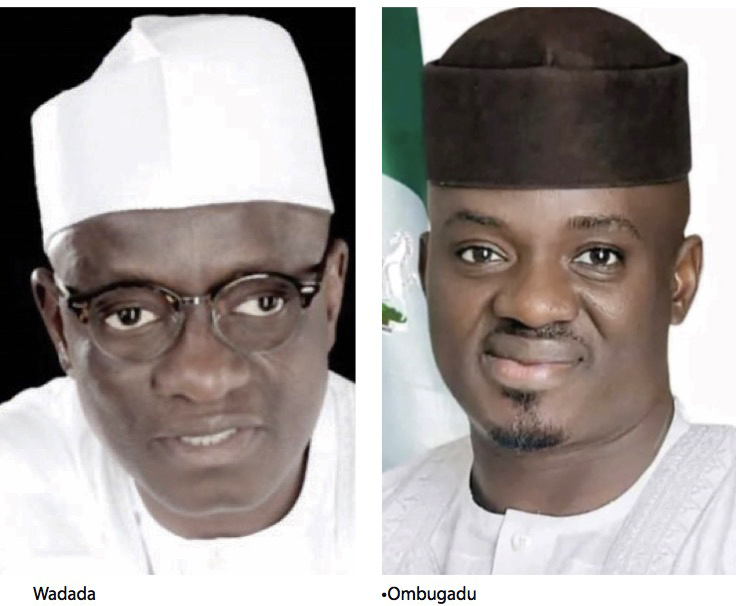
At the absolute centre of the unfolding political drama is Senator Ahmed Aliyu Wadada, the governorship candidate of the ruling All Progressives Congress (APC). Wadada emerged from a historically contentious and bitter primary election, having ultimately secured the critical endorsement of Governor Abdullahi Sule as his preferred successor to lead the state into the next dispensation.
Following his hard fought victory at the party internal polls, Wadada immediately launched a reconciliation offensive, calling for urgent unity among party members. In his acceptance speech, he declared that there should be no winner and no vanquished, pleading with aggrieved aspirants and their influential supporters to return to the fold for the collective success of the party. Recent reports from Lafia indicate that Wadada has indeed intensified high level consultations with key party stakeholders across the state three senatorial districts in a desperate bid to heal the deep, bleeding wounds left by the APC primary process.
However, independent political analysts believe that the APC may face its toughest electoral test yet in 2027. The primary threat does not necessarily stem from the traditional opposition parties, but rather from internal discontent and clandestine sabotage arising from the bitter aftermath of the ruling party primaries. Several frontline aspirants and their fiercely loyal networks have reportedly expressed profound dissatisfaction with how the exercise was managed. Furthermore, a wave of resignations by prominent party members who failed to secure alternative legislative or state tickets has generated severe concern among top tier party leaders.
Compounding this internal friction, widespread resignation letters have been sighted by our correspondent on various social media platforms, heavily populated by the supporters of influential party figures. Most notably, a storm of online activity has surrounded the political camp of the former Inspector General of Police, Mohammed Adamu. Many within the state believe that Adamu may be actively considering alternative political options following his unexpected defeat in the APC primary.
Although neither Adamu nor his immediate political directorate has officially confirmed any definitive plan to defect to another political party, the rumors continue to dominate heated political discussions across Lafia, Akwanga, Keffi and other major urban centres. Insiders repeatedly allege that he may move his entire structure to the Social Democratic Party (SDP).
“The APC won the primary, but it has not completely won the peace,” observed political commentator Musa Adamu, a Lafia based analyst who has tracked the state politics for over two decades. “The biggest challenge before Wadada is not the opposition; it is the strategic management of post primary grievances. If the aggrieved stakeholders remain outside the fold or engage in anti party activities during the general election, it could create massive, irreversible openings for rival parties to exploit.”
Another astute political observer, Ibrahim Abdullahi, believes the ruling party still possesses formidable institutional advantages but warns that modern Nigerian elections are no longer won solely by relying on incumbency power.
“The APC remains the dominant party in Nasarawa because it controls the state machinery and enjoys deeply entrenched grassroots structures,” Abdullahi noted. “But internal crises have historically been the ultimate undoing of ruling political parties in Nigeria. If these frantic reconciliation efforts fail to satisfy the core aggrieved groups, the opposition will undoubtedly inherit a golden opportunity.”
For Wadada, the Herculean task ahead extends far beyond mere party unity. He must also convince a highly critical electorate that he can successfully sustain and improve upon Governor Sule industrialisation legacy, while simultaneously presenting a distinct, compelling vision capable of inspiring confidence among young voters, disgruntled civil servants, rural farmers and the rapidly growing urban population.
Yet, perhaps the most potent threat to the APC ambition of retaining power lies in the formidable emergence of Dr David Emmanuel Ombugadu as the standard bearer of the main opposition party, the Peoples Democratic Party (PDP). The PDP national and state working committees recently affirmed Ombugadu as its consensus governorship candidate for the 2027 election, effectively positioning him once again as the principal challenger to the ruling party. Senior PDP leaders insist he remains the sole, undisputed candidate of the party, despite recent attempts by detractors to circulate counter rumours suggesting internal division.
For many political observers, Ombugadu enters the 2027 arena with substantial, battle tested advantages. Since 2019, he has remained the most visible, vocal and consistent opposition figure in Nasarawa politics. His exceptionally strong showing during the 2023 governorship election, where he mounted an unprecedentedly serious challenge against Governor Sule and initially secured a favourable tribunal judgment before the decision was overturned on appeal, elevated his political profile across the state to iconic heights.
His supporters describe him as a consummate grassroots politician who has systematically maintained close ties with ordinary citizens throughout his years out of office. They point to various community water projects, educational scholarships and economic empowerment initiatives associated with his foundation as concrete evidence of his enduring commitment to public service.
“Ombugadu has spent years building durable bridges across ethnic and religious lines that traditionally divide Nasarawa,” said political analyst Danladi Obadiah. “Whether one supports his ideology or not, he has evolved into a major political institution in Nasarawa politics. He cannot be underestimated.”
Many young voters, particularly in Nasarawa North and Nasarawa South, view Ombugadu as a potent symbol of political persistence and resilience. Among large sections of the influential Eggon community, he is often celebrated for reaching political heights previously unattained by many contemporary leaders from the ethnic group, effectively locking in a massive ethno regional voting bloc.
Other News
Nevertheless, Ombugadu journey has not been entirely free of controversy. Longstanding critics continue to question certain aspects of his political trajectory, while some former allies who worked closely with him during previous campaigns have since parted ways over ideological differences. Yet, despite these defections, PDP leaders insist he remains the face of the party in Nasarawa State and retains an absolute, iron grip over its structural organs.
“If the general election were held today, Ombugadu would clearly be among the front runners,” said Dr Solomon Agyeno, a political science lecturer. “He possesses near total name recognition, an established and passionate support base, and a party structure that remains largely intact and hungry for power after years in the wilderness.”
Beyond the traditional APC and PDP rivalry lies another highly intriguing and sophisticated figure, retired Major General Nuhu Angbazo of the African Democratic Congress (ADC). Angbazo, a former PDP member and highly respected military officer, secured the ADC governorship ticket after defeating other contenders within the third force movement. His entry adds a volatile new dimension to the contest, particularly among educated, middle class voters seeking a complete alternative to the two dominant political parties.
Known for his distinguished military background, Angbazo has consistently projected himself as a disciplined, no nonsense administrator capable of addressing the state lingering insecurity and governance challenges. His supporters argue that his extensive experience in national security positions him uniquely to offer a fresh perspective on leadership.
However, analysts remain sharply divided over his actual electoral prospects. While acknowledging his immense popularity in certain elite communities, they openly question whether the ADC possesses the statewide political machinery, polling agents and financial firepower required to realistically challenge either the APC or the PDP.
“General Angbazo has immense credibility and personal appeal,” said analyst Haruna Mohammed. “But elections in Nasarawa are heavily dependent on deep structures and extensive grassroots mobilization. Those are areas where the APC and PDP remain vastly superior.”
Conversely, others argue that Angbazo candidacy could prove decisive even if he does not emerge victorious. “He may not necessarily win the seat, but he could easily act as a spoiler by attracting thousands of votes from key constituencies that would otherwise go to the APC or PDP,” said political strategist Yakubu Alaku. “Third force candidates often reshape the entire electoral calculation by shifting the margin of victory.”
Also attracting significant attention is Jonathan Gaza Gbefi, the highly influential member representing the Karu, Keffi and Kokona Federal Constituency in the House of Representatives. Gaza has built an enviable reputation as a formidable grassroots politician, particularly within the densely populated and electorally critical Nasarawa West Senatorial District, which borders the Federal Capital Territory.
Having previously won tough elections under different political platforms, Gaza is regarded by many as a unique politician with a deep personal followership that transcends party labels. His immense popularity among Christian communities and dynamic youth groups has further strengthened his visibility ahead of 2027.
However, major questions surrounding the Labour Party lingering leadership crisis in Nasarawa State have created deep uncertainty around his ultimate governorship ambition. The state chapter of the party remains fractured between rival factions, each claiming constitutional legitimacy. Recently, the Nasarawa State party chairman recognised by the Independent National Electoral Commission (INEC), according to an authoritative source within the INEC headquarters, Comrade Alex Emmanuel Ombugu, publicly declared that Gaza and former minister Labaran Maku were not recognised candidates of the party because they did not participate in the specific primaries conducted by his leadership.
Political observers believe that unless these internal legal disputes are urgently resolved, Labour Party candidates could face catastrophic organizational challenges that might invalidate their participation ahead of the election.
“The biggest threat to Gaza is not his popularity, which is undeniably massive in the West,” noted political commentator Mary Danjuma. “The biggest threat is the absolute uncertainty over the legality of the platform itself. Voters generally prefer institutional clarity, especially in a high stakes governorship election.”
As the political atmosphere continues to heat up across the state, complex ethnic and regional considerations are also expected to play a critical role in shaping voter behaviour. Nasarawa’s diverse demographic composition means that any successful candidate must build broad, multi ethnic coalitions that cut across delicate religious and geographical boundaries.
Historically, successful governorship candidates in the state have combined suffocatingly strong local support in their home zones with extensive, well funded statewide alliances. Analysts believe the exact same formula will determine the outcome in 2027.
For now, the ruling APC remains focused on consolidating support and resources around Wadada. The opposition PDP is rallying its old guard behind the resilient Ombugadu. The ADC hopes Angbazo can emerge as a transformative alternative, while Labour Party supporters continue to await legal clarity over the future of Gaza’s ambition.
What appears entirely certain is that the road to Government House in Lafia will be anything but straightforward. Political stakeholders across the length and breadth of the state increasingly agree on one definitive point: the 2027 governorship election is on track to become the most fiercely contested and historical political battle in Nasarawa’s democratic history. As alliances shift daily, grievances deepen and candidates intensify their night consultations, the coming months will reveal whether the APC can successfully overcome its internal divisions, whether Ombugadu can finally complete his long pursuit of the governorship, or whether an unexpected challenger will fundamentally alter the state political equation. Until then, Nasarawa remains firmly on the edge of what promises to be a fascinating and potentially explosive political contest.