Follow Us on Google
From Adesuwa Tsan, Abuja
On December 19, 2025, President Bola Ahmed Tinubu presented the N58.47 trillion 2026 Appropriation Bill to a joint session of the National Assembly, marking Nigeria’s largest national budget in recent history. Tagged “Budget of Consolidation, Renewed Resilience and Shared Prosperity,” the proposal projected total revenue of N34.33 trillion, total expenditure of N58.18 trillion, debt servicing of N15.52 trillion, capital expenditure of N23.214 trillion, a deficit of N23.85 trillion (4.28 per cent of GDP) and personnel costs for the National Assembly of N344.85 billion.
During the presentation, the President urged lawmakers to ensure speedy consideration and passage, stressing that “time is of the essence if we must sustain economic reforms and consolidate gains already made.” True to that request, by December 23, 2025, both the Senate and the House of Representatives had rapidly debated and passed the budget for second reading, an unusually swift legislative response for a document of such magnitude.
The Senate’s near-instantaneous second reading, achieved within four legislative days, was described by ranking lawmakers as “unusual but deliberate,” intended to signal synergy between the executive and legislative leadership.
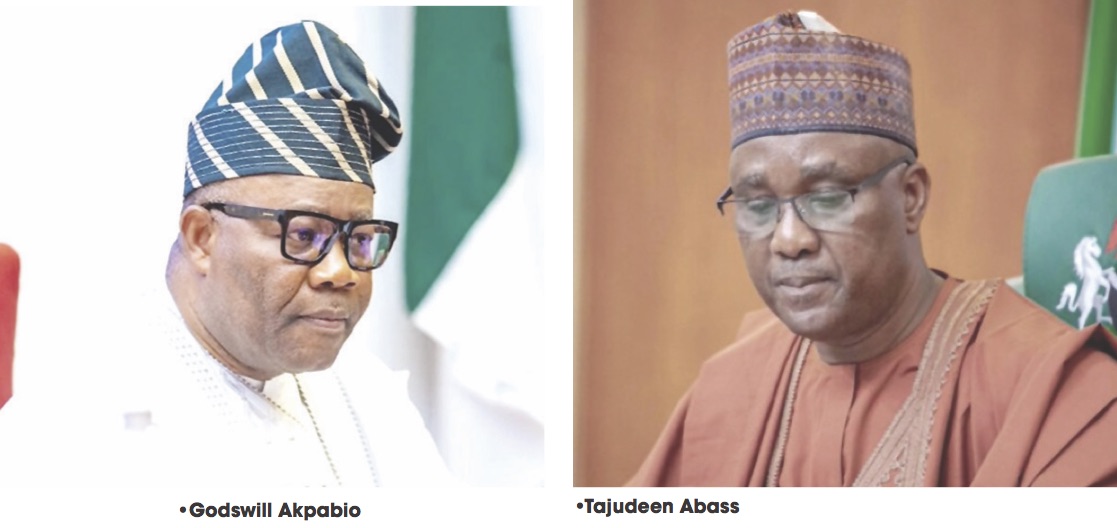
Senate President Godswill Akpabio, while commending the budget’s focus on infrastructure and security, said the National Assembly was “committed to supporting policies that stabilise the economy and deepen reforms.”
However, that speed at the top did not translate into action at the committee level, where detailed oversight, sectoral defence by Ministries, Departments and Agencies (MDAs), and appropriation hearings are expected to commence almost immediately after second reading. With only a few days left in January 2026, neither the Senate nor House had begun committee-level sectoral defence and detailed scrutiny. This marked a clear departure from the usual practice where budget defence by MDAs starts within days of referral to committees. The unusual delay, coming on the heels of a hurried second reading, raises fundamental questions about what is different about the 2026 budget process.
The 70 Percent Rollover Factor
One major reason for the stalling appears to be the massive rollover of capital projects. A major structural deviation in the 2026 budget process is that about 70 percent of the capital budget components were rolled over from the uncompleted 2025 budget.
This rollover followed severe revenue underperformance in 2025, when the Federal Government reportedly realised about N10 trillion against a projected N40 trillion, leaving a shortfall of nearly N30 trillion. The revenue gap, worsened by oil production challenges, subsidy removal shocks and macroeconomic headwinds, all of which forced the government into difficult fiscal trade-offs.
The rollover directive was formalised in the 2025 amended budget framework, which capped new capital project proposals and instructed MDAs to carry forward ongoing projects. Daily Sun gathered that members of the Senate and House Committees on Appropriations have argued that since most projects were already appropriated for in 2025 with known locations, cost profiles and contractors, there was less urgency to begin fresh sectoral scrutiny.
A member of the Senate Committee on Appropriations, who spoke anonymously, said,
“The bulk of these projects are not new. Committees already have the details from 2025. What we are essentially doing is continuing implementation, not starting afresh.”
It will be recalled that to accommodate the rollover, lawmakers voted in support of extending the implementation window of the 2025 capital budget to March 31, 2026, following a request by the president. That decision further diluted the sense of urgency that typically drives legislative budget activity at the start of a fiscal year.
In essence, the rollover reduced the immediate workload, as reviewing continued capital projects does not require the traditional early commencement of hearings, especially when field details including site locations, contractors, costs and timelines are already on record, Daily Sun further gathered.
Still, concerns remain. Some lawmakers, including Senator Danjuma Goje, openly criticised the trend of multiple budget implementations and persistent revenue gaps, warning that Nigeria risks institutionalising fiscal disorder. “We cannot continue this cycle of overlapping budgets and expect efficiency,” Goje cautioned during plenary debates on fiscal policy.
Finance Minister, Wale Edun, while defending the rollover, admitted that revenue constraints left the government with limited options. “The rollover was a pragmatic response to fiscal realities. It allows us to complete ongoing projects rather than abandon them.” He spoke at a post-Federal Executive Council briefing.
NASS and the Question of Legislative Vigilance
The current handling of the budget has reignited debate about whether the National Assembly is becoming more relaxed, or outright lax, in budget consideration, as observers note that the prevailing posture of political alignment and executive-legislative harmony under the Tinubu administration has reduced confrontation on the floor of the chambers. While this has produced smoother plenary sessions, it has arguably limited the legislature’s leverage in setting strict terms for capital expenditure oversight.
Critics argue that proper scrutiny has been sacrificed on the altar of political harmony, to the detriment of ordinary Nigerians who rely on the legislature as a check on executive spending.
Despite a clear directive to freeze new capital projects, independent budget analyses revealed that MDAs allegedly inserted up to N3.5 trillion worth of new project items into the 2026 estimates. This development points to weak enforcement of budget rules, poor coordination within the executive arm, and an under-performing legislative scrutiny process.
Other News
Ironically, under the late President Muhammadu Buhari, the 9th Assembly which was often accused of been a “rubber-stamp” legislature, enforced a more disciplined budget calendar. Budgets were routinely presented by October 31 and passed by December, ensuring that each fiscal year began on January 1 with an approved budget. That system worked relatively smoothly between 2021 and 2023 under the leadership of Senate President Ahmad Lawan and Speaker Femi Gbajabiamila, resulting in less spillover, better expenditure planning and clearer accountability.
Post-2023 Disruptions
The post-2023 era marked a turning point. The Tinubu administration disrupted the established cycle with a supplementary budget in November 2023, which was extended into December 2024, overlapping with both the 2023 and 2024 fiscal years.
Those disruptions cascaded into delayed implementation of the 2024 and 2025 budgets, repeated extensions, and a growing inventory of incomplete capital projects rolled into subsequent years. The ordinary rhythm of Nigeria’s budgeting process – presentation, committee consideration, passage and implementation – became increasingly distorted.
In contrast, early January 2025 saw both chambers commence committee consideration promptly, laying out open days, stakeholder engagement sessions and plenary suspensions to allow focused scrutiny. That experience stands in sharp contrast to 2026, where committee hearings have yet to begin weeks into the year.
Historically, budget consideration has often generated tension within the legislature, especially in the House of Representatives, where disagreements over borrowing approvals, constituency projects and welfare provisions have led to abrupt adjournments.
But such tension is largely absent in 2026, signalling smoother executive-legislative engagement — but also raising concerns about diminished oversight zeal.
Rollover: Relief or Risk?
Nigeria has experienced budget overlaps before, but the practice intensified after 2023. The Senate recently rebuked the trend, even directing revenue agencies including the Federal Inland Revenue Service (now Nigeria Revenue Service) to raise revenue targets and improve collection efficiency to avoid future rollover dependency. If sustained, that resolve could make 2026 a transition year back to more disciplined budgeting.
There are undeniable benefits to rollover. It ensures that ongoing infrastructure and strategic projects are not abandoned, a common source of waste in Nigeria’s public finance system, observers say. By reducing re-procurement delays and contractor disputes, rollover can help curb the country’s notorious project abandonment problem, they added.
With fewer new projects introduced, committees can theoretically focus on monitoring execution quality, value for money and completion timelines rather than debating feasibility from scratch.
However, the downsides are significant. Weakening legislative oversight undermines one of the National Assembly’s core constitutional responsibilities. Repeated rollovers can mask inefficiencies rather than correct them, fuel inflationary pressures by releasing dormant funds into a fragile economy, and reduce predictability for contractors and sub-national governments dependent on federal capital releases.
Transparency and Accountability Challenges
While the speed of second reading signals cooperation, it also risks public perception that lawmakers are abdicating rigorous oversight, especially amid rising concerns over borrowing, debt servicing and macroeconomic indicators that directly affect citizens’ livelihoods.
Also, if the National Assembly treats the 2026 budget as a mere routine because “there isn’t much to consider,” citizens and civil society groups may lose critical opportunities to interrogate priorities, challenge assumptions and demand better outcomes, Daily Sun’s investigations reveal.
Nigeria’s narrow revenue base which is heavily dependent on oil prices and uncertain production levels continues to shape these choices. The resulting risk-averse posture encourages rollover as a stop-gap rather than a reset of revenue frameworks. While the budget is inherently political, executive-legislative alignment should not eclipse robust democratic deliberation, some lawmakers argue.
They further submitted that budget calendar has been disrupted for years, creating a culture of overlapping appropriations that have proven difficult to dismantle.
“Going forward, the executive must strictly enforce rules against ad-hoc project insertions, while the legislature must reject unsubstantiated capital proposals. Strengthening revenue projections and empowering collection agencies remain essential to avoiding unrealistic baselines that collapse into rollovers,” one of the lawmakers added.
Last Line
As lawmakers resume plenary on January 27, they must recognise that the handling of the 2026 budget reflects both short-term expediency and deeper structural weaknesses. While the 70 percent capital rollover may have been pragmatic under current fiscal constraints, vigilance is required to prevent weakened scrutiny, eroding discipline and reduced transparency. Past budget cycles, though politically contentious, maintained tighter timelines and stronger oversight, a model that better served democratic accountability. Therefore, if the 2026 budget is to be effective and legitimate, the Senate and House of Representatives must now reassert committee-level scrutiny, prioritise transparency and insist on project completion quality. Ultimately, the real test of the 2026 budget will lie not in how quickly it was read, but in how faithfully it is implemented and whether Nigeria’s democracy can balance political harmony with institutional accountability.