Follow Us on Google
•Says party regrets fielding some candidates in last elections
From Sola Ojo, Abuja
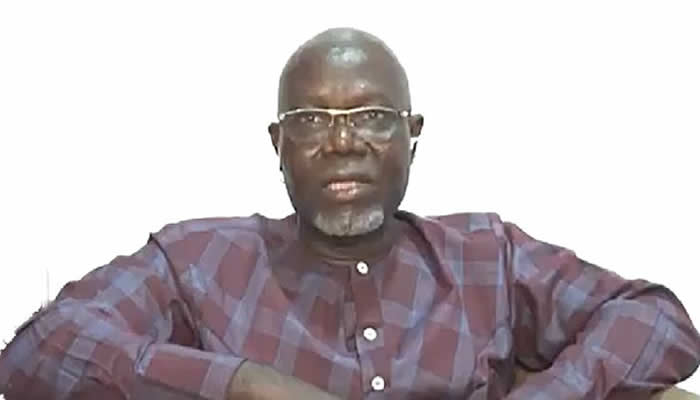
Labour Party (LP) Deputy National Chairman, Dr. Ayo Olorunfemi, has admitted that the party made mistakes in sponsoring several candidates in the 2023 general election, blaming weak screening and opportunistic defections. He also alleged that the current crisis in the party was triggered by Senator Ireti Kingibe’s “backdoor dealings” with the Independent National Electoral Commission (INEC).
Excerpts:
Recently, we’ve seen significant developments within the Labour Party and across the political landscape – defections, internal disagreements, and realignments. As a party that is still striving to govern the country, what do these trends mean for your future?
What we are witnessing reflects the nature of our society in Nigeria today. Unfortunately, many people are no longer guided by principle or conviction. It has become increasingly difficult to discern what individuals truly believe in. However, for us in the Labour Party, our commitment is rooted in principle and ideology. Personally, I have yet to see another political party that aligns with my core beliefs the way the Labour Party does. Our foundation is built on the values of social democracy, centered around productivity and work ethics. When you talk about Labour, productivity is inseparable. It is at the heart of our party’s ideology. Our manifesto is anchored on the idea that for Nigeria to become prosperous, we must engage in productive activities and these activities require human beings. But these human resources must be well taken care of.
Some lawmakers elected on the platform of LP have defected from your party. How do you fell?
Yes, and that’s why we have publicly apologised to Nigerians. At the height of frustration during the administration of the late former President Muhammadu Buhari, people were desperately looking for alternatives. Many of them flocked into our party and in the spirit of that national urgency, we did not screen them properly. We admit we brought in people who were not even fit to contest a local council election. They came in with no ideological connection to the Labour Party. Some didn’t contribute financially, and many lacked the foundational values we stand for. That was our mistake.
If that was the case, what is your party doing to avoid a repeat in the coming contests?
To prevent a repeat, the Labour Party is now establishing a Leadership Institute. Before anyone can contest under our platform going forward, they must pass through this institute. That way, we can be confident they’ve been groomed in line with our principles and ideology. It’s now a prerequisite for participating in our primaries.
We regret sponsoring many of them in the 2023 elections though I must stress, not all of them. Some remain committed and principled. People like Hon. Afam, Hon. Emeka, and a few others, they’ve held their ground. When you study their backgrounds, you’ll find that they’ve always been connected to the labour movement. That’s the difference.
So going forward, we will be very deliberate. If you don’t have a track record with the labour movement, and if you haven’t passed through our leadership training, you will not be eligible to contest. We’ve learned our lesson.
Some political observers argue that the wave of support in 2023 wasn’t necessarily for the Labour Party but rather a Peter Obi tsunami, would you agree?
I respectfully disagree. It is a mischaracterisation to call it a Peter Obi tsunami. Yes, Peter Obi played a major role in mobilising people, but the momentum started long before he joined us. Let me take you back. The Trade Union Congress (TUC) convened a Political Summit that drew over 3,000 participants not just ordinary citizens, but major political and intellectual figures from across the spectrum. I remember vividly: former Governor Mimiko was there, Femi Falana, Prof. Attahiru Jega, Dan Iwanyawu, Prof. Ladi Adamu, Jaye Gaskia, and many others. All the major trade unions were present. At that summit, we collectively agreed that the era of merely protesting bad governance was over. It was time to actively seek power and lead. The idea was that those who wear the shoe know where it pinches. That summit laid the foundation, and the TUC began implementing the resolutions that followed. Peter Obi came in later and helped amplify that momentum. But make no mistake, this was a broader movement rooted in labour, in principles, and in the people’s yearning for genuine change.
So, the implementation of the summit’s recommendations began with nationwide mobilisation zone by zone where we engaged Nigerian workers and built grassroots support for the Labour Party. During one of those mobilisation efforts, a tragic event occurred. Our train was bombed on its way to Kaduna, carrying the General Secretary and the TUC Chairman from Kwara State. He was shot in the head and killed. That attack was meant for us. Some of us narrowly escaped that day. Others didn’t make it out.
So, when people talk about what happened in 2023, they need to understand that this struggle didn’t start in 2023. It started as far back as 2020, shortly after the COVID-19 pandemic, when the TUC recalibrated its political commission and resolved to take political destiny in its own hands. Any presidential candidate of the party as of that time would have received the same support Obi got because Nigerians were yearning for a new course. People like Dr. Olusegun Mimiko and other respected leaders recognised that if Nigerian workers could come together politically, there would be no force that could defeat them at the polls.
Even the End SARS movement was part of this broader build-up. While Peter Obi had no role in organising End SARS, many of the youth leaders and mobilisers behind it were also involved in our political summit. So, the momentum was already building before Peter Obi came into the picture. We had already assembled a broad coalition of frustrated but determined Nigerians, workers, civil society leaders, youth movements, all united in their desire to rescue the country from poor governance.
Then how did Peter Obi become the party’s presidential candidate?
Peter Obi saw the opportunity in what we had already built. The Party had become a magnet for disenchanted yet hopeful Nigerians. Initially, we approached former Governor Mimiko to fly our presidential flag. He respectfully declined, noting that it was the turn of the South-East, not the South-West. That was how we eventually settled for Peter Obi.
But I must say candidly that while Obi brought visibility, we also suffered significant setbacks by bringing him in. Many people were drawn to him, yes. But some of his public statements like his position on fuel subsidy removal were in direct contradiction to our ideology. The Labour Party stands for social democracy, which emphasises social protection, including subsidies that support the masses. When he said he would remove subsidy, many of our committed allies were disappointed and even embarrassed. Some prominent comrades like Professor Ladi Adamu, and other progressive voices began to distance themselves. That moment hurt our momentum.
Is there any hope to attract those who have left the party back to LP?
Well, we’ve reached out to some of them, but from their responses and actions, it’s clear they are no longer interested in the Labour Party. And that’s fine because we already have many credible and committed people ready to take on leadership roles within the party. Take, for instance, someone like Senator Ireti she was never a good fit for the Labour Party. She lacks the organisational discipline and does not project the qualities of a unifier, which our party needs. In fact, she played a key role in engineering the crisis within the party. Before the situation even escalated, she had already jumped ship. That tells you everything.
There have also been some controversies about the role of INEC in the crisis especially after the supreme Court judgment. What’s your take?
Let’s be frank, INEC has failed to be transparent. It is being manipulated, and I believe the integrity of the commission has been compromised, particularly under the leadership of Professor Mahmood Yakubu. When I mention INEC, I’m not referring to the entire institution, but Mahmood himself must take responsibility and excuse himself from this electoral mess.
How do you explain a situation where a national convention was conducted with over 100 days’ notice far more than the statutory 21 days yet INEC raised no objection, made no attempt to stop it, and gave no indication of disapproval?
The convention was legitimate and inclusive. Dr. Alex Otti, who was to chair the convention, sent his deputy as a representative, who served as the chairman and chief returning officer. Delegates were drawn from across the country. In Abia State, for example, all commissioners were automatic delegates. Members of the House of Representatives, House of Assembly, and Special Assistants from multiple states attended.
Each state sent their statutory delegates including party chairmen, secretaries, and members of the National Working Committee (NWC). Even though the Nigeria Labour Congress (NLC) was absent, they only have three statutory delegates (the President, the General Secretary, and the Chair of their Political Commission) the Trade Union Congress (TUC) was fully present and participated.
The Deputy Governor of Abia State, representing the Governor, declared the results of the convention. All elected officers, including myself as Deputy National Chairman, were declared.
INEC’s current posture suggests they are doing the bidding of certain powerful individuals who cannot achieve their goals through legitimate means. So, instead, they resort to underhanded tactics and manipulation. That’s the only explanation for why INEC would recognise Lamidi Apapa, who has no legal standing, as the party’s chairman. Lamidi Apapa is a product of illegality.
So, at what point would you say the crisis in the Labour Party began?
The turning point was when Senator Ireti Kingibe began visiting INEC roughly six months after our national convention. She was seen at the commission, engaging in backdoor dealings and lobbying for interference in internal party affairs. We have records, evidence, including photographs of her visits to INEC. That was the beginning of the current disruption. She started courting INEC to help undermine the leadership structure that had already been constitutionally and democratically established.
But why would she do that?
That’s a question she should answer. Why would a sitting senator bypass party structures to go to INEC and start discussing internal matters? It’s inappropriate, unethical, and speaks volumes about her intent. Sadly, Mr. Peter Obi was drawn into this crisis, whether knowingly or unknowingly. It’s unfortunate because many of us respected him and expected better judgment. But the real root of the conflict lies with the Nigeria Labour Congress (NLC). They claimed not to recognise the convention simply because their preferences weren’t upheld.
NLC as the real problem, how?
If NLC had registered the party on its own, it would have been named the NLC Labour Party or Nigerian Labour Congress Party. But they didn’t. The party was formed through a coalition, NLC, TUC, civil society groups, rights organisations, and pro-democracy activists. So, no one can lay sole claim to ownership. Once it was registered, it became a public institution governed by its constitution. The constitution, not any individual is the ultimate authority