Follow Us on Google
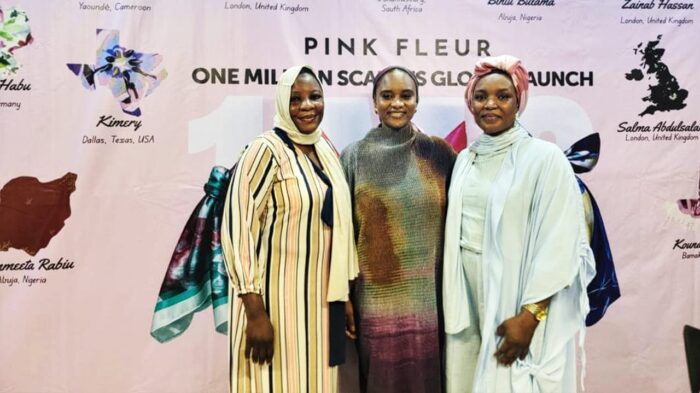
From Adline Elechi, Abuja
The Pink Fleur Foundation says it has empowered more than one million women across Nigeria with financial knowledge, entrepreneurial skills and access to opportunities aimed at helping them build wealth and achieve long-term financial security.
Speaking during a recent women empowerment campaign in Abuja, the Founder of the foundation, Zainab Salihijo, said the organisation was established to address the economic challenges facing women, particularly those in underserved and rural communities.
She said the foundation’s vision is to ensure that women become financially independent and are able to contribute meaningfully to the development of their families and communities.
“We’re going to have women who are going to be so economically empowered that they will no longer be described as underserved women or unserved communities,” Salihijo said.
She stressed that providing women with access to finance and economic opportunities would transform not only their lives but also the communities where they live.
According to her, “if women have access to economic empowerment and have access to funds that would change their stories, they would be able to change the community they belong and change their world.”
Salihijo added that the foundation goes beyond financial support by equipping women with the skills and networks needed to grow sustainable businesses.
“We create opportunities for women to develop businesses, strengthen leadership capacity, and access networks that support sustainable growth,” she said.
Also speaking, Chairwoman of the Pink Fleur Foundation, Hafsah Salihijo, said the organisation has spent the last 10 years building the capacity of women and girls across Nigeria through programmes focused on education, healthcare, economic empowerment and community development.
She noted that many beneficiaries of the foundation’s interventions have become successful entrepreneurs, employers of labour and financially independent women.
“We do sustainable development in the sense that we build the capacity of women and girls to advocate for themselves across different developmental fields—education, healthcare, community development and so many other things,” she said.
According to her, the foundation has implemented projects in several states covering gender-based violence, fertility, education, healthcare and urban poverty.
“We already have a lot of women that we have worked with across different states in Nigeria. These are women who work under different projects. Some of these projects are gender-based violence projects. Some of these projects are fertility projects while some are education projects. Some of these projects are healthcare while some are urban poverty.
“And in all of these projects, we have met different women. We have built the capacity of different women and girls to use their tools to advocate for themselves,” she added.
The foundation said it remains committed to expanding its reach and creating more opportunities that will enable women to achieve economic independence and drive sustainable development across Nigeria.