Follow Us on Google

“ACF is political only on issues most northerners share. The North is never in dilemma over the candidature of Buhari and Atiku.”
Olakunle Olafioye
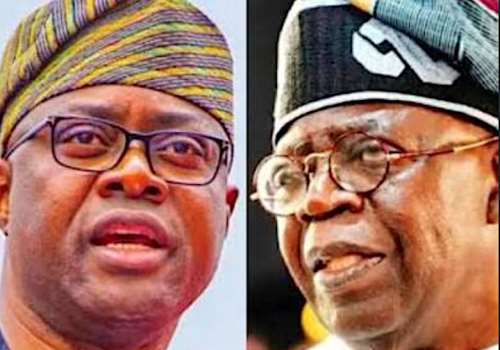
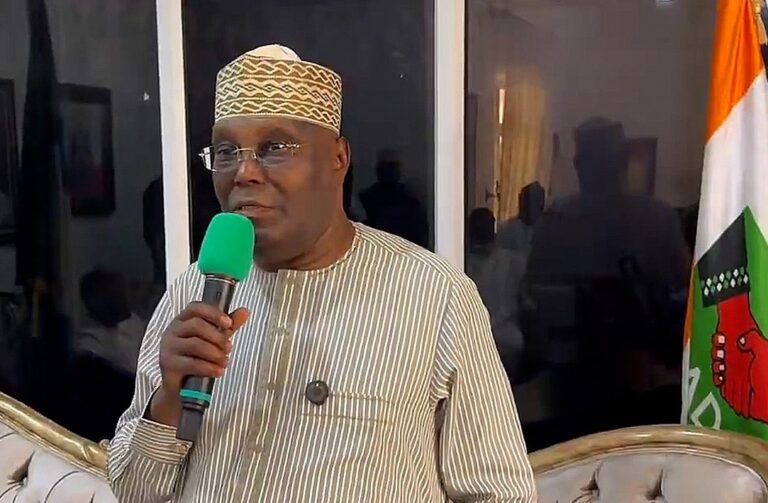
The 2019 elections inch closer, Elder Anthony Sani, general-secretary, Arewa Consultative Forum, ACF, has identified what the North is looking for in the candidatures of President Muhammadu Buhari of the All Progressives Congress (APC), his People’s Democratic Party (PDP) counterpart, Atiku Abubakar and other presidential candidates.
Buhari our man, Arewa youth group declares
He also spoke on other issues of national importance.
The ACF has refused to make a categorical statement on its expectations ahead of next year’s election unlike the South, which has promised to back a candidate that has the agenda to restructure the country. Is this an indication that the North is in a dilemma over Buhari and Atiku?
Why do you limit the contest to only President Buhari and Atiku when out of the 76 presidential candidates, about 70 of them are southerners? You are most unfair to ACF when you say ACF has refused to make categorical statement on presidential candidates despite too many explanations on this issue. I have said it many times that ACF is not like Afenifere. Membership of ACF cuts across party lines. As a result, the forum cannot afford to be partisan. ACF is political only on issues most northerners share. The North is never in dilemma over the candidature of Buhari and Atiku. This is because it is not the first time more than one candidate for the presidency would come from the North. In the First Republic, there were NPC led by Sardauna of Sokoto, NEPU led by Mallam Aminu Kano and UMBC led by Tarka that were northerners. Those led by southerners were Action Group led by Chief Awolowo and NCNC led by Dr Azikiwe. During the Second Republic, Alhaji Shehu Shagari competed with not only Awolowo of UPN and Zik of NPP from the South, but also with Mallam Aminu Kano of PRP and Alhaji Ibrahim Waziri of GNPC both of whom were northerners. In the current republic, General Buhari contested with Alhaji Umaru Yar’Adua also a Fulani Muslim from Katsina State. So, when you ascribe split of the North on the basis of the region having more than one presidential candidate, I begin to wonder the motive. As I have said over and over again, ACF has pamphlets containing list of qualities good leaders are expected to possess which voters should look for in candidates that can deliver on the promise of democracy. We also try to engage the candidates on their manifestoes and how they affect the North and enlighten the electorate to that effect. President Buhari and former VP Atiku are both Northerners and Fulani Muslims. As a result, politics of identity like of region, religion and ethnicity is not to the advantage of any of them. What will matter most in the campaigns is concentration on real issues of real concern to real ordinary Nigerians. Both Buhari and Atiku have been in politics for quite sometimes and Nigerians know their performance as well as their content of character both of which should speak for them.
The North seems averse to the idea of restructuring. What is the fear of the North concerning this?
Make no mistake, the North is not averse to restructuring. Certainly no! What the North is saying is that this country has been restructured several times, be it political, economic or geographic. We have tried confederate arrangement and parliamentary system, we have tried military dictatorship and now trying presidential system. We started with three regions which became four. We now have 36 states. That is why we think any further restructuring may not be productive. We, therefore, believe the problems of Nigeria require prudent management of national resources more than anything else. Consider how Lagos State has improved under the same structure which some people believe is not working. Further more, restructuring seems to mean different things to many people. For example, there are groups of people who see restructuring to mean “true federalism”, whatever that means. Some other people see it as “fiscal federalism”, while some others talk of “resource control”, or “resource ownership”. Those who hanker for a structure which allows sections to develop at their own pace are those who want Nigerians to live as if they are in different countries where some sections would be on the cutting edge and some others on the knife edge of survival. And they say this in blithe disregard of the trite that unbridled inequality is recipe for split of a country. But if we must restructure the country at all costs, then it should be done democratically.
Democratically in the sense that multi-party democracy allows political parties to represent distinct approaches to addressing national challenges as contained in the manifesto which the political parties use and campaign for electoral mandate needed for execution. So, those political parties that wish to restructure the country should reflect it in their manifestoes clearly while those opposed to restructuring should do the same by giving their reasons. The ensuing debates among the political parties will go a long way towards the enlightenment of the electorate for informed judgment during elections. That is how democracy works. It is not for a few group of elite to assemble in Southwest and Southeast and try to foist their concept of restructuring on the rest of the country.
Don’t you think restructuring could help the North to address the problems of poverty and insecurity?
How? We tried confederate arrangement, we tried unitary system and have tried federalism. We tried parliamentary, have tried presidential and the only one we have not tried is a combination of presidential system and parliamentary, which works in France. And all these work in other climes, but are said to be the problem of the nation. Some of you talk as if the South has given the North very wide gap in socioeconomic development and ignore the fact of history that western education reached the South about a century before it reached the North. The comparison between the North and South, which you bandy about is not a fair comparison.
The recent killing of soldiers fighting Boko Haram has further indicated that the war is far from over. What do you think this government is getting wrong in the fight despite its promise to crush insurgency in the North?
Those who think terrorism can be wiped out completely by hard power of military might are ignorant of insurgence regarded as viral power. Boko Haram is a guerrilla warfare and not a conventional warfare that can easily be contained by a superior military might. Recall when President Bush ousted President Saddam Hussein and said: “Mission accomplished with precision”, within seven days. Little did Bush know that marked the beginning of campaigns that would cost American over 5,000 soldiers and over $100 billion to no avail. Note the whole NATO has been in Afghanistan and led by America for over 10 years only to be considering exit strategy.
Look at Al-Shabbas in Somalia. It has been there for over 20 years. And that explains why UN Resolution 1960 of 2010 has enjoined the affected states to address the underlying causes of insurgence. And when you look at Boko Haram from that perspective, you can hardly avoid the conclusion that this regime has truly weakened Boko Haram by consigning it to the fringes of Northeast as against in the past when the attacks were frequent and straddled across the entire North. The fear, which almost overwhelmed the North in the past has given way to hope and confidence as life is gradually returning to normalcy. I, therefore, cannot say the regime has not tried to tame the insurgence. I think the regime is trying and I believe when the soldiers take delivery of the ordered jets from America, they will go a long way towards containing the insurgence while efforts are made to address the underlying causes. The recent attacks and killings of soldiers was demoralizing and a set back. But winning a battle is not the same thing as winning the war. Given the resolve of the regime, I am confident that the soldiers will go as far as effort can go in order to avoid a repeat.
Some months ago, ACF, Northern Elders Forum and 16 other Arewa groups passed vote of no confidence in Buhari government and other northern politicians for failing to address the issues of poverty and insecurity in the region. What has changed between then and now?
ACF has never joined any group to pass vote of no confidence in Buhari’s regime and other northern politicians for failing to address the problem of insecurity in the region. ACF was not party to such a meeting under reference. While it may be true that the problems of this nation are due largely to failure of leadership, the point must be made that this regime inherited a situation where some American group predicted the country would fail by 2015, and the economy was in shambles largely due to the fall in price of oil and volume of production of the crude oil, as well as of unbridled corruption which outsourced everything good. Recall the recession was foretold by the trio of Soludo, Sanusi and Ngozi Okonjo-Iweala. No wonder the recession came in the third quarter of 2015. I remember President Buhari confessed that he did not expect what he saw that made him consider possibility of abdication. I think facts check should include the frequency and spread of attacks and number of people killed, including high profile killings, under the PDP government compared to what has happened under this regime for fair and realistic assessment of progress against plans. The same should apply to facts-check on fight against corruption as to whether there have been progress in the campaign against corruption or not. The government promised to diversify the economy away from over dependence on oil wealth which is not a result of hard work. All these should be put in correct perspective for fair and realistic assessment, given the limited resources and the short time of three and half years.
I have been noting the efforts by the regime in the area of collection of taxes, which has yielded substantial results. In the past, our leaders have not bothered about the need to pay taxes out of the fear that when people pay taxes, they will hold them to account for their stewardship.
Payment of taxes will further inculcate civil responsibility and inspire the electorate to make judicious use of their democratic rights and ensure that their votes count so that the ensuing leaders will be accountable. All these should be taken into account as we assess the government.
The wife of the president has constantly maintained that the cabal within the presidency is working against the country. Is ACF considering hearing the woman out on the issue or calling the attention of the president on the need to look inwards?
Do you consider it reasonable for anybody or group to dabble into matter of husband and wife? This allegation of a cabal has been on since the emergence of this regime. Madam mentioned it in the past and the Senate President mentioned it. But Mr President has denied it. Why should ACF dabble into the issue when Mr President has denied the existence of a cabal? Mr President does not look like someone who can allow himself to be manipulated in the manner being portrayed. Any way, I believe Mr President has heard his wife and knows what to do.
Recently, you rose in defence of President Muhammadu Buhari when he was accused of nepotism. What do you make of the EFCC nominees that were rejected by NASS on the grounds that the S/East and S/South were not represented?
This is the second time the Southeast is crying foul of being short-changed. The last time it was about the distribution of the five service chiefs, which have the Chief of Defense from the Southwest, the Chief of Naval Staff from South-South, the Chief of Army staff from Northeast, that of Air Force from Northwest and the IG from North central. As they complain, the Southeast forget the fact of history that when the Chief of Army staff was from Southeast, a zone did without a service chief at the time. So, if the board members of EFCC are only four, some zones must do without. Southeast must know that even God himself does not give rain to the whole country at the same time.
Criticisms have continued to trail the president’s refusal to sign the Electoral Acts (Amendment) Bill. What is your take on this?
The president has given his reasons for withholding his assent to the bill. One of which is the time frame which is too short for INEC to introduce exclusive use of electronic voting and transmission of results, given the possibility of failure and prevalence of hacking that could cause havoc to the electoral process.
The president is also opposed to fusion of results of political parties that are in alliance and have not merged. I guess the president wants the parties to make up their minds either to merge or remain independent. This is because when the parties in alliance merge, they would be stronger and provide viable opposition as alternative platform, since democracy without a viable opposition is a sham. President Buhari also mentioned the problem of ECOWAS charter which allows for 90 days from the day of enactment of Electoral Act and the day of elections. The time to the elections is much less than 90 days.
Given the seminal roles played by Nigeria in ECOWAS, it would not be helpful for Nigeria to breach the charter in which the country is a signatory. And so, given the fact that President Buhari was he who caused the inclusion of the card reader in the bill when the NASS excluded it in the previous version, it stands to reason to believe the president’s observations are in good faith. And given that INEC is already familiar with the use of the card reader, it is my plea that the two arms of government can come together and single out card reader into the Electoral Act in order to make for its legalization. The two arms of government should note that issue of Electoral Act should be treated with less partisanship and more of bi-partisanship.
ACF claimed it worked against Jonathan in 2015 because he failed to adhere to zoning arrangement. Should Atiku win 2019 election, will the North prevail on him not to seek re-election in 2023 as the North would have served out its year tenure?
The North did not work for President Jonathan because he reneged on the gentleman agreement that he would not contest in 2015 and in favour of the North. We do not know whether PDP has such gentlemen agreement if VP Atiku wins in 2019. More so that out of the about 76 presidential candidates only six are Northerners. The only candidate who has only one tenure to go is President Buhari. If he wins, then the possibility of the president moving down South is much higher.