Follow Us on Google

Isaac Anumihe, Abuja
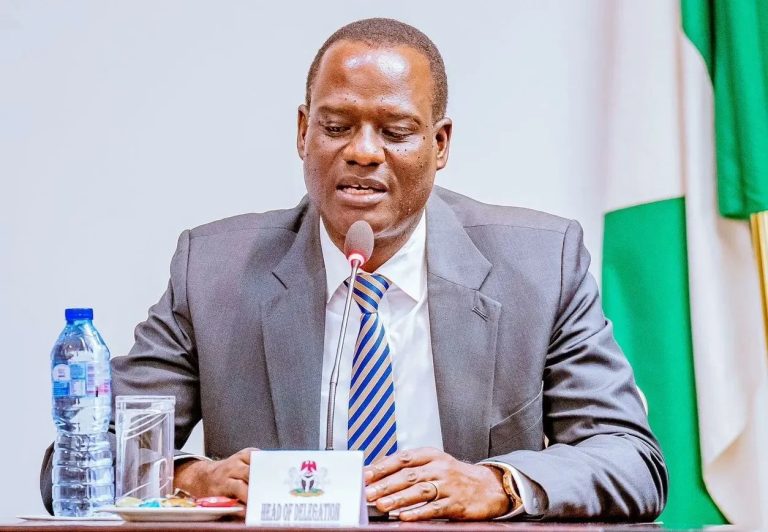
Minister of State for Finance, Budget and National Planning, Prince Clem Ikanade Agba, yesterday, said that Nigeria has the second highest number of stunted children with an estimated 2.5 million of them under the age of five.
Agba who made this revelation in Abuja during the flag-off of Nigeria’s Nutrition Week, said the children under five years are suffering from severe acute malnutrition (SAM).
“This is quite worrisome and calls for urgent measures to reverse the trend” he lamented, saying that despite concerted efforts by government in recent years, particularly in the area of child nutrition and breastfeeding, malnutrition (and other public health issues) have remained a challenge.
This, he insisted, must be addressed through the implementation of innovative policies and strategies that are appropriately funded, data-driven, sustainable and optimised in terms of transparency and accountability for the efforts to yield the desired results.
“Furthermore, we must also continue to work collaboratively across all levels of governments, and hand-in-hand with the private sector and development partners in this regard”. The ministry, he said, places high premium on nutrition in view of its multi-sectoral nature and overarching effects on the nation’s socio-economic development.
According to him, this year’s theme – “Nutrition: The Bedrock for Economic Development” was carefully selected to further drive home the importance the ministry attaches to nutrition as a prerequisite for national development.
“Over the years, this week-long annual event has proven to be a veritable platform for intensifying awareness on the importance of food and nutrition on child survival and its impact on development, productivity, economic growth and national development. This can be attested to by some of the achievements recorded in past editions of the programme.
“Research has shown that investments in nutrition prevents undernutrition, builds human capital, boosts shared prosperity and improves health outcomes” he said.
According to him, returns from programmes for improving nutrition far outweigh their costs while delay/failure in addressing malnutrition has high costs in term of higher budget outlay as well as lost Gross Domestic Products (GDP) and this makes investment in nutrition a must do.
“Under the leadership of President Muhammadu Buhari, Nigeria has shown a clear commitment to the eradication of malnutrition through the adoption and domestication of policies and costed strategic plans, which emphasises increased reliance on domestic funding; and a well co-ordinated multi-sectoral and multi-stakeholders’ approach backed by sustained high-level political commitment. This is evident in Nigeria’s Economic Recovery and Growth Plan (ERGP) (2017-2020), a medium-term strategic plan aimed at investing in our people, diversifying the economy and restoring growth, which places critical emphasis on strategic multi-sectoral interventions to address food security and malnutrition.
“Owing to the importance the current administration places on child survival, nutrition is one of the key thematic areas in the Medium-Term National Development Plans (MTNDP 2021-2025 & 2026-2030) and the Nigeria Agenda 2050 presently being developed by our Ministry.