Follow Us on Google
By Juliana Taiwo-Obalonye
Every year, millions around the world leverage the opportunities provided by the 16 Days of Activism Against Gender-Based Violence to raise public awareness on the need for collective action aimed at tackling incidents of GBV.
An initiative of the United Nations’ agency, the UN Women, which is commemorated globally from November 25 to December 10 every year, has resonated among activists, state actors and influential voices, as they form a united platform to condemn the dangers posed by gender violence against women and girls on economic, social and political spheres as well as achieving gender inclusion.
The theme for 2024, 16 Days of Activism Against Gender-Based Violence, which states inter alia: “Equality – Reducing Inequality and Advancing Human Rights,” aptly captured the mood of Nigeria’s effort to eliminate gender-based violence against women and girls through the active participation of stakeholders on the demand and supply sides, the civic groups and the government alike.
Furthermore, this provides an opportunity for reflection on the collective effort toward the elimination of gender based violence against women and girls in member states through legislations, legal compliance and adequate sanctions as deterrent against violators of rights of women and girls who resort to violence.
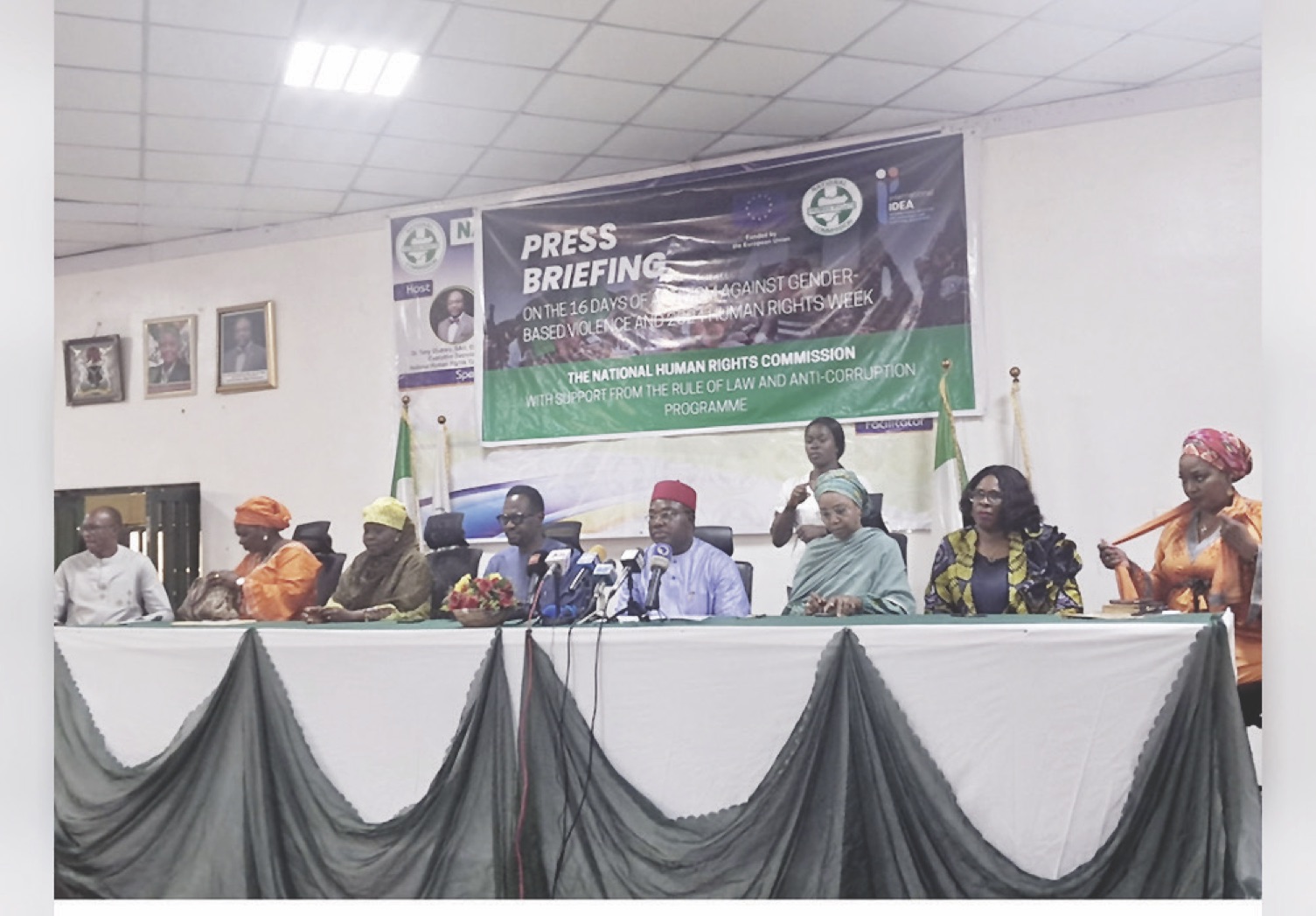
On Friday November 22, 2024, the National Human Rights Commission (NHRC), Nigeria’s ombudsman human right agency, unveiled the startling revelation and data during a press conference in Abuja to herald the 2024 edition of 16 Days of Activism against gender-based violence in Nigeria. The data collated by the agency through its zonal offices and collaboration with civic groups, places Nigeria rating at a low rung, indicating that there is a need an urgent action to put the country back on the path of progress, strengthening its capacity and capability to safeguard the rights of millions of women and girls in Nigeria from gender violence.
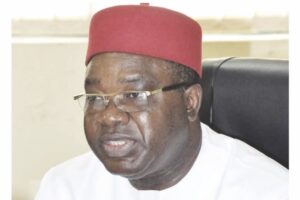
The Executive Secretary, National Human Rights Commission (NHRC), Tony Ojukwu, a senior advocate of Nigeria, who spoke at the briefing, disclosed that the NHRC is committed towards positive actions aimed at tackling gender based violence against women and girls in Nigeria.
The media parley, which was conveyed by NHRC along with its civil society partner, the Rule of Law and Anti-Corruption (RoLAC) initiative, provided the pathway for collective action on curbing the alarming rate of gender based violence against women and girls in the country as well as how Nigerians across board can join in the fight against gender based violence.
The NHRC ES noted that between 2020 and 2023, Nigeria reported a total of 27,698 cases of sexual and gender-based violence (SGBV), which resulted in 1,145 fatalities with only 393 convictions of perpetrators through the courts.
By simple logic deductions, the ration of reported cases of SGBV, fatality figures and post-trial and convictions, therefore, are indicators that the Nigerian state is yet to prioritise accountability of the perpetrators that often, may never be held accountable for their actions, thereby exacerbating the incidents of SGBV against women and girls across the country.
In a groundbreaking effort to tackle gender-based violence, Nigeria launched its first national sexual offenders register on November 25, 2019. This initiative, supported by RoLAC, aims to document and publicly disclose the names of individuals convicted of sexual offenses since 2015. However, prior to this national effort, two states had already taken steps to address sexual violence through their own registers.
Other News
Lagos State initiated its sexual offenders register in 2014, allowing public access to information about individuals convicted of sexual crimes. This initiative is part of broader efforts to improve community safety and serve as a deterrent against sexual offenses. Ekiti State followed suit in 2013 with its “Black Book” for sexual offenders, which similarly aims to document and publicise the names of those convicted of sexual crimes.
Ojukwu revealed that in October 2024 alone, the NHRC received a staggering 427,606 complaints related to human rights violations, underscoring the pervasive nature of violence against women across which no doubt places Nigeria among the state with a high rate of gender based in the world.
The poignant big question now is, what are the best possible options towards tackling this raging monster, of gender based violence against women and girls? How can the government as the duty bearer for the protection of the rights of women and girls do to discharge its obligation as a state with duty of care to ensure the protection of rights and liberties of women as well as the preservation of lives within the Nigerian territory,
Ojukwu noted the campaign aimed at engaging all stakeholders, including the governmental bodies, civil society organisations, and the media, to foster collaboration and drive initiatives aimed at reducing violence against women. “We must galvanize our efforts to create a safer environment for all individuals,” he added.
It is pertinent to note that the need for collaboration among stakeholders towards combating the insidious monster of gender-based violence effectively through deepening legislative action, policy immersion and public awareness creation and ultimate sanction by the Nigerian state to ensure that perpetrators are punished both as a deterrent as well as appropriate justice for the victims and their families.
According to him, the NHRC aims to mobilize diverse stakeholders during the 16 Days Activism—including media, civil society, and security agencies—to combat this pervasive issue.
Recent reports indicate that one in three women in Nigeria experiences violence in their lifetime, with 33% of women aged 15-49 having encountered physical or sexual violence.
The campaign will feature nationwide events, including advocacy visits to legislative bodies and community engagement to promote awareness and legislative reform.
Ojukwu, speaking on the theme, said: “This theme serves as a powerful reminder and a call to action for all of us to reaffirm our commitment to protecting the rights of every individual,” he stated.
Crunching the data collated by NHRC is call to action by the government as a duty bearer in safeguarding the rights to life and liberties of women and girls in Nigeria against the perpetrators of sexual and gender based violence.
For instance, in October 2024, NHRC received 427,606 complaints of human rights violations from our offices across Nigeria, underscoring the serious nature of gender-based violence in the country. It noted that nearly one in three women globally experience violence in their lifetime, with adolescent girls being particularly vulnerable. While nearly one in three women globally experience violence in their lifetime, with adolescent girls being particularly vulnerable.
On its parts, the RoLAC initiative, funded by the European Union, implemented by the International Institute for Democracy and Electoral Assistance (International IDEA), is set to play a crucial role in this campaign. The ongoing efforts by these partners to tackle the rising incidents of SGBV in Nigeria demands the support of all as the country commence another round of the 16 Days of Activism against Gender Based Violence against women and girls. It also indicated that it intends to establish a Sexual Assault Referral Centres (SARCs) across Nigeria, to provide a critical support to thousands of survivors, who would need to rebuild their lives after the trauma of violence.