Follow Us on Google
From Juliana Taiwo-Obalonye, Abuja
United Nations International Children’s Emergency Fund (UNICEF), has expressed concern over Nigeria’s failure to effectively deploy its large workforce of 1.8 million teachers in basic education.
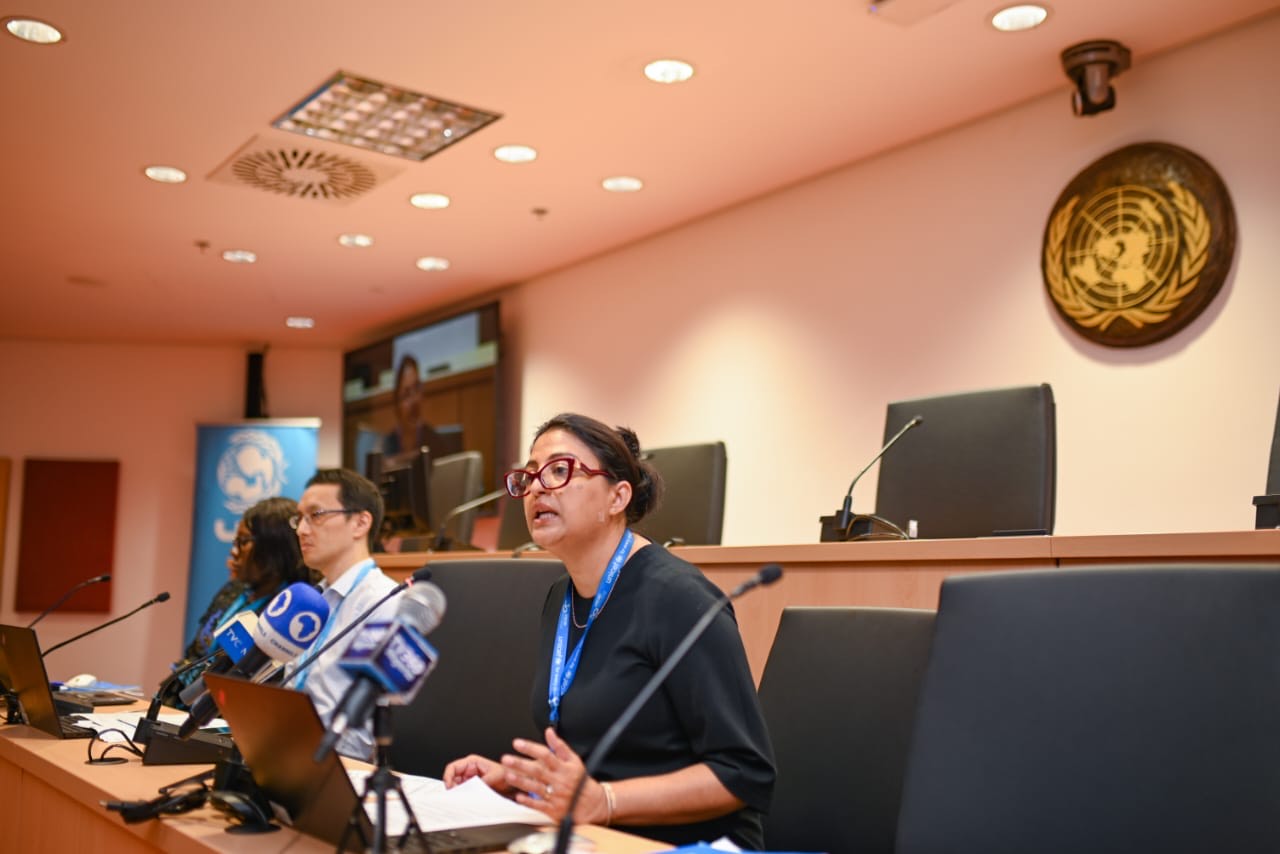
Chief of Education UNICEF, Saadhna Panday, stated this at the launch of Teacher Management Information System (TMIS), in eight states at the UN House Abuja, where representative from 20 states were in attendance.
The states are Bauchi, Borno, Kaduna, Kano, Katsina, Sokoto, Zamfara, and Yobe.
Panday said UNICEF, in collaboration with Federal Ministry of Education (FME), developed a Teacher Management Information System (TMIS) to strengthen the recruitment, deployment, and management of the performance of teachers in Nigeria.
She said the TMIS seminar organised to launch TMIS in the eight states in Nigeria demonstrate the use of TMIS and sensitize partners on the benefits of TMIS share experience and learning from states piloting TMIS discuss scaling of TMIS to all states in Nigeria.
She said: “We have a very large workforce in Nigeria almost 1.8 million teachers and we have got to ensure this resource is very well deployed across the country to improve learning outcomes. We have got severe learning crisis in Nigeria so when we have a system that collates the data of all the teachers, their profiles, how old they are, what are their qualifications etc, it really helps to make sure we have the right number of teachers with the correct profiles recruited into the education system and that we deploy them to the right classrooms.”
“What we see is very low pupil-teacher ratio, in some schools is one teacher to 10 learners and in other states is one teacher to 262 learners. This is significant problem because very little learning can take place when you have such large class size. So this is telling us that we have a problem with the deployment of teachers, to get the right teacher to the right classroom at the right time. When you collect administrative data like this, you are able to centrally managed, to see how many teachers you have the system, those that need the most and deploy effectively.”
On rural urban or urban rural deployment and the proficiency of the teachers, Panday said: “When teachers recruitment are put on the system, you can predict the number of teachers you need in a particular area be it rural or urban, with their profile which entails their qualifications, where they are from, where they are based, you can effectively deploy that resource to where it is needed most. So this will kind of level the playing field. Most people want to live where they services are needed but unfortunately we also need to service people in the rural areas and such a system allows you to effectively deploy where it is need the most.
“In terms of qualifications of teachers, we’ve got a significant number of teachers about 30 percent at primary school level, about 40 percent at junior secondary school level, who are unqualified, so we need to close that gap. TMIS allows to engage in continuous teacher profession training development, so we now have central database that now captures the qualifications of teachers. We know where the unqualified teachers are located, we know what subject areas we need them to specialize in and we can now deploy continuous teacher profession training development to them.”
On if TMIS allows for inter-state transfer, she said: “Absolutely because it is now a centralized system so you can track the movement of teachers across states and deployment where they are required provided that it is in agreement across the states. So the system exist to track inter-state movement, the policy environment now needs to support that.
Asked when the project will be handed over to Nigerian government, Panday said: “It is already with the Nigerian government. The way UNICEF works, we don’t run projects, we run programmes. From the get go we do this in partnership with government, so the Federal
Ministry of Education (FME) and Universal Basic Education Commission (UBEC) have been involved at the inception and so have the states government and TMIS is already active in the states.
Also speaking, Director Teacher Professional Development, UBEC Abuja, Mayowa Aleshin, explained that TMIS is a vital to the management of school information in basic education and will help to effectively manage teachers.
He said: “TMIS is basically a platform that helps administrators in basic education to manage teachers, plan effectively for teachers in the system. It covers area of teacher effectiveness, teacher absenteeism, redeployments, recruitments, efficiency.
“So, TMIS helps policymakers, administrators, like I said, to effectively plan. From what we’ve heard today, if you look at what we have in the classroom, the teacher-pupil ratio, the deployment of teachers, maybe there are so many teachers in the urban area as against the rural area. So, in the rural areas, we have so many schools that don’t have teachers, meanwhile, you have a lot of them in the urban areas. And at times teachers are deployed to school not based on needs, TMIS will help you to manage this effectively. Because all the detailed information about the teacher, you have on the platform.
On if there won’t be clash of interest, he said: “There won’t be any clashes because you already have some level of management, but it is basically manual. What you’re now introducing is the technology aspect of it. Now you can gather your data on the platform, you can look at it instantly. And you can also get instant information. What we had before were done manually and in hardcopy, but now, you already have the data on the platform, and then you can easily access it. So there shouldn’t be any clash”.
Aleshin added that the platform also allows recruitment and advertisement of vacancies where the locations are and where one will be deployed if eventually employed.”
Asked if this have been embraced by teachers since people resist change in this part of the world, he said: “There’s nothing to resist here because it tells you about who you are, it tells you where you are the location of where you’re working, and it reduces the workload on the head teacher because now you can instantly do what you want to do on the system.
“It also tells you the enrollment to your school and number of teachers. At the other end, the administrators also will be able to see who is retiring in the next six months, the areas of needs and what quickly need to be done to cover the gap.
“So, there’s nothing much to it, although it’s a change, because it’s going to be bring in technology, but it’s also bringing efficiency and effectiveness.”