Follow Us on Google
By Henry Aku
Watching the snaking Lagos lagoon meld into the long stretch of the Atlantic Ocean from the windows of the white coaster bus conveying Nigerian journalists and art critics to the Pan Atlantic University, venue of the arts journalism workshop came with a thrill. The majority of the participants, for the first time, were also riding on the new Coastal Road, which, on completion, would link nine Nigerian states all the way to Calabar.
By the left side of the road, Lagos offered a kaleidoscope of architectural views, from the highrise of Victoria Island to the creeping conurbation of Lekki and its environs. The lush swath of green mangrove lining the road offered a spectral view of the Lagos flora that isn’t common in the metropolis. The organisers got it spot on: a media workshop mixed with excursion.
The Yemisi Shyllon Museum of Art, located at the Pan Atlantic University, Lagos, hosted a select group of 35 Nigerian journalists and art cognescenti in a workshop tailored to broaden the views of journalists on the arts beat and get them up to speed with new reportorial tools and developments in the sector.
The event was organised in collaboration with the Embassy of Spain in Nigeria and Casa ÁFrica and Casa África through its #PeriodismoÁfrica programme with the theme,“New Narratives and Singular Communication in Arts Journalism: The Museo del Prado Experience”. The programme was supported by the Museo Nacional del Prado, Madrid, with Art Report Africa serving as a media partner.
Apart from arts and culture journalists from leading Nigerian dailies and online publications, the programme attracted art critics, museum workers, cultural communicators, and members of the academia. For two days, the workshop focused on storytelling, ethics, media relations, audience engagements, digital communications, and artificial intelligence. It also discussed the role of the media in enhancing the understanding of the audience of art.
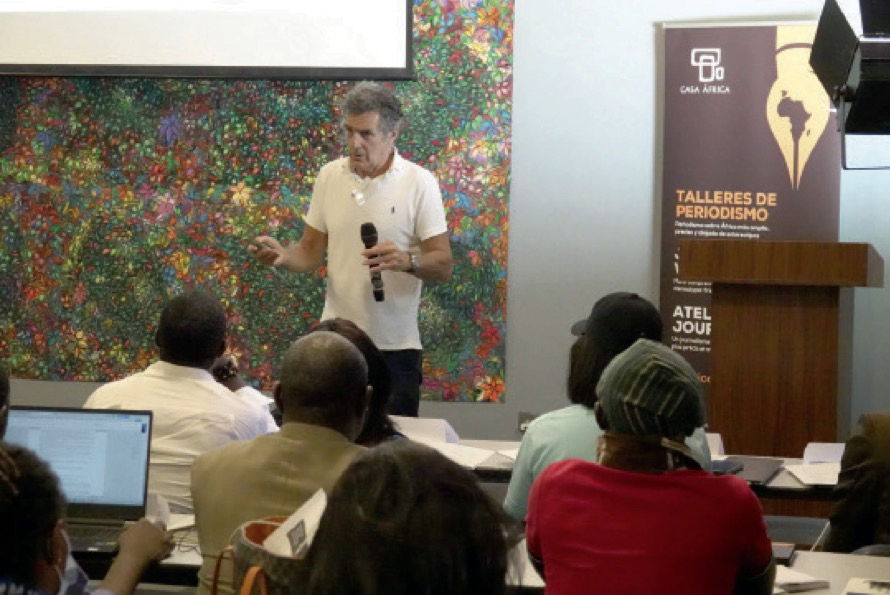
The Director of Communications at the Museo del Prado, Carlos Chaguaceda, flew in from Spain to present the keynote speech entitled “The Prado and the Will to Communicate.” Lest we forget, Museo del Prado is ranked as one of the best museums in the world and a must-visit location for tourists visiting the Spanish capital, Madrid, and the country itself. It is a repository of the best of Spanish and European art, welcoming more than 3.5 million visitors yearly. Through its digital platforms, it also reaches millions of people worldwide.
His speech drew from the Prado experience. He showed a documentary of the museum, showcasing its rich collections and how it had evolved over the years. His speech hinted on how journalists, cultural institutions and museums can forge a worthwhile relationship with different audiences, while creating e growing narratives, and generating public value by deploying strategic communication.
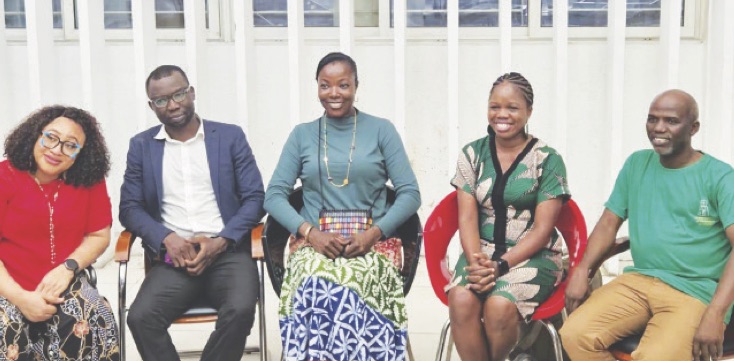
The first day of the programme featured a panel discussion of participants that involved Dr. Ike Obiaya, the Dean of the School of Media and Communication, Pan-Atlantic University; Dr. Jess Castellote, Director of the Yemisi Shyllon Museum of Art; and Sunshine Alaibe, the Director of Art Report Africa. Wale Alimi; and Dr. Nwachukwu Egbunike.
Emphasising the need for collaboration, Eva Barta, the Cultural Adviser of the Embassy in Nigeria, Eva Barta, said you could advance diplomacy through culture: “By bringing together expertise from the Museo del Prado and leading voices from Nigeria’s cultural sector, we are investing in relationships, knowledge, and dialogue that will continue to benefit both countries long after the programme has ended,” she remarked.
Casa África is a public diplomacy institution connected to the Ministry of Foreign Affairs of Spain, committed to strengthening relations between Spain and Africa through culture, education, media, and knowledge exchange. It played a huge role in the programme through its #PeriodismoÁfrica programme that seeks to boost media practice in Africa.
In his speech, Joan Tusell, the coordinator of #PeriodismoÁfrica programme at Casa Africa, said cultural journalism was not simply about documenting events; rather it enhances the preservation of memory, interprets change, and connects communities with shared stories.
Besides: “Through #Periodis moÁfrica, we seek to support journalists who tell richer and more nuanced stories about African realities,”, he said, emphasising that they “facilitate a practical exchange of ideas and experiences that we hope will inspire journalists and cultural institutions alike to build stronger narratives and greater public engagement around arts and culture.”
Dr. Jess Castellote, the Director of Yemisi Shyllon Museum of Art, stated in his lecture, “The Art Ecosystem and the Journalist’s Mandate” that a healthy cultural ecosystem requires informed and engaged journalism. Museums preserve and interpret culture, but journalists help amplify those conversations in the public sphere.”
The museum, he said, believed that the future of the art history of Nigeria was dependent partially on the stories journalists slfish outbtomtje public. He hoped “this experience refines the quality of cultural journalism which ultimately shapes the visibility, understanding, and value society places on culture itself.”
The museum is noted for organising workshops, professional exchanges, and training programme meant to strengthen cultural literacy, support creative practitioners, and build capacity among stakeholders, aside showcasing the country’s art and cultural heritage.
The Yemisi Shyllon Museum of Art (YSMA) boasts of a rich collection of rare Nigerian artworks dating back to centuries. This collaboration the Spanish Embassy of Spain, Casa África, and the Museo del Prado, is an attempt to deepening the knowledge base of Nigerian journalists in the area of cultural reportage and capacity building for others in the culture sector.