Follow Us on Google

By Damiete Braide
There is a tightening in the texture of contemporary Nigerian writing, a compression of language, a sharpening of tone, a quiet urgency that mirrors the tightening of belts across the country. The flamboyance, satire, and ideological bravado that once defined much of Nigeria’s post-independence literature are giving way to something leaner and more anxious. Today’s writers are not observing a crisis from a distance; they are writing from inside it.
Inflation, unemployment, currency instability, migration pressures, and the daily arithmetic of survival are no longer atmospheric details in fiction and poetry. They are structural forces. They determine the plot. They dictate character choices. They compress timelines. They reshape publishing pathways. In this age of hunger, both literal and metaphorical, writing itself is being redefined.
Earlier generations of Nigerian writers often worked on a broad national canvas. Their novels wrestled with colonial legacies, military dictatorship, corruption, and the moral failings of leadership. The individual frequently stood in for the nation. Personal suffering symbolised collective trauma. Allegory was expansive; the nation was the primary subject.
Contemporary literature has narrowed its gaze, not out of indifference but out of necessity. The grand allegory of “Nigeria” has contracted into intimate narratives of economic precarity. Writers are less interested in defining what Nigeria means and more concerned with documenting what it costs to live in it.
Stories increasingly revolve around rent deadlines, unpaid salaries, fuel scarcity, erratic electricity, side hustles, failed interviews, and the emotional weight of downward mobility. Characters are not debating ideology; they are calculating transport fares. They are deciding who eats first. They are negotiating shame. The politics remain, but they are embedded in the mechanics of survival.
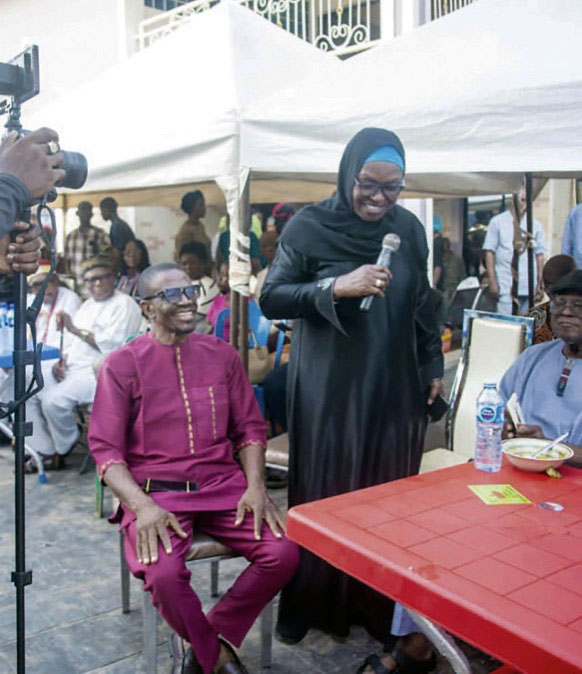
Dr. Olatunbosun Taofeek, Chairman of the Association of Nigerian Authors (ANA), Lagos State Chapter, sees this shift as inevitable. Echoing Nina Simone’s famous assertion, he insists that “an artist’s duty is to reflect the times.” For him, inflation and unemployment are not decorative backdrops but defining pressures. “Inflation and unemployment are not mere backdrop scenery on the Nigerian map,” he argues. “They are the very ties that bind the human condition to its inexorable struggles.”
In recent fiction, inflation functions almost as an unseen antagonist. It is rarely personified, yet it governs every decision. A character’s moral compromise may hinge on the price of rice doubling overnight. A relationship may fracture under the strain of mounting bills. A young graduate may abandon ambition for immediate survival because opportunity has collapsed into scarcity.
Writers often do not need to explain these conditions in detail. Nigerian readers already understand the stakes. The realism is shared and immediate. Scenes begin in crisis because crisis has become the baseline. Exposition shrinks. Prose tightens. Words must justify their presence, much like expenses in a household budget.
Unemployment, once framed in earlier literature as temporary misfortune or individual failing, now appears as systemic and enduring. Characters with degrees drive commercial tricycles, sell phone data, gamble online, or rely on remittances. Professional identity dissolves. The language of aspiration gives way to the language of endurance.
The psychological consequences are foregrounded. Writers dwell on eroded dignity, the quiet despair of being educated yet disposable, and the gendered burdens that economic collapse intensifies. Men grapple with provider expectations they cannot fulfill. Women shoulder invisible labor, emotional, domestic, financial, often without recognition.
Humour survives, but it is darker. Satire softens into resignation. Laughter becomes a coping mechanism rather than a weapon of critique.
Migration, popularly captured in the term “japa”, has become one of the most dominant motifs in contemporary Nigerian writing. Yet as Ayo Oyeku observes, the desire to seek greener pastures is not new. “It’s not just about the economic situation,” he notes. “It’s also a form of classism and life ambition for a large chunk of Nigerians.”
Still, what distinguishes current migration narratives is their tone. Departure is rarely glamorous. It is portrayed as desperate, bureaucratic, exhausting. Visa rejections, financial proofs, waiting rooms, dangerous routes, and diasporic loneliness populate recent stories. Leaving is framed not as triumph but as last resort.
Oyeku describes “japa” as “not a fleeting motif but a pervasive undercurrent in Nigerian writing.” Writers, he says, “peel off the scabs around the wounds of migration,” chronicling shattered dreams and interrogating the irony of departure as both liberation and loss.
Even stories set entirely within Nigeria are haunted by the possibility of exit. Characters measure their worth against those who have left. The nation becomes a waiting room. Narrative structures reflect this instability, episodic, fragmented, often unresolved. Endings resist closure because migration rarely offers it.
Yet migration is stratified. It demands visas, tickets, bank statements, resources beyond the reach of many. “Japa is largely a middle-class project,” as critics increasingly observe. The poor remain, not necessarily out of patriotism but constraint. This inequality, engineered and entrenched, recurs in literature as a defining structural imbalance.
Hunger, once metaphorical in Nigerian writing, has become bodily. Contemporary texts describe skipped meals, empty pots, the fatigue of malnutrition, and the mental calculations that determine who eats and who waits. The body emerges as a site of economic violence.
Prose reflects this embodiment. Ornamental description recedes. Sensory detail, heat, sweat, noise, hunger pangs, anchors stories in physical reality. Writers resist abstraction. Hardship is not a statistic; it is a daily assault on flesh and mind.
Economic hardship has also reshaped language itself. Writers increasingly blend Standard English with Nigerian Pidgin, slang, text-speak, and local idioms. This hybridity is not stylistic experimentation for its own sake; it mirrors lived speech. Pidgin, especially, captures negotiation, hustle, humor, and despair with precision. Its presence in literary texts signals an embrace of immediacy and authenticity.
At the same time, sentences grow leaner. Excess is pruned. The prose mirrors scarcity. Words, like currency, must earn their place.
Other News
This recalibration extends beyond content and language to the structures of publishing. Nigeria’s literary infrastructure, long fragile, is under strain. Printing costs—paper, ink, transportation—have surged. Distribution networks remain weak. Readers’ disposable income has shrunk.
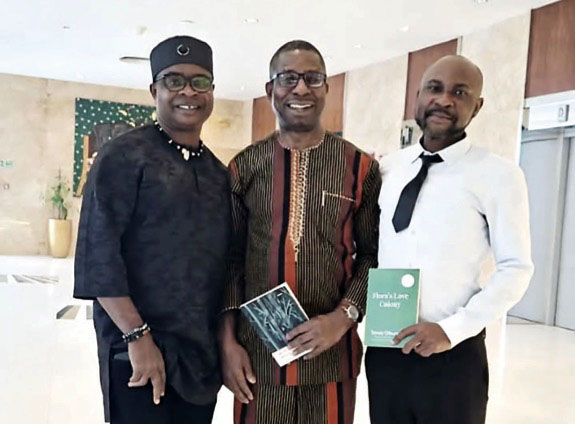
Oyeku, who founded a self-publishing firm, describes the environment candidly: “People struggle to print 100 to 500 copies of their books nowadays.” Advances in five or six digits are rare. Traditional publishing houses are few. The path to publication is narrow and competitive.
As a result, many writers turn to digital platforms, newsletters, online magazines, and chapbooks. Short forms flourish because they are cheaper to produce and easier to consume. Self-publishing, once stigmatized, has become normalized, often by necessity rather than preference.
Oyeku advocates strategic flexibility. Traditional publishing, he argues, “helps to break new grounds and markets for authors,” while self-publishing allows writers to push out work they believe in and retain greater earnings. He himself “juggles both platforms.” In his view, “the Nigerian writer must prioritize endurance over ephemeral local acclaim.”
Economic pressure also shapes thematic choices. Some writers tailor their work to international markets, platforms that pay in foreign currency, or genres that travel well abroad. Others resist such calibration, insisting on local specificity even when it limits visibility. The tension between global appeal and domestic relevance has intensified in a context where financial survival intersects with artistic ambition.
Gendered narratives have deepened as well. Women writers foreground unpaid care work, domestic precarity, exploitation, and burnout. Female characters navigate layered vulnerabilities, economic dependence, societal expectations, bodily risk, while crafting quiet, improvisational survival strategies.
At the same time, contemporary women’s writing resists romanticizing resilience. Anger, refusal, and exhaustion surface more openly. Survival is interrogated rather than celebrated. This expansion of emotional vocabulary pushes Nigerian literature beyond stoicism toward candor.
Religion, long central to Nigerian life, appears with renewed intensity in recent texts. Churches, mosques, prophets, and prayer spaces are depicted as sanctuaries, industries, battlegrounds, and last illusions. Characters pray not for transcendence but for rent, visas, and employment. Faith mechanism, contested terrain, and sometimes quiet protest.
Hope itself is rendered cautiously. Endings often remain ambiguous. Redemption arcs are restrained. When hope appears, it is small: a meal shared, a call returned, a day endured. Writers avoid false optimism, wary of betraying the realities they document.
This literature is anchored in the present tense. It bears the marks of urgency and improvisation. Yet urgency does not negate ambition. As Oyeku notes, “Literature born of urgency remains the true witness in the act of preservation.” It testifies. It archives feelings. It etches “the unseen wounds of trauma and the aroma of nostalgia into the collective memory.”
Still, he cautions against the dangers of a single story. Nigerian writers, he argues, must offer fresh narratives that extend beyond crisis. The rise of new publishing houses and creative platforms led by Millennials and Gen-Zs is diversifying the field. Romance, speculative fiction, horror, graphic novels, and so-called “chicklit” are gaining ground. “Literature isn’t just about urgency,” Oyeku insists. “It’s about agency.”
This diversification complicates the narrative that Nigerian literature is consumed entirely by hardship. While economic precarity shapes the environment, imagination continues to expand. Writers explore love, fantasy, humor, and futurism, even if survival remains an undertone.
Yet the structural paradox persists. Nigeria’s adversity generates powerful stories, but the same adversity weakens the infrastructure that sustains writers. Strong narratives sometimes suffer from poor editing, limited distribution, and inadequate marketing. Talent thrives; systems falter.
In this sense, the struggle is double. Writers contend not only with the pressures they depict but also with the fragility of the ecosystem that carries their work into the world. And yet they persist.
To write in a context where electricity fails, printing costs soar, unemployment lingers, and migration beckons is itself an act of defiance. To insist on narrative, on language, on testimony in the face of scarcity is to assert humanity.
The hunger shaping contemporary Nigerian literature is real and devastating. It narrows possibilities. It compresses imagination. But it also produces clarity. It strips away illusion. It compels honesty.
Nigeria has become an epicenter of stories not by accident but by necessity. In a society where people wake before dawn to chase uncertain livelihoods, where highly educated citizens remain unemployed, and where access often outweighs merit, hardship is not metaphor, it is structure.
Writers cannot afford to look away.
If earlier eras of Nigerian literature were defined by ideological contestation and national allegory, the current moment may be remembered as the era of survival narrative, a literature forged in scarcity, sharpened by urgency, and anchored in witness.
“An artist’s duty is to reflect the times,” Dr. Taofeek reminds us. Nigerian writers are doing precisely that. Whether their primary task is endurance or testimony, whether their stories are meant to last decades or to capture the texture of now, they are documenting what it feels like to live in this moment.
And in doing so, they transform survival into art.