Follow Us on Google
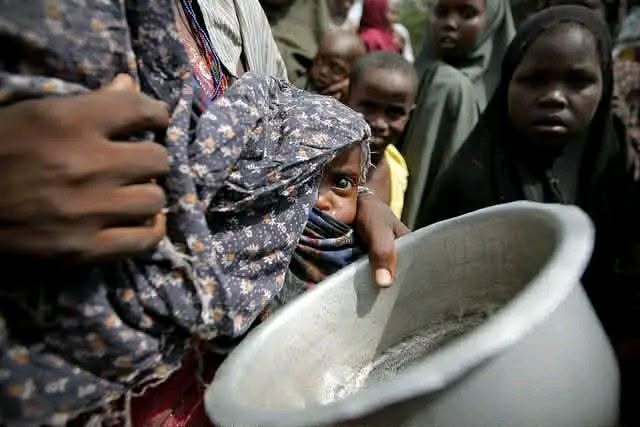
The United Nations World Food Programme (WFP) has warned that Nigeria’s food security crisis is deteriorating faster than previously anticipated. The UN agency also explained that conflict is driving hunger in some northern states, especially the North-East, to levels not seen in a decade. According to its recently completed Cadre Harmonise, over 17 million people across nine conflict-affected states in Northern Nigeria are experiencing crisis, emergency, or catastrophic levels of hunger.
In all, the WFP reveals also that the number of food insecure people across the country has increased to 36.2million. In addition to severe funding shortages, the WFP pointed out that additional 15 areas are now considered difficult for its personnel to reach on account of rising insecurity.
In Borno State, the epicentre of the Boko Haram insurgency, the WFP analysis shows that over three million people are acutely food insecure. Out of these, more than 750,000 people are in severe hunger conditions and over 10,000 people are facing catastrophic hunger. The WFP Regional Director for West and Central Africa, Kinday Samba, said that “what concerns us most is how this crisis is expanding.”
On the escalating insecurity in the North-East region, Samba further opined that “for years, insurgent attacks and violence were largely concentrated in parts of North-East Nigeria. Today, they are spreading across a much wider area and forcing people from farmland, driving displacement and restricting humanitarian access, meaning hunger is quick to follow.”
With the number of food insecure people in the region put at 6.2 million, the WFP says that it is only able to support 740,000, leaving 5.5million people, particularly children, without lifesaving food and nutrition assistance. The UN agency further says that it requires $89million over the next six months to continue food and nutrition assistance, and essential logistics support across Northern Nigeria before hunger deepens further.
The WPF alarm over the food and humanitarian crisis in the North is grim. It should be of utmost concern to the federal government as well as the governors of the affected states. Perhaps the WFP warning is a clarion call on the affected governments to do something to address the food crisis.
Other News
Similarly, the 2026 Global Report on Food Crises revealed that 266 million people across 47 countries experienced high levels of acute food insecurity in 2025. Nearly a quarter of the population analysed almost double the share recorded in 2016. Conflict is the primary driver, accounting for more than half of all people facing severe hunger.
The report showed that 10 countries —Afghanistan, Bangladesh, the Democratic of the Congo, Myanmar, Nigeria, Pakistan, South-Sudan, Sudan, Syria Arab Republic and Yemen — accounted for two-thirds of all people facing high level of acute hunger. The report also revealed that children are the most affected in 2025, 35.5 million children were acutely malnourished, including nearly 10 million suffering from severe acute malnutrition, a life-threatening condition that increases the risk of death.
The Boko Haram insurgency in the North-East region, the herders and farmers’ crisis in the North-Central region and the banditry in the North-West may have contributed to the food insecurity in Northern Nigeria. With farmers not having access to their farms and some being killed in the course of farming, the nation’s food production capacity is likely to shrink.
With the recent abduction of schoolchildren in Oyo State and abduction of some people in Kwara State not too long ago, farmers in some parts of the South-West region will be afraid to go to their farms. The situation is not even better in the South-East and the South-South with reports of abductions and kidnapping of people by herdsmen who operate from the various forests.
With the escalation of insecurity across the country, all parts of the country will likely face the food crisis. Let all states begin to do something to enhance the nation’s food security by encouraging the development of the agriculture sector. Nigeria after crude oil will depend so much on agriculture. Good enough, we have fertile land for growing all kinds of food and cash crops.
Nigeria is the largest producer of cassava in the world today, producing over 60 million metric tons annually. Nigeria also accounts for over 60 per cent of global production of yam with 45-50 million tons annually. Nigeria is Africa’s top producer of rice, taro, cowpeas and vegetables. We also have enough body of waters for fish farming. However, we cannot truly realise our agricultural potential in the presence of frightening insecurity. No agric venture can succeed in the midst of intractable insecurity. Therefore, we urge the government to intensify measures to frontally tackle the security challenges forthwith.