Follow Us on Google
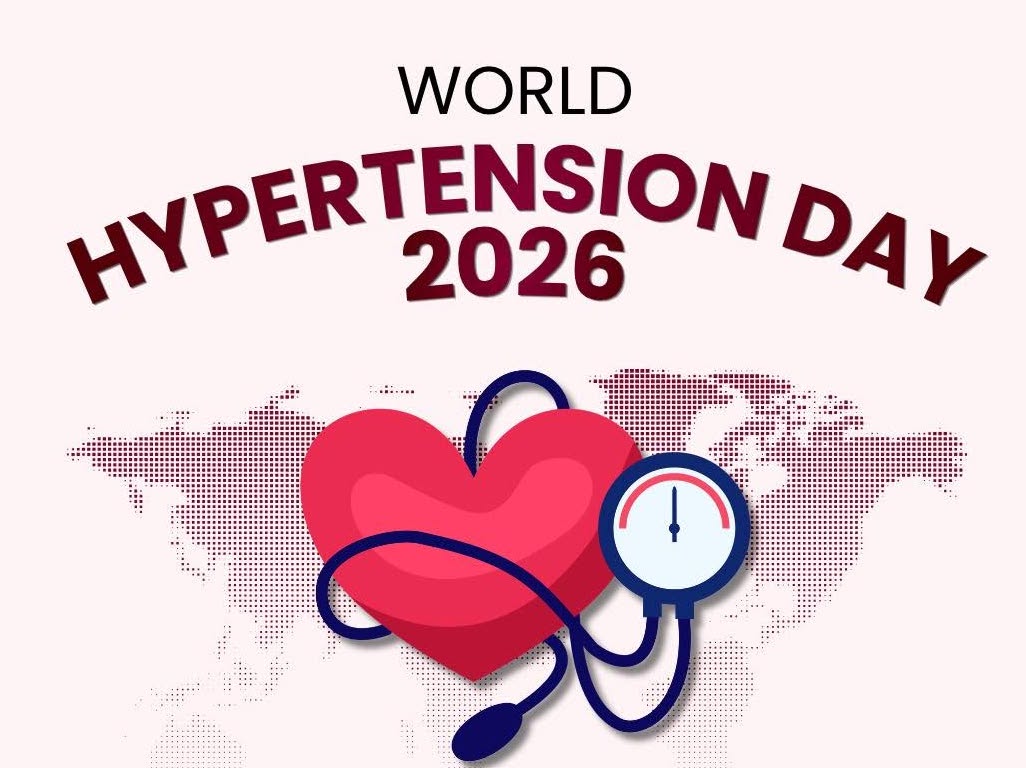
The President of Nigerian Hypertension Society, Prof. Simeon Isezuo, has called for a nationwide concerted effort in the war against hypertension, the silent killer. Isezuo, who stated this during the marking of this year’s World Hypertension Day, said hypertension is the leading preventable cause of death and disability in Nigeria and globally. He observed that no single group can win the battle alone; hence all should be involved, including government, health workers, civil society, private sector and spiritual and traditional leaders.
The World Hypertension Day is marked annually on May 17. It also forms part of Hypertension Awareness Month. The day aims to raise global awareness about high blood pressure, promote prevention, detection and control. It encourages action at individual, community and health-system levels. The theme of this year’s World Hypertension Day is, “Controlling Hypertension Together: Check Your Blood Pressure Regularly, Defeat the Silent Killer.” Hypertension remains the leading preventable cause of premature death worldwide.
Not less than four in 10 Nigerian adults live with hypertension, according to the 2025 State of Health of the Nation Report released by the Federal Ministry of Health and Social Welfare. According to the World Health Organisation (WHO), an estimated 1.4 billion adults aged 30-79 years worldwide had hypertension in 2024; this represents 33 per cent of the population of this age range. Two-thirds of adults aged 30-79 years who have hypertension live in low-and middle-income countries. Despite the availability of effective and affordable treatments, many people are unaware of their condition. Medical experts say that only about one in four people with hypertension have their blood pressure adequately controlled.
In other words, hypertension affects an estimated 27 to 30 million adults in Nigeria. Sadly, fewer than one in five Nigerians achieve target blood pressure levels regularly. The Nigerian Hypertension Society has described the situation as unacceptably low, considering that the condition often shows no symptoms until it leads to major complications. Unchecked hypertension is capable of causing irreversible damage to multiple systems in the body like the heart, kidneys, or brain. Hypertension significantly increases the risk of heart attack, stroke, kidney disease and premature death. Early detection, regular monitoring and sustained treatment can prevent most hypertension-related complications.
Since the disease has no symptoms, we urge Nigerians to routinely check their blood pressure. That is the only way the disease can be detected. Early detection is very important in the treatment of the disease. Hypertension can be prevented and controlled by eating healthy diets, increasing physical activity, avoiding tobacco, and reducing alcohol intake. Taking appropriate medication can significantly reduce the risk.
As most people with the disease are unaware that they have it, government should increase screening and routine measurement. It is very important that everyone should know their blood pressure values. The public should do away with certain myths and superstitions surrounding hypertension in this part of the world where people generally see it as spiritual attacks by demons and perceived enemies or from the so-called ‘village people.’
Due to the rising cost of hypertension drugs, we urge the government to subsidise the cost of treatment for low-and middle-income earners as well as for those who cannot afford the treatment cost. With monthly spending of N17,000 or more on hypertension drugs, not many Nigerians can really afford the cost of treatment. The long-term hypertension treatment depends on sustained access to care, medicines and follow-up.
The government should incorporate hypertension care in its primary care system in order to achieve its universal health coverage by 2030. We believe that strengthening the primary health care system will ensure access to diagnosis and treatment and also reduce disparities.
The World Hypertension Day offers an opportunity to increase public awareness and understanding of hypertension. It can also be used to promote routine blood pressure measurement in communities and health facilities. Let the government increase public awareness about the disease, causative factors, prevention measures and treatment options. We call for more public screening and blood pressure measurement in government health facilities and medical outreach in hard-to-reach communities.
It is a reality, too, that hardship is discouraging many people suffering from hypertension from buying recommended drugs, thereby breaking the dosage required to keep hypertension under control. Poverty should not be used as an excuse to compromise health. All tiers of government should be part of the crusade to curb the rising cases of hypertension in the country.