Follow Us on Google

Head of the Due Process and Public Procurement Bureau, Abia State, Dr. Oluebube A. Chukwu, has urged governments at all levels to make strategic and sustained investments in agriculture as a pathway to achieving food and nutritional security in Nigeria.
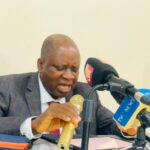
Chukwu made the call while interacting with newsmen in Umuahia, Abia State, as part of activities marking this year’s World Food Day celebration, themed, ‘Hand in Hand for Better Food and a Better Future.’
He described the theme as both timely and inspiring, emphasising that it underscores the importance of global collaboration among diverse actors, governments, private sector, researchers, farmers and civil society to build peaceful, sustainable and food-secure societies.
The day, he noted, serves as a global platform to raise awareness and inspire action toward ending hunger, promoting sustainable agriculture and ensuring access to safe, nutritious food for all.
Chukwu, founder of the Oluebube Chukwu Foundation, lamented that despite Nigeria’s 84 million hectares of arable land, of which only about 35 percent is currently cultivated, the country continues to grapple with food shortages, low productivity and heavy reliance on food imports.
“We cannot continue to depend on food imports when we have the land, manpower and knowledge to feed ourselves,” he said. “It is time for Nigeria to take deliberate steps toward agricultural transformation by investing massively in mechanized farming, irrigation, research and agricultural value chains.”
He emphasized that agriculture remains the foundation of national development, providing food, jobs and industrial raw materials, while driving inclusive economic growth.
“The government must see agriculture not just as a sector, but as a strategic investment. We need bold, consistent policies that empower farmers with access to finance, quality inputs, modern equipment and effective post-harvest systems,” he stated.
He commended the Abia State Governor, Dr. Alex Otti, for his renewed focus on agriculture, lauding his administration’s efforts in reviving moribund agricultural institutions, promoting agribusiness entrepreneurship and investing in rural access roads and irrigation systems to boost food production.
Other News
“Abia State is blessed with fertile land spanning over 2.4 million hectares, much of which is suitable for both crop and livestock production. Under Governor Alex Otti, we have seen a strategic shift toward agricultural revival, through support for farmers, promotion of cooperative farming, and renewed partnerships with development agencies,” he said.
He added that the governor’s reforms were timely and visionary, setting a model for other states to emulate in making agriculture the true engine of rural and economic development.
He also urged Nigerian youths to embrace agriculture as a profitable enterprise, not merely as subsistence: “Agriculture today is driven by innovation and technology. With agritech, processing, logistics, and exports, young people can build sustainable livelihoods. Youths must see agriculture as the new oil.”
On tackling Nigeria’s agricultural challenges, Chukwu proposed a systemic and coordinated approach involving research institutions, policymakers, farmers and private investors.
He recommended drawing lessons from agrarian success models in countries like Brazil, Israel and Kenya, where technology-driven farming, public-private partnerships, and agricultural extension networks have transformed food systems.
“Nigeria can learn from Brazil’s agribusiness clusters that integrate production, processing and marketing under one ecosystem; from Israel’s precision irrigation systems that maximize water efficiency; and from Kenya’s youth-focused agritech initiatives that use innovation to attract new generations to farming,” he suggested.
He further emphasised the importance of investing in agricultural education, rural infrastructure and research, adding that these are essential to build the capacity of farmers and promote adaptive technologies suited to local environments.
Chukwu maintained that food security is a shared responsibility, insisting that, with strong collaboration across governments, private sector and citizens, Nigeria can build a resilient agricultural system capable of feeding the nation, driving exports and fostering sustainable economic growth.