Follow Us on Google

By Doris Obinna
The Lagos State Government is developing a state-owned framework to strengthen emergency maternal and newborn care and curb preventable deaths arising from pregnancy and childbirth complications.
The initiative will focus on improving healthcare workers’ skills, strengthening emergency response and referral systems, standardising clinical procedures and ensuring that health facilities are adequately equipped to manage obstetric and neonatal emergencies.
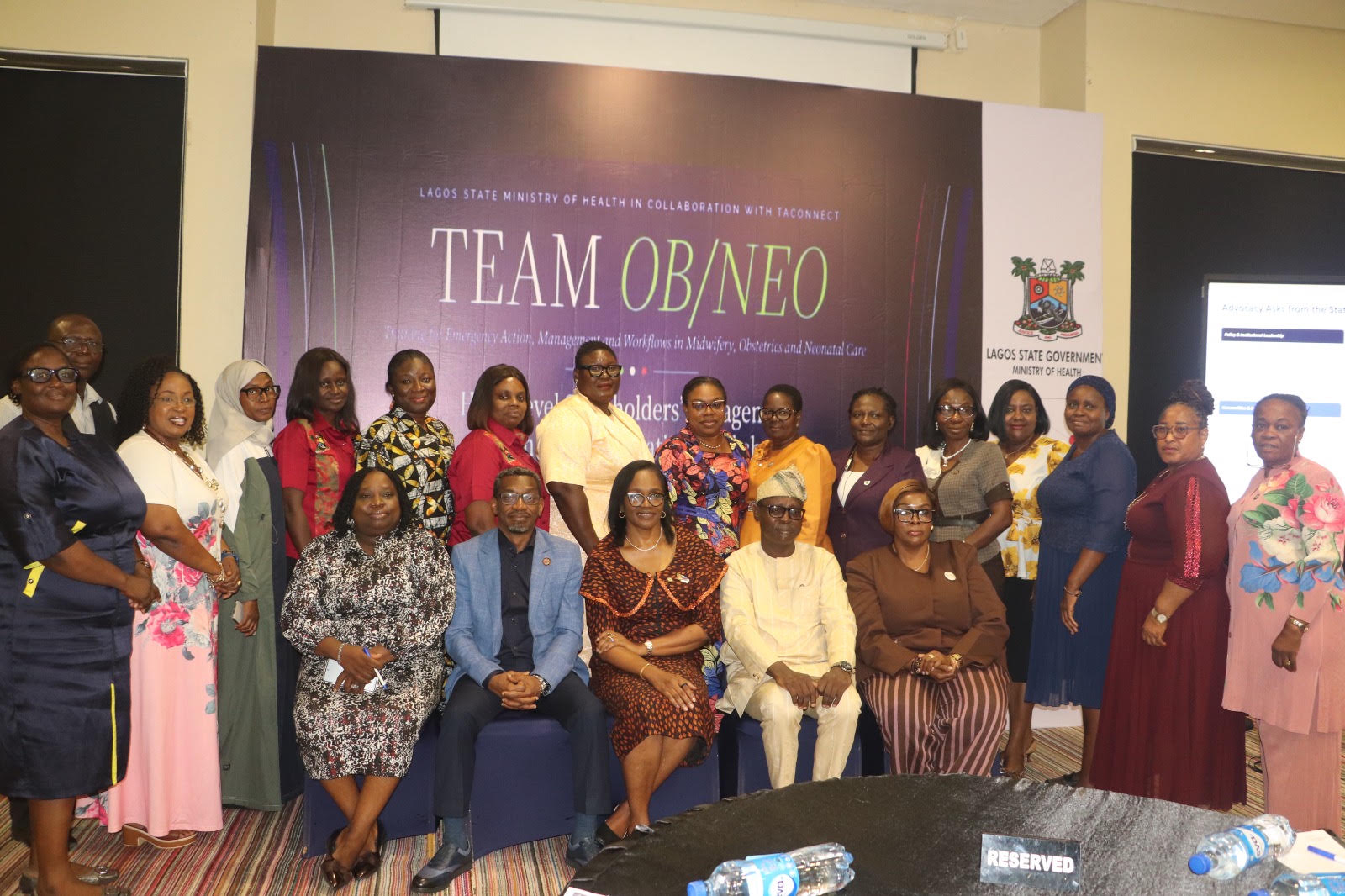
The Special Adviser to the Governor on Health, Dr Kemi Ogunyemi, disclosed this at a three-day high-level stakeholders’ engagement and technical co-creation workshop organised by the Ministry of Health in collaboration with TEAM OB/NEO in Lagos.
Ogunyemi said complications such as postpartum haemorrhage, eclampsia and prematurity-related conditions continued to threaten the lives of mothers and newborns, despite government investments in the health sector.
She said Lagos’ growing population and the influx of pregnant women from other states seeking specialised maternity services had placed additional pressure on its healthcare system, making stronger emergency care essential.
According to her, reducing preventable deaths requires more than identifying complications, stressing that healthcare workers must be able to recognise danger signs early, communicate effectively and initiate appropriate treatment without delay.
She called for competency-based training, simulation exercises, mentorship, multidisciplinary teamwork and standardised clinical workflows, insisting that the initiative must go beyond training to become a sustainable government-owned programme with measurable health outcomes.
Other News
Ogunyemi also identified government ownership, facility readiness, practical capacity development, standardised clinical practices, data-driven accountability and stakeholder coordination as critical to the programme’s success.
She urged stakeholders to support funding requests with credible evidence, including baseline figures and measurable progress, to demonstrate the impact of interventions.
The Permanent Secretary, Ministry of Health, Dr Dayo Lajide, represented by the Director, Family Health and Nutrition, Dr Abosede Wellington, said preventing avoidable maternal and newborn deaths required skilled personnel, functional equipment, essential medicines, effective teamwork and clear clinical protocols.
Similarly, the Permanent Secretary, Lagos State Health Service Commission, Dr Olufemi Omololu, identified workforce shortages and high staff attrition as major challenges, calling for continuous training and measurable benchmarks to track improvements in emergency care.
He stressed the need for functional emergency response pathways to ensure that women and newborns receive timely and appropriate treatment upon arrival at health facilities.
Development partners, including the Health Strategy and Delivery Foundation, the United Nations Population Fund and the Centre for Integrated Health Programme, also pledged support for stronger coordination and improved maternal and newborn health outcomes.
The three-day workshop, held from 10 to 12 November, brought together government agencies, professional associations, development partners and healthcare institutions to develop an implementation pathway addressing workforce gaps, facility readiness, referral systems and accountability in maternal and newborn emergency care.