Follow Us on Google

• Says outstanding election funds expected before month end
• Insists off-cycle polls, updated BVAS will prevent technical glitches
________________________________________________________________________
From Romanus Ugwu, Abuja
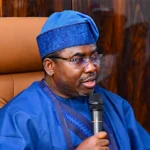
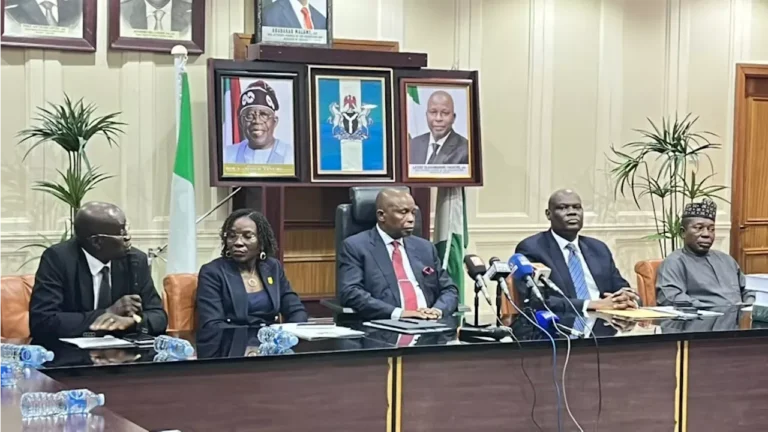
The Chairman of the Independent National Electoral Commission (INEC), Joash Amupitan, SAN, has ruled out the possibility of inaccurate data being uploaded to the INEC Result Viewing Portal (IReV) during next year’s general elections.
Amupitan appealed to Nigerians to trust his leadership to deliver free, fair and credible general elections in 2027, emphasising the measurable operational improvements recorded in recent off-cycle polls and the new technical safeguards designed to prevent a repeat of the technical glitches of the 2023 elections.
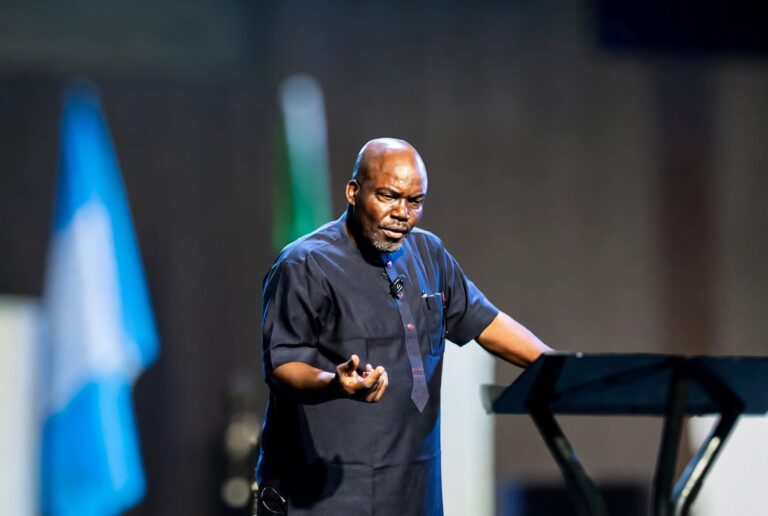
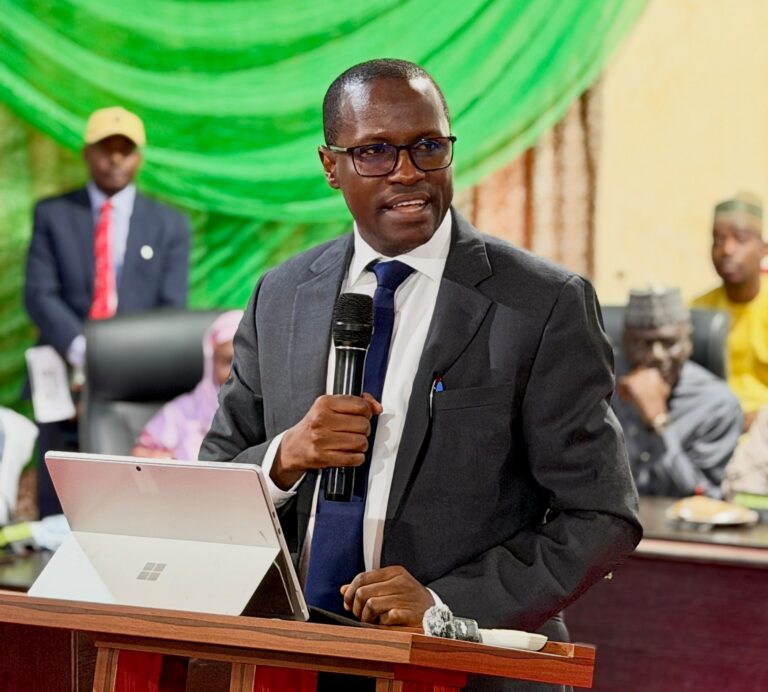
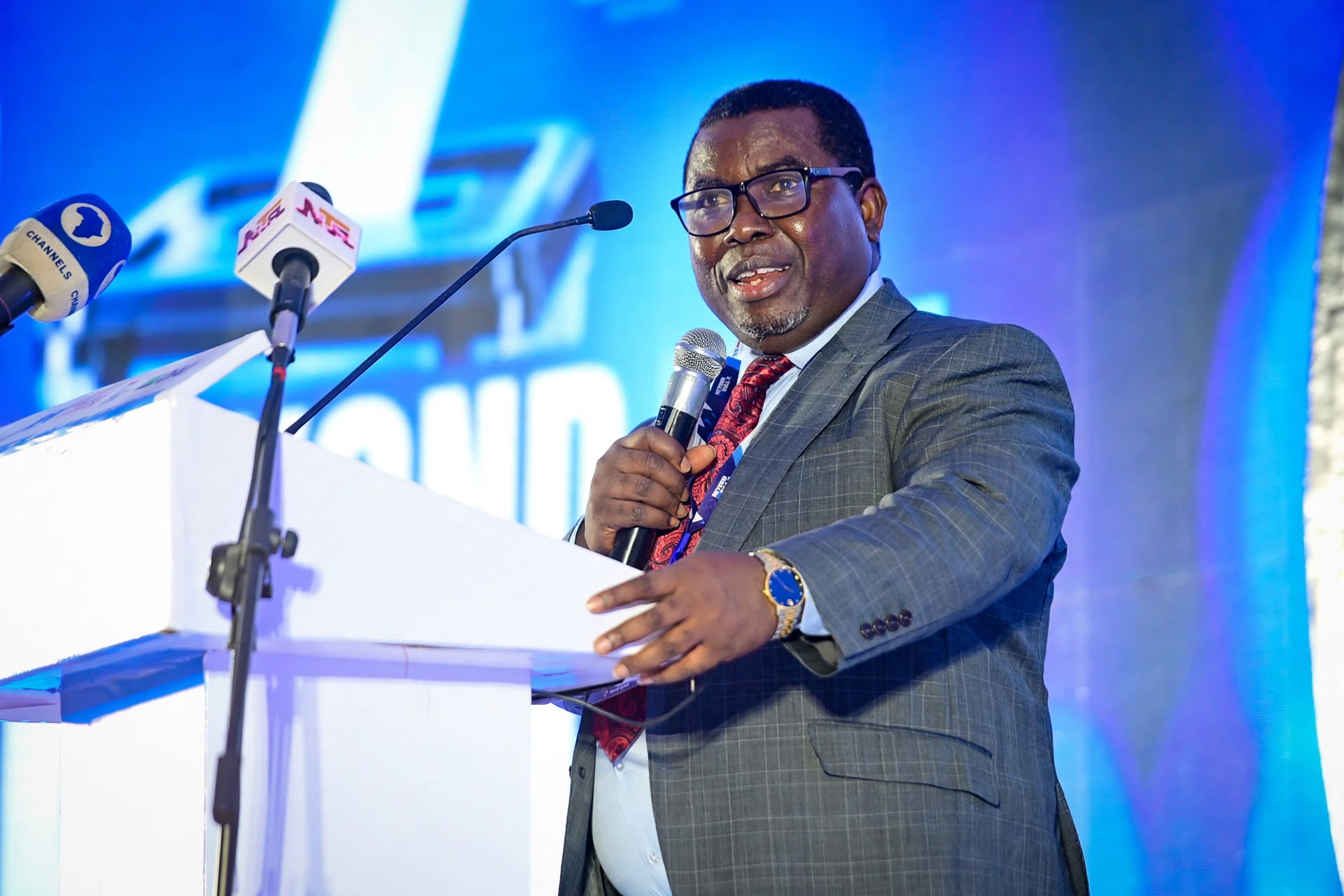
He spoke on Thursday at Chatham House, London, during a high-level dialogue convened in partnership with the Kimpact Development Initiative (KDI) under the theme, “Nigeria’s 2027 Elections: Democratic Trajectory and Regional Stability Beyond the Ballot.”
The statement, e-signed by Adedayo Oketola, Chief Press Secretary/Media Adviser to the INEC Chairman, in London, United Kingdom, noted that Amupitan addressed the controversial new safeguards on IReV and collation, highlighting insecurity, logistics and result management as INEC’s three top priorities for 2027.
He revealed that the commission’s post-2023 audit traced the most acute result management failures to collation centres rather than polling units.
To eliminate discrepancies between polling unit figures and collation sheets, he announced that INEC had built strict validation safeguards into its system so that inaccurate results or figures reflecting over-voting could not be uploaded to IReV.
“We found that the core problem of election result management and declaration in Nigeria is not even at the polling unit—it is at the collation centres,” he explained. “In 2023, there were instances of inaccurate results or results with over-voting being uploaded onto IReV. We have now devised a technical safeguard: if a result is not accurate at the polling unit, it will not go to IReV at all.
“The moment a result appears on IReV, citizens can trust what they see. By eliminating inconsistencies at the source, collation will become a transparent formality.”
Amupitan disclosed that while INEC had considered introducing an entirely new electoral technology for 2027, it opted instead to upgrade and harden its existing infrastructure because of the tight operational timeline before the polls.
Addressing the malfunctioning of the Bimodal Voter Accreditation System (BVAS) linked to extreme heat and storage conditions in 2023, he announced that INEC was constructing climate-controlled storage facilities across all states. Additionally, the commission had procured extra devices and reduced the maximum number of voters assigned per BVAS machine from 1,250 to 850, ensuring that polling units with more than 850 registered voters were deployed with multiple devices.
To test these upgrades ahead of the polls, Prof Amupitan announced a nationwide mock accreditation and voting exercise scheduled for 28 November 2026.
“On the 28th of this month, we will conduct a mock accreditation and voting exercise across all states of the federation to simulate the presidential election and verify that we have gotten both accreditation and electronic result transmission right,” he stated.
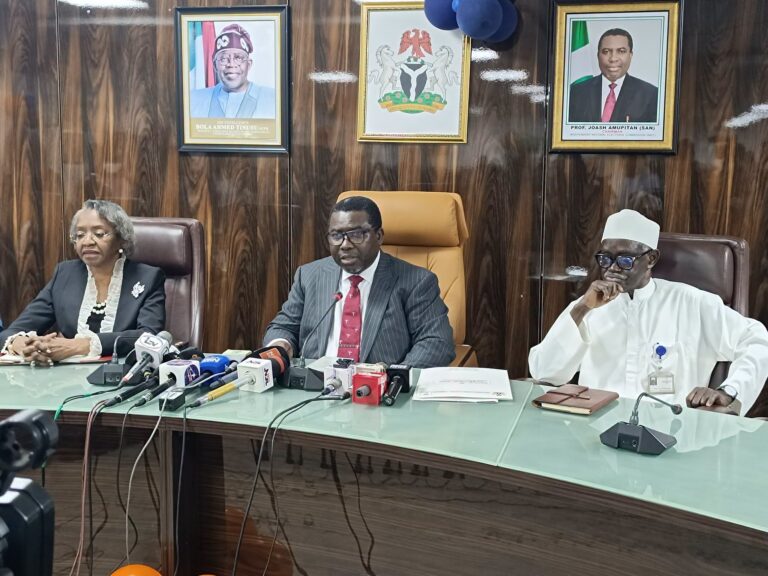
On election financing, the chairman confirmed that while INEC had received a substantial portion of its 2027 election budget, it was awaiting the release of the outstanding balance, part of which was earmarked for the recruitment and welfare of ad hoc personnel, and had received assurances that the funds would be released before the end of November.
Other News
He also addressed questions regarding his neutrality following social media allegations linking his phone number to a controversial X (formerly Twitter) account, and categorically denied ever operating an X account. He noted that an independent forensic review had been obtained and the matter formally referred to the Department of State Services (DSS) and the Inspector-General of Police for investigation.
He also dismissed suggestions that his past legal representation in political disputes would compromise his impartiality, stressing that he acted strictly within his professional duties as a Senior Advocate of Nigeria prior to his appointment.
“My loyalty is solely to the Constitution of the Federal Republic of Nigeria and the Electoral Act,” he affirmed. “Every constitutional institution—including the Presidency, the National Assembly and state governors—owes its primary loyalty to the Constitution and the rule of law.”
Addressing the trust deficit left by the 2023 presidential election, the INEC chairman acknowledged that the controversies surrounding that exercise had severely dented public confidence in the electoral body, damage from which the commission was still working to recover.
“First and foremost, let me speak about what happened in 2023, which resulted in a significant trust deficit for INEC—damage so large that the Commission has not yet fully recovered from it,” he said.
Amupitan, however, noted that the commission had treated every subsequent election as a practical laboratory to identify operational weaknesses and strengthen accreditation, voting and result management.
In response to the question of why Nigerians should trust his leadership ahead of 2027, he referenced the successful conduct of the Anambra and Osun governorship elections, the Federal Capital Territory (FCT) Area Council polls, the Ekiti governorship election and 16 legislative by-elections.
“Why must Nigerians trust me? Nigerians must trust me because, number one, I have conducted off-cycle elections—and observers agree that the recent election in Osun State marked a clear improvement.
“Every election is a lesson. The 2023 general election was a major lesson for Nigeria, and the Anambra election was another,” he said.
The electoral umpire’s boss also noted that Anambra and Osun previously had histories of prolonged, inconclusive governorship contests, recalling that the 2021 Anambra governorship poll took roughly five days to conclude, whereas targeted administrative reforms under his watch had enabled results in both states to be declared the day after voting.
On concerns regarding alleged voter register anomalies, including claims of an 85 per cent surge in registrants in a ward in Ebonyi State, he stated that the commission had already investigated and resolved the complaint in line with statutory procedures, noting that the Electoral Act provided clear windows for public claims, objections and requests for certified true copies of the register.
Amupitan, in his remarks, urged Nigerian youths to stay actively involved in the democratic process and to guard against digital disinformation.
“This country belongs to young Nigerians, and they must not relent in working for the Nigeria they desire,” he said. “Misinformation remains one of the greatest threats to our democracy. Citizens must verify information before acting or sharing, and give our democracy the chance to succeed.”